
Last updated November 25, 2026
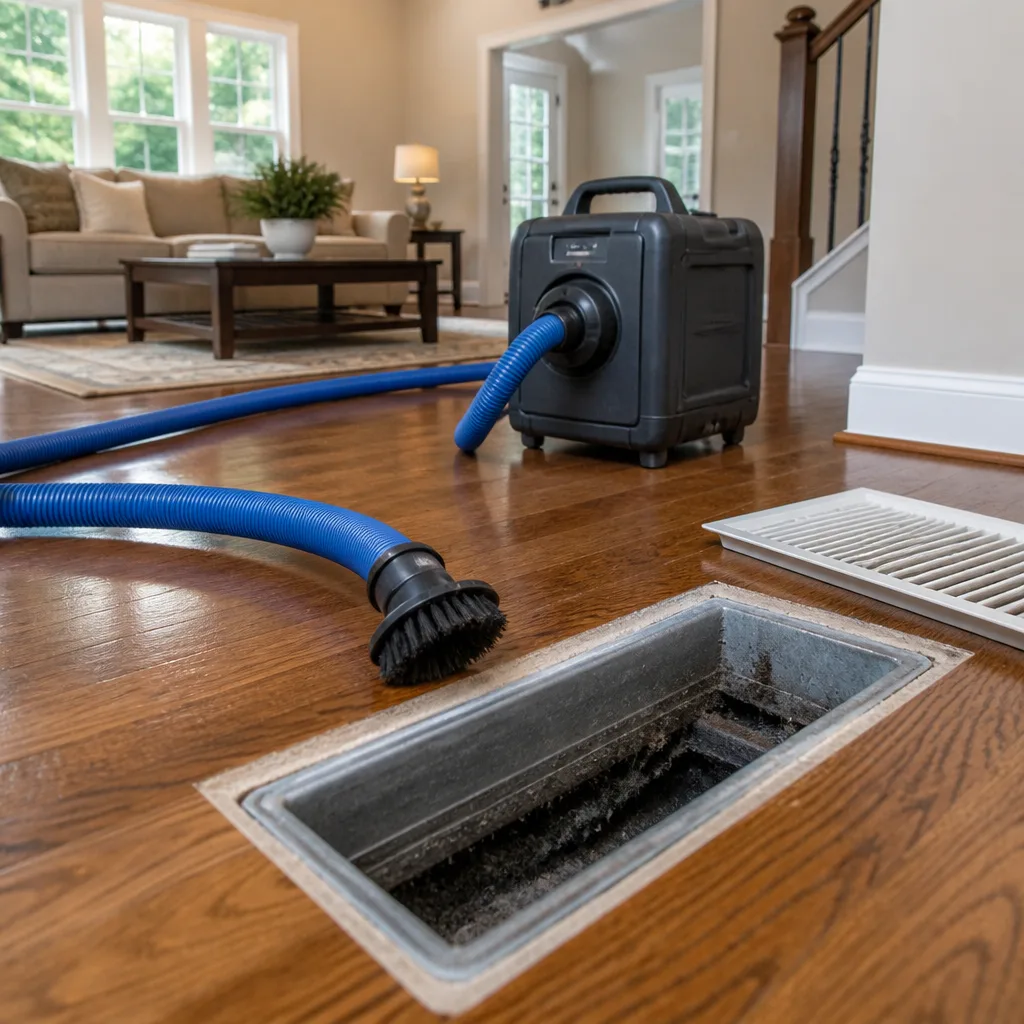 Whole-home duct cleaning
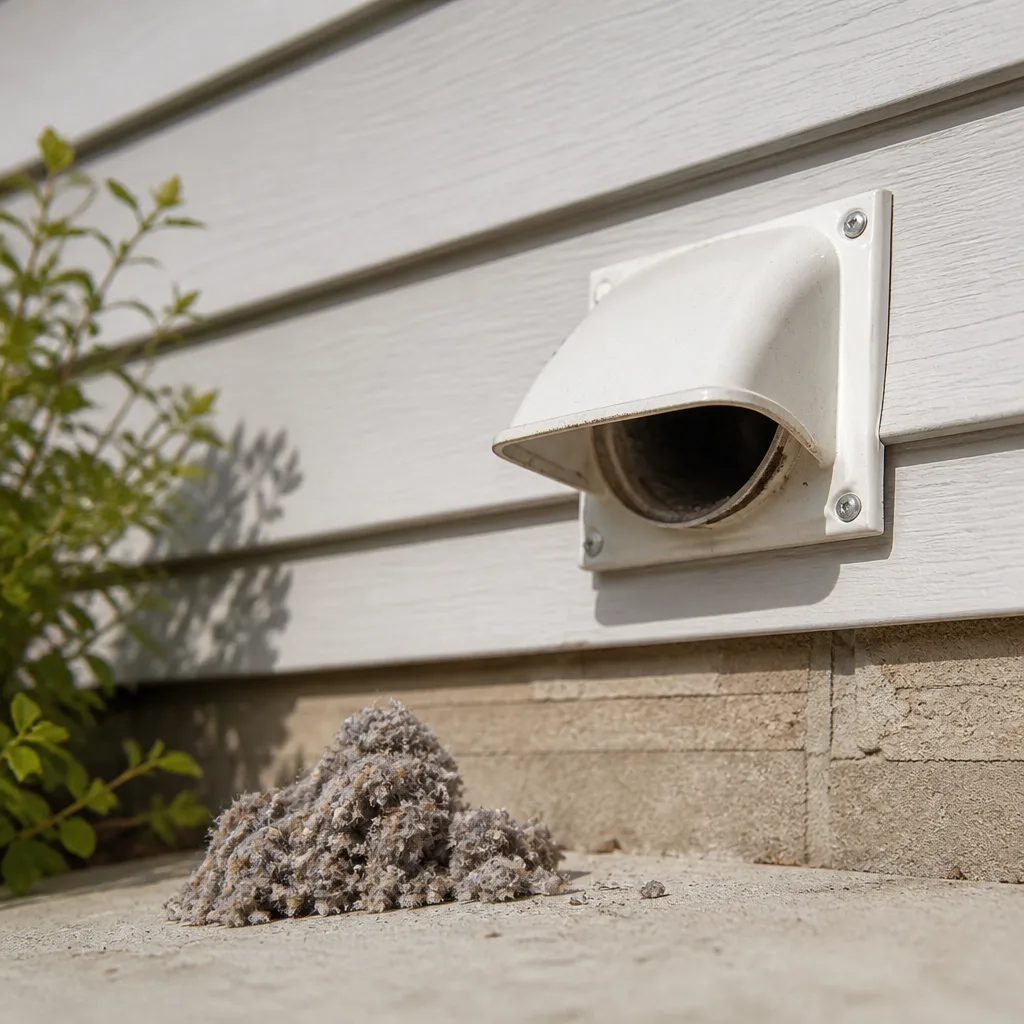 Dryer vent cleaning
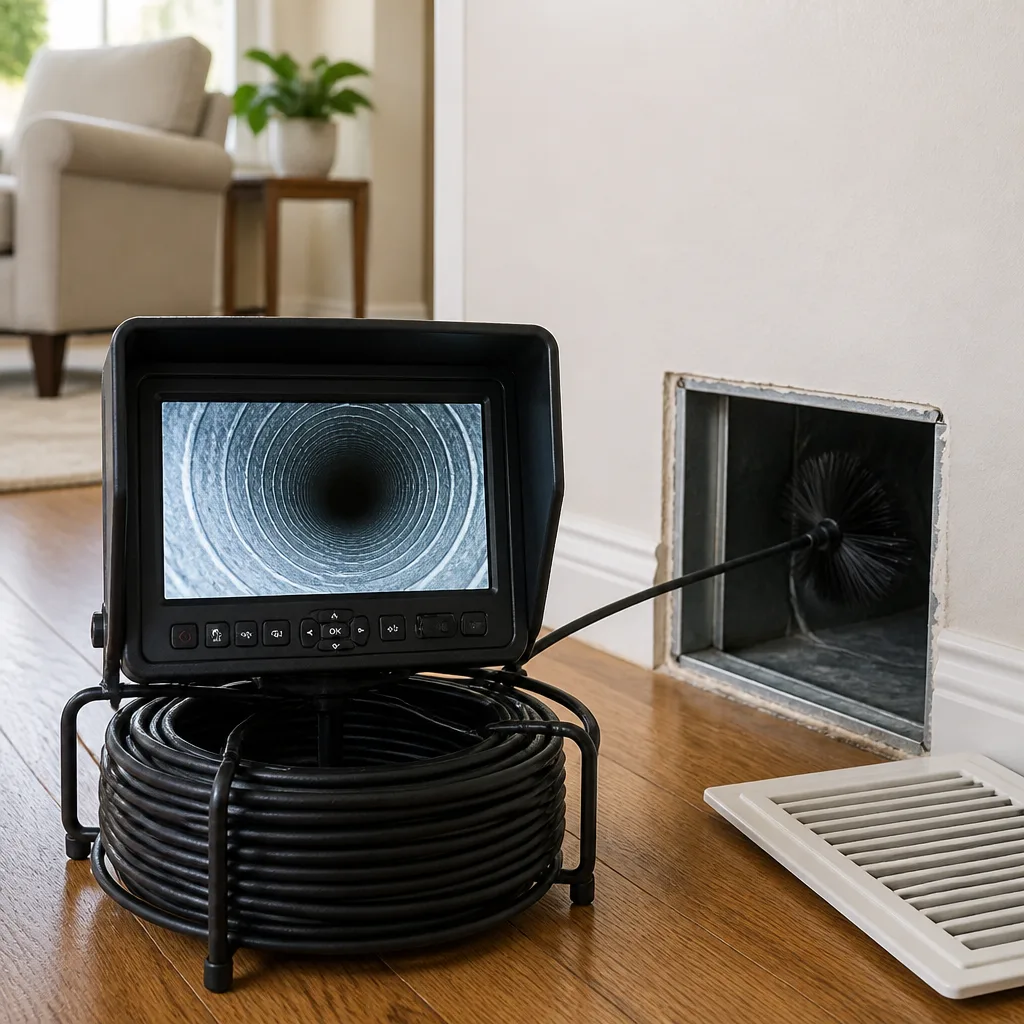 Camera inspection
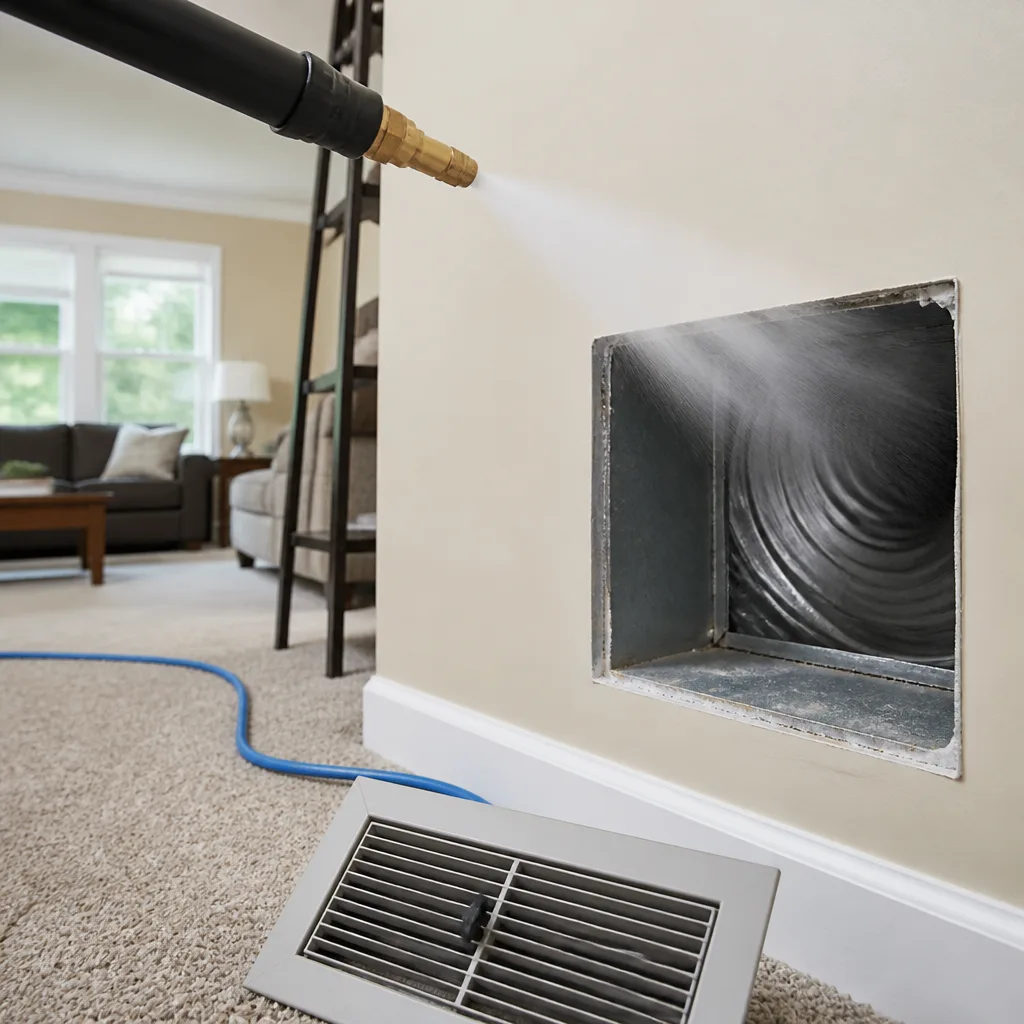 Sanitizing & deodorizing
Whole-system duct and dryer vent check with before-and-after photos - you see exactly what came out of your vents
That "$99 whole-house special" is a bait ad - the real number appears once they are in your hallway, or the "clean" is a shop-vac at the register. We photograph the inside of your ducts before and after instead.
Air Duct Cleaning Emergency Preparedness Guide for Knoxville Homes
Most Knoxville homeowners think of duct cleaning as maintenance, a checkbox item you get to eventually. The truth is less comfortable: your ducts are the one part of your house that can go from fine to contaminated in under three days. The 2019 and 2021 flood events in the Knoxville area pushed standing water into crawlspace-mounted duct systems across dozens of neighborhoods, and the homeowners who didn’t act within 72 hours ended up with mold colonization behind the duct liner that routine cleaning couldn’t reach. Smoke events from Great Smoky Mountains wildfires create a different but equally urgent problem. This guide walks you through both scenarios step by step, including what to document, what to shut down, and how to vet the crew you call when contamination is biological or chemical rather than just dusty.
Quick Answer
If your ducts have taken on water or smoke, the window to prevent permanent contamination is roughly 72 hours after the event ends. Shut down the HVAC system immediately, document everything with photos and air quality readings before anyone touches the ductwork, and call a crew that uses HEPA extraction and negative-air containment rather than a shop vacuum. Routine cleaning can wait, but post-flood and post-smoke remediation can’t. Air Duct Cleaning Knoxville Pros handles both as part of a full air pathway service, and the estimate is free.
Styles & brands we work with
- Whole-home duct cleaning
- Dryer vent cleaning
- Camera inspection
- Sanitizing & deodorizing
Table of Contents
- Why Knoxville Duct Systems Face Two Very Different Emergencies
- The 72-Hour Window: What to Do in the First Three Days After Water Intrusion
- How Wildfire Smoke Infiltration Differs From Ordinary Dust
- HVAC Shutdown Protocol During an Active Flood or Smoke Event
- What to Document for Insurance Before Any Work Begins
- How to Vet an Emergency Duct Contractor vs. a Routine Cleaning Crew
- The Equipment That Separates Remediation From Cleaning
- Building Your Knoxville Duct Emergency Plan Before You Need It
Why Knoxville Duct Systems Face Two Very Different Emergencies
Knoxville sits in a geography that produces two specific threats to duct systems, and they require completely different responses. The first is water. The Tennessee River basin and its tributaries have a history of pushing floodwater into crawlspaces and low-lying mechanical areas, and older Knoxville neighborhoods with crawlspace-mounted ductwork absorb that water fast. When a duct system takes on standing water, the problem isn’t the water itself. It’s what begins growing on the interior surfaces within days.
The second threat is smoke. Knoxville’s proximity to the Great Smoky Mountains means wildfire smoke from regional and upwind fires can settle over the valley for days. That smoke doesn’t behave like dust. It carries fine particulates and volatile organic compounds that adsorb onto duct liner surfaces, and once they’re bonded to porous material, mechanical brushing alone doesn’t remove them.
Most Knoxville homeowners have a plan for a burst pipe or a power outage. Very few have a plan for their ductwork. That gap is what this guide fills.
- Water intrusion – floodwater, crawlspace seepage, sump failure, or a plumbing release that reaches the duct system. Risk: biological growth behind liner within 72 hours.
- Smoke infiltration – regional wildfire smoke drawn into the return side during a smoke event. Risk: VOC adsorption onto porous interior surfaces and lingering odor that returns after cleaning.
- Renovation release – construction dust and drywall particulate pulled into the system during a remodel. Common across Knoxville’s older housing stock where renovation is continuous.
The response to each is different, and the equipment matters more than most people expect. We’ll get to that.
The 72-Hour Window: What to Do in the First Three Days After Water Intrusion
Water in a duct system is a countdown, not a one-time event. Porous duct liner, the fibrous interior lining common in many Knoxville homes, holds moisture long after visible water drains away. That trapped moisture plus warm indoor air creates conditions where mold colonization can establish behind the liner in roughly three days. Once it’s behind the liner, standard mechanical cleaning can’t reach it, and the duct section may need remediation rather than cleaning.
Here’s what to do before a professional crew arrives:
- Stop the air handler immediately. Turn the HVAC system off at the thermostat and, if you can safely reach it, at the breaker. Running the system pulls humid air and any contaminants deeper into the ductwork and distributes them through the house.
- Document the water line. Take photos of the visible water level inside the ducts or at the registers before anything dries. This becomes your insurance evidence, and it disappears fast.
- Remove standing water you can safely reach. If water is pooled in a register boot or a low duct run and you can reach it without disassembling anything or entering standing water near electrical components, soak it up with towels. Don’t crawl into a flooded crawlspace to do this. Leave that to a professional.
- Open the house up. Ventilation helps the structure dry, but don’t run the HVAC fan to do it. Open windows on dry days and use portable dehumidifiers if you have them.
- Don’t run a household vacuum in the ducts. A shop vacuum or household vacuum will aerosolize whatever is growing and spread it through the living space. This is exactly the wrong tool for post-water contamination.
- Call for a moisture assessment within 72 hours. A crew with moisture metering and HEPA extraction can tell you whether the liner is salvageable or whether a section needs remediation.
The 72-hour figure isn’t a marketing number. It’s the practical outer edge of when cleaning can still solve the problem without remediation. Past that window, the job shifts from cleaning to containment and removal, which is a bigger, more involved process.
How Wildfire Smoke Infiltration Differs From Ordinary Dust
When smoke from a regional fire settles over Knoxville, most homeowners think of it as outdoor air quality. What actually happens inside is more subtle. Smoke particles are small enough to pass through standard filters, and the volatile organic compounds in smoke don’t just sit on surfaces, they adsorb onto them. Duct liner is porous by design, which is good for sound and insulation and bad for VOC adsorption. Once those compounds bond to the liner, the duct smells like smoke every time the system runs, even after the outdoor air clears.
This is why smoke remediation is not the same as air duct cleaning. Mechanical brushing removes particulate. It doesn’t necessarily remove adsorbed compounds from porous surfaces. The difference matters:
- Particulate contamination (dust, pollen, drywall dust) responds to rotary brushing and HEPA extraction. This is routine cleaning territory.
- Chemical contamination (smoke VOCs, post-fire odor) requires cleaning plus a sanitizing step that addresses the surface chemistry, not just the visible debris. Running a rotary brush through a smoke-affected duct and calling it done leaves the odor source in place.
In our experience, the homeowner who calls three weeks after a smoke event because the smell came back is almost always dealing with adsorbed compounds that were never addressed. The crew that cleaned the ducts did the mechanical work correctly. They just didn’t treat the liner. That’s the gap a full-scope HVAC cleaning with a sanitizing option closes.
If smoke is actively in the air and your system is running, stop it. That’s the next section.
HVAC Shutdown Protocol During an Active Flood or Smoke Event
During an active event, your HVAC system can work against you. It’s an air mover. If smoke is outside or water is rising in the crawlspace, running the system draws contamination deeper into the ductwork and distributes it through every room.
Here’s the shutdown sequence:
- Set the thermostat to OFF. Not to fan-only, not to a lower setpoint. Off. This stops the air handler from moving air.
- Close the outdoor air intake if your system has one. Some systems draw in outside air for ventilation. During a smoke event, that intake is a direct line for contaminated air.
- Close windows and doors during an active smoke event. Counterintuitive if you’ve been told to ventilate, but during smoke, sealing the house and running a standalone HEPA air purifier in the main living space is the better play. Ventilation comes after the event ends.
- During a flood event, shut off power to the HVAC equipment if water is approaching. Water plus electricity is a safety hazard. If the air handler or any electrical component is near rising water, cut the breaker and stay out of the crawlspace.
- Don’t restart the system until the ductwork has been assessed. A crew with a moisture meter and a scope can tell you whether it’s safe to run. Restarting a water-contaminated system before assessment spreads the problem.
This is where a lot of homeowners get burned. The event passes, the house seems fine, and the system goes back on. Three weeks later the smell or the allergy symptoms start. By then you’re in remediation territory instead of cleaning territory.
What to Document for Insurance Before Any Work Begins
Insurance claims for duct contamination live and die on documentation. The single biggest mistake we see is a homeowner who lets a crew start work before documenting the condition, and then can’t prove what was there. Once the ducts are cleaned, the evidence is gone.
Document in this order, before anyone touches the system:
- Wide shots of each affected room. Include the register, the floor, and the water line or smoke staining in the same frame. This establishes location and extent.
- Close-ups of the register interior and duct opening. Use a flashlight and get the visible contamination on camera.
- Photos of the duct liner surface. If you can see inside a register boot with a light, photograph the liner. Water staining and discoloration on the liner is what an adjuster needs to see.
- Photos of the water level or the smoke plume source. For flood events, photograph the high-water line on the foundation and mechanical equipment. For smoke events, a screenshot of the local air quality index at the time of the event helps establish the timeline.
- A written timeline. Note when the event started, when it ended, when you shut the system down, and when you first noticed symptoms or odor. Adjusters work on timelines.
- Air quality readings if you have them. If you own a particulate monitor or a VOC meter, save the readings and the timestamps. If you don’t, ask the crew to take baseline readings before cleaning begins. That baseline is your evidence.
Do not let a cleaning crew start work before this documentation exists. A professional crew will understand why you’re asking, because they know the claim process. If a crew pushes past the documentation step, that’s a signal about how they operate.
How to Vet an Emergency Duct Contractor vs. a Routine Cleaning Crew
Routine duct cleaning and emergency remediation are different jobs, and the equipment difference is the tell. A crew that cleans residential ducts on a maintenance schedule can get away with a rotary brush and a portable vacuum. A crew responding to biological or chemical contamination cannot. Here’s what to ask before you book anyone for post-flood or post-smoke work.
- Do they use HEPA filtration on the extraction equipment? Nikro HEPA-filtered vacuums capture fine particulate at the exhaust. A shop vacuum recirculates it into your living space. Ask specifically what vacuum they run.
- Do they use negative-air containment? Abatement Technologies negative-air machines create a pressure differential that keeps dislodged debris in the work zone instead of drifting through the house. This matters most when contamination is biological, because you don’t want mold spores aerosolized into a bedroom.
- Do they moisture-meter the liner before and after? A crew doing post-flood work should be able to show you readings. No meter, no assessment.
- Do they offer sanitizing as a real step, not an upsell? Post-smoke work needs surface treatment beyond mechanical cleaning. Ask what product and what process.
- Do they handle duct repair and sealing in the same visit? Post-flood ductwork often has compromised seams and connections. Cleaning a leaky duct system and leaving it leaky means the contamination path stays open.
- Are they state-licensed and insured as their state requires? Ask for documentation. Any hesitation is an answer.
One more thing worth asking: do they clean the full air pathway, including the dryer vent cleaning side? A crew that only touches supply and return ducts is leaving part of the system out of scope. Full-pathway work is how you know the job is complete, not partial.
The Equipment That Separates Remediation From Cleaning
We name the equipment we use because the tools matter as much as the technician. When contamination is biological or chemical, the equipment determines whether the job solves the problem or just moves it around. Here’s the toolkit and what each piece does.
- Rotobrush rotary brush systems – mechanically agitate the duct interior to break loose bonded debris. This is the same method used in commercial buildings, scaled for residential systems. It handles the physical removal step.
- Nikro HEPA-filtered vacuums – capture what the brush dislodges at the exhaust, trapping fine particulate and preventing recirculation into the living space. This is the difference between cleaning and aerosolizing.
- Abatement Technologies negative-air machines – maintain containment during the cleaning so dislodged material stays in the work zone. In post-flood and post-smoke work, this is the piece that protects the rest of the house.
- Moisture metering and inspection scopes – give the crew a before-and-after read on the liner so you know whether it’s salvageable or needs remediation.
- Sanitizing application – the step that addresses adsorbed compounds on porous surfaces after mechanical cleaning. This is where smoke odor actually gets resolved.
We also work with Honeywell and Aprilaire whole-home filtration and humidity systems. After a contamination event, the filtration question comes up: does your current filter setup actually capture what got into the system, and does your humidity control keep the crawlspace dry enough to prevent a repeat? Those are advisory questions, and a crew that knows the products can answer them. The equipment matters, and so does knowing what to do with it afterward.
If you want to see how this applies to a routine job versus an emergency one, the main Air Duct Cleaning Knoxville Pros page lays out the full service scope.
Building Your Knoxville Duct Emergency Plan Before You Need It
The best time to build a duct emergency plan is before the emergency. Knoxville’s flood and smoke events don’t schedule themselves, and the homeowners who come through them with minimal damage are the ones who already knew what to do. Here’s the plan to write down now.
- Locate your HVAC breaker and label it. In a water event, you need to cut power fast. Know where the breaker is and make sure it’s labeled clearly.
- Know your duct configuration. Crawlspace-mounted, attic-mounted, or slab? This tells you which event types pose the biggest risk. Crawlspace systems are the most vulnerable to floodwater.
- Save a duct professional’s number in your phone. Ours is (844) 625-6998. We answer 24/7, and fast dispatch from 7am to 7pm means most calls get a crew the same day.
- Keep a documentation kit. A flashlight, a phone with storage space, and a notebook. That’s it. The kit is for the 15 minutes after the event when the evidence is still there.
- Know your insurance policy’s language on water intrusion and smoke damage. Read it now, not during a claim. Some policies treat floodwater and plumbing releases differently, and some have specific timelines for reporting.
- Check your filter setup. A higher-MERV filter doesn’t stop smoke VOCs, but it does slow particulate loading during a smoke event. If you run a Honeywell or Aprilaire system, know what filter it takes so you’re not searching during a smoke week.
The plan takes an afternoon to build and saves you from the worst outcomes. The 72-hour window doesn’t care whether you were ready.
Common Mistakes to Avoid
- Running the HVAC system during the event. It’s the single biggest amplifier of contamination. Turn it off at the thermostat and, if water is near the equipment, at the breaker. Restart only after an assessment.
- Using a shop vacuum in the ducts. A shop vacuum recirculates fine particulate into the room, and in a post-flood scenario that means aerosolized mold spores. This is the wrong tool at the wrong time.
- Letting a crew start before documentation. Once the ducts are cleaned, the evidence of what was there is gone. Photograph everything first, then book the work.
- Assuming a smoke smell means the ducts weren’t cleaned. It usually means the cleaning was mechanical only and the liner was never treated. Ask specifically about sanitizing before you book.
- Skipping the crawlspace moisture check. Knoxville’s crawlspace-mounted systems are vulnerable to recurring moisture, not just one-time flooding. If the crawlspace stays damp, the ducts will too. Address both.
- Hiring on price alone for contamination work. A low quote for post-flood remediation is a signal that the crew is bringing routine cleaning equipment to a remediation job. Ask about HEPA extraction and negative-air containment specifically.
- Waiting past 72 hours to book. The window between “cleaning can solve this” and “this needs remediation” is short. Book an assessment within three days of the event ending.
See the difference
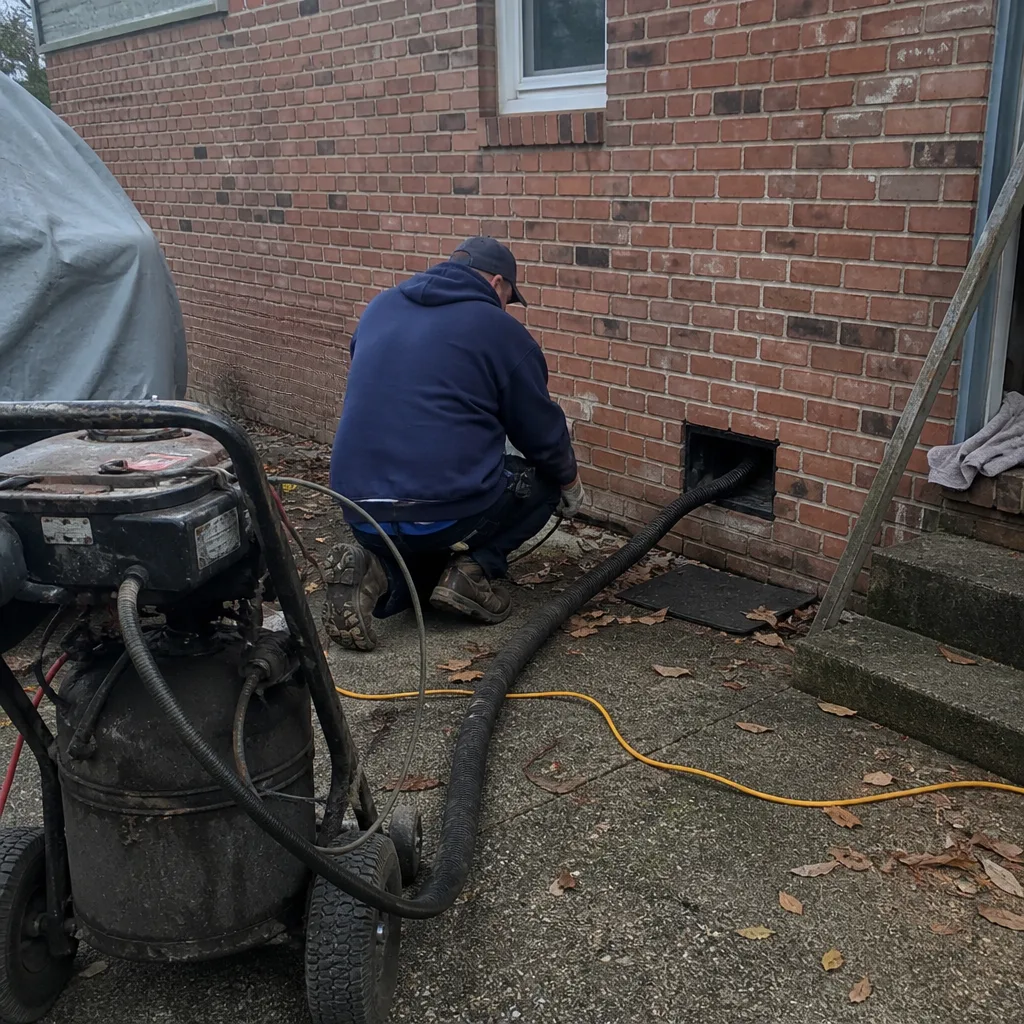 Before
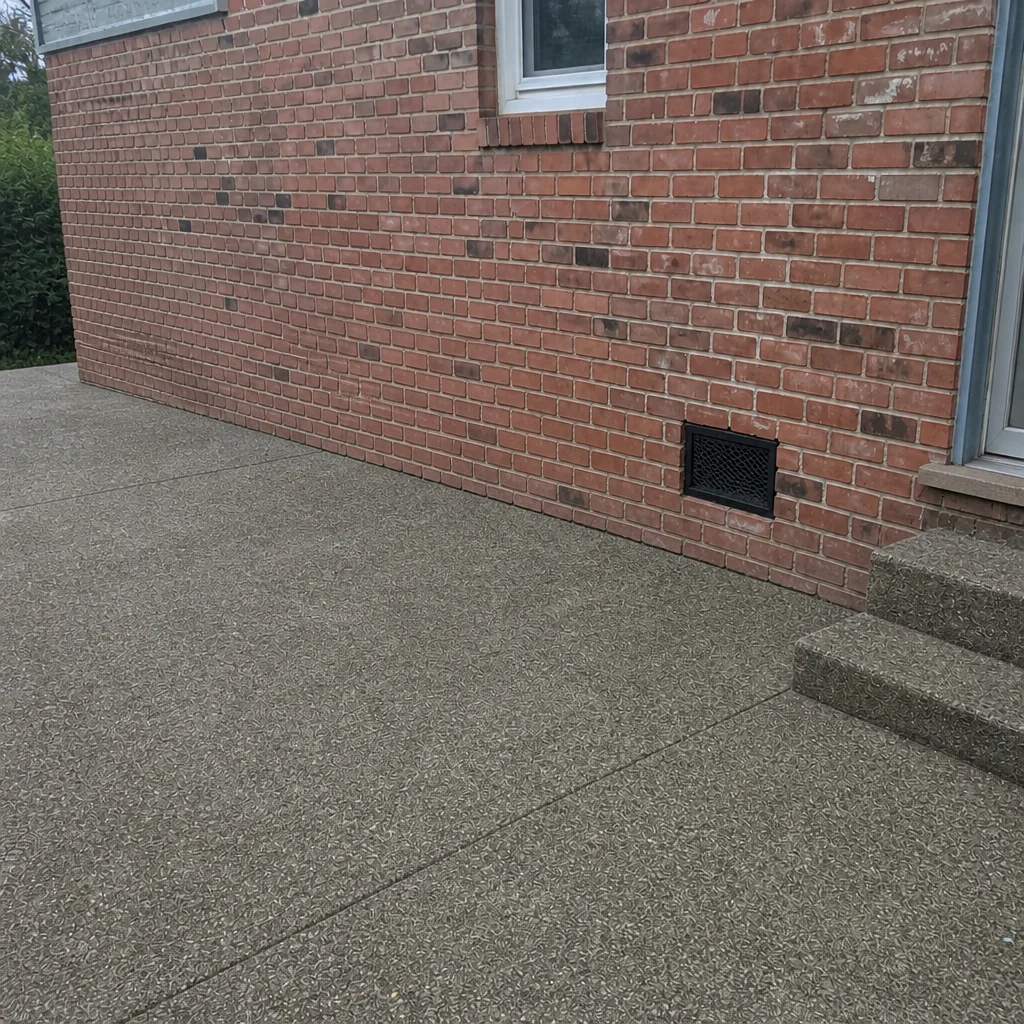 After
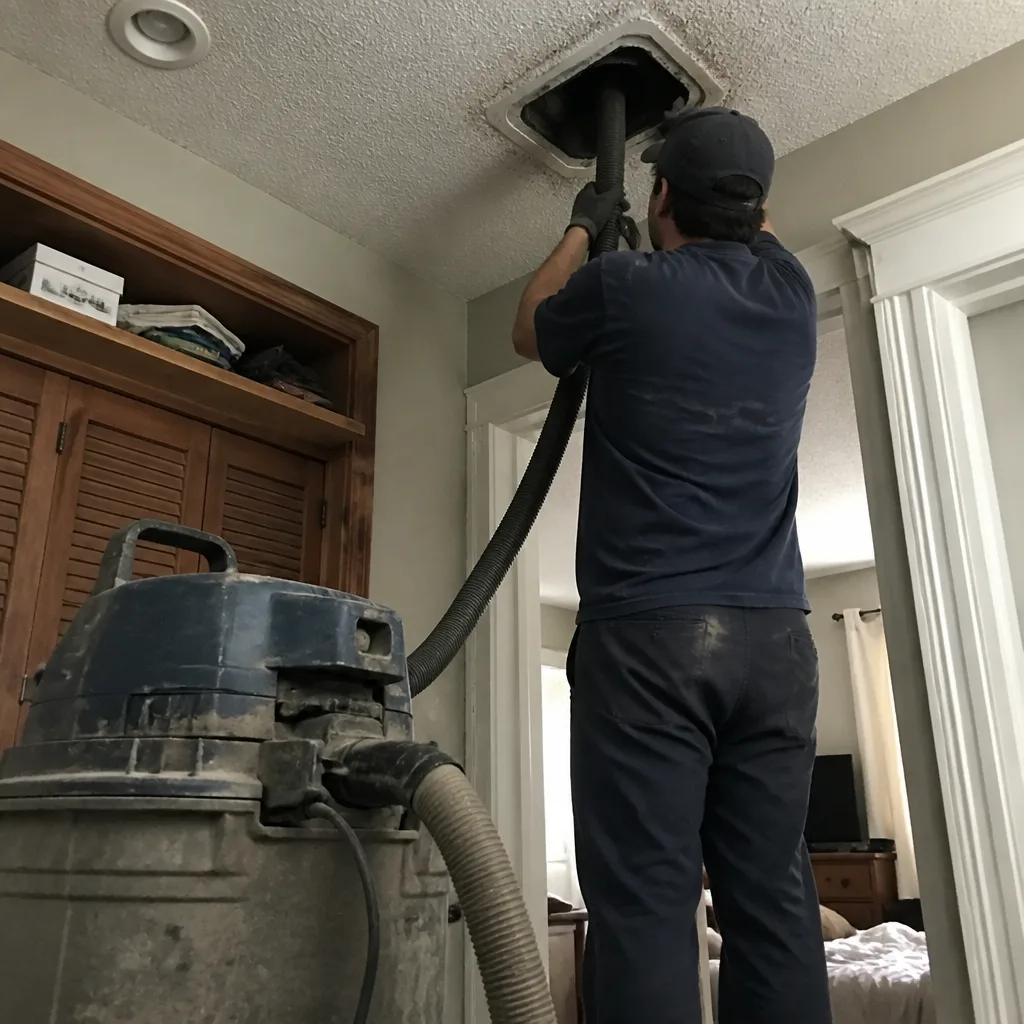 Before
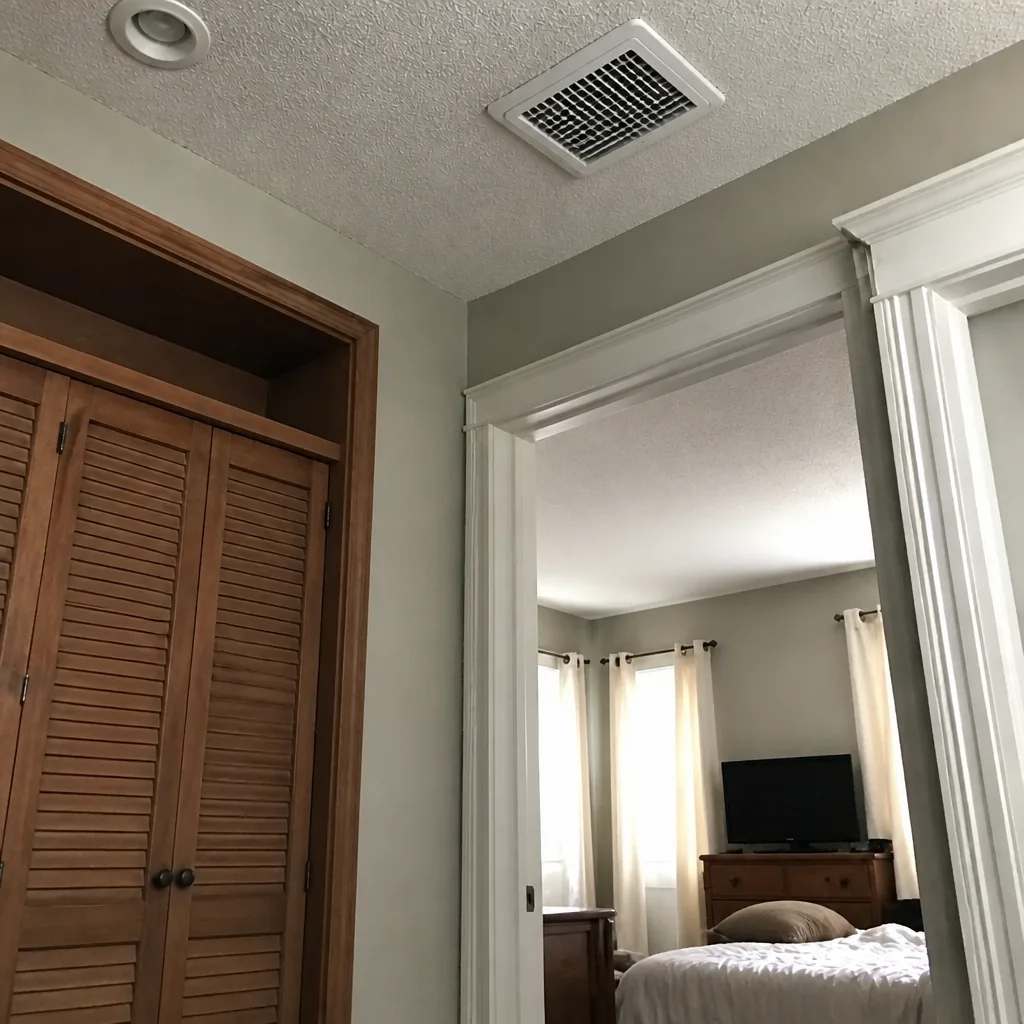 After
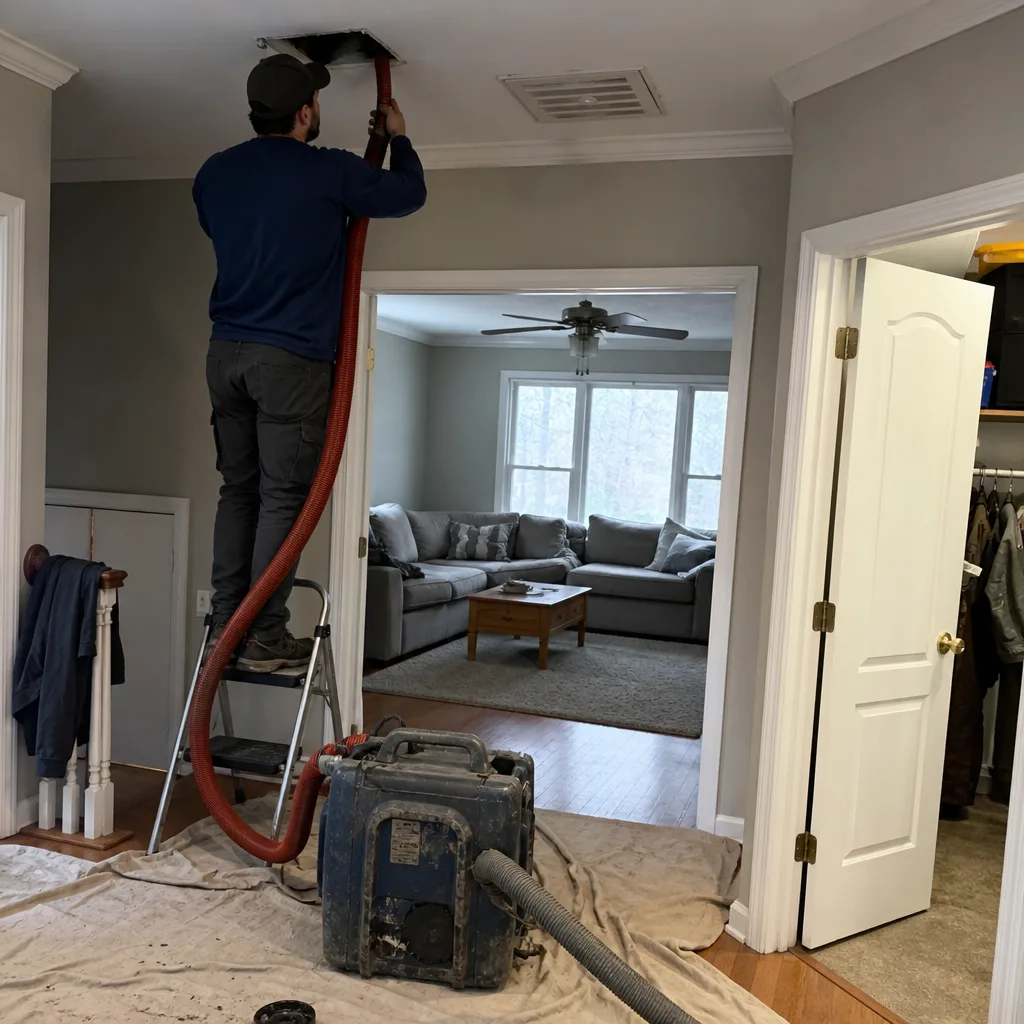 Before
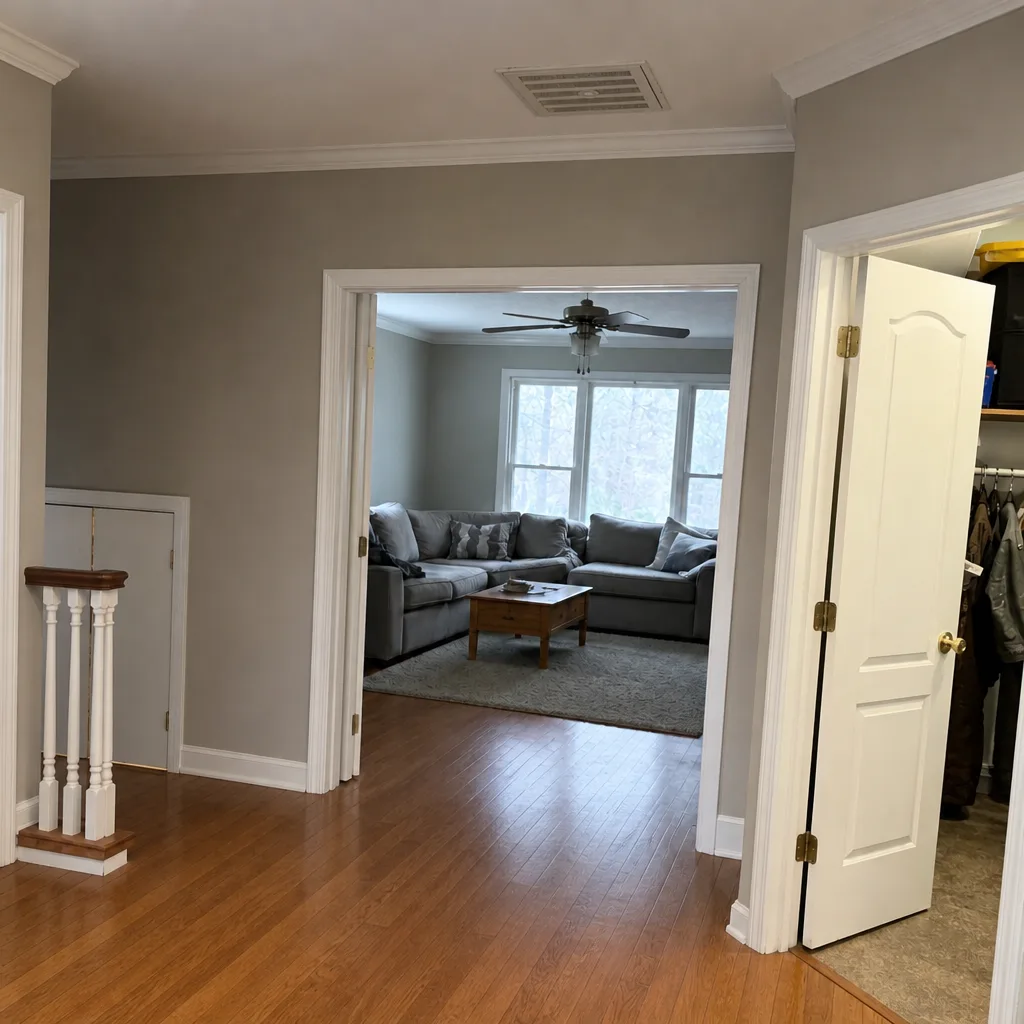 After
When to Call a Professional
Some duct work is routine and can be scheduled on your timeline. Post-flood and post-smoke work is not. Call a professional if water has reached the ductwork or the crawlspace that houses it, if smoke has been drawn into the return side during an active event, if you notice odor that returns after a previous cleaning, or if anyone in the house is showing allergy or respiratory symptoms that started after an event. Call if the duct liner shows water staining or discoloration, if the crawlspace smells musty, or if you’re filing an insurance claim and need baseline readings before cleaning begins.
Air Duct Cleaning Knoxville Pros offers free estimates in Knoxville. Call (844) 625-6998. We answer 24/7. Fast dispatch from 7am to 7pm, Sunday through Friday.
Frequently Asked Questions
Within 72 hours of the water receding. Mold colonization can establish behind duct liner in roughly three days once moisture is trapped, and past that window the job shifts from cleaning to remediation. Shut the HVAC system down immediately, document the water line, and book an assessment fast.
Not permanently, but it does require a different treatment than mechanical cleaning. Smoke carries volatile organic compounds that adsorb onto porous duct liner, and rotary brushing alone doesn’t remove them. A sanitizing step after extraction is what resolves the odor rather than just the visible debris.
Wide shots of each affected room with the register and water line or smoke staining in frame, close-ups of the register interior, photos of the duct liner surface, and a written timeline of the event. If you have air quality readings, save them with timestamps. Take all of it before any cleaning begins, because the evidence doesn’t survive the cleaning.
No. Turn it off at the thermostat. Running the system draws smoke deeper into the ductwork and distributes it through every room. Close windows, seal the house, and run a standalone HEPA purifier if you have one. Restart only after the outdoor air clears and the ducts have been assessed.
HEPA-filtered extraction like Nikro systems, negative-air containment like Abatement Technologies machines, a rotary brush system like Rotobrush for mechanical removal, moisture metering for post-flood assessment, and a sanitizing application for post-smoke work. A crew arriving with only a portable vacuum and a brush is equipped for routine cleaning, not remediation.
Ask for before-and-after photos of your own ducts, moisture readings if the issue was water, and a clear description of what sanitizing product was applied. If the odor returns within a few weeks, the liner likely wasn’t treated, and the job needs a second look. A crew that documents its work can show you what changed. Call (844) 625-6998 for an exact quote. Estimates are free.
The Bottom Line
Knoxville duct systems face two specific emergencies that most homeowners aren’t prepared for: post-flood water intrusion and post-wildfire smoke infiltration. Both come with a short window, roughly 72 hours for water, and both require remediation-grade equipment rather than routine cleaning tools. The plan is simple: shut the system down, document everything before work starts, and call a crew that uses HEPA extraction and negative-air containment. Build the plan before you need it, and the next event is a job rather than a crisis. When you’re ready to book an assessment or a routine cleaning, call (844) 625-6998. We answer 24/7. Fast dispatch from 7am to 7pm, Sunday through Friday. Estimates are free.
Written by the team at Air Duct Cleaning Knoxville Pros.