
Last updated November 25, 2026
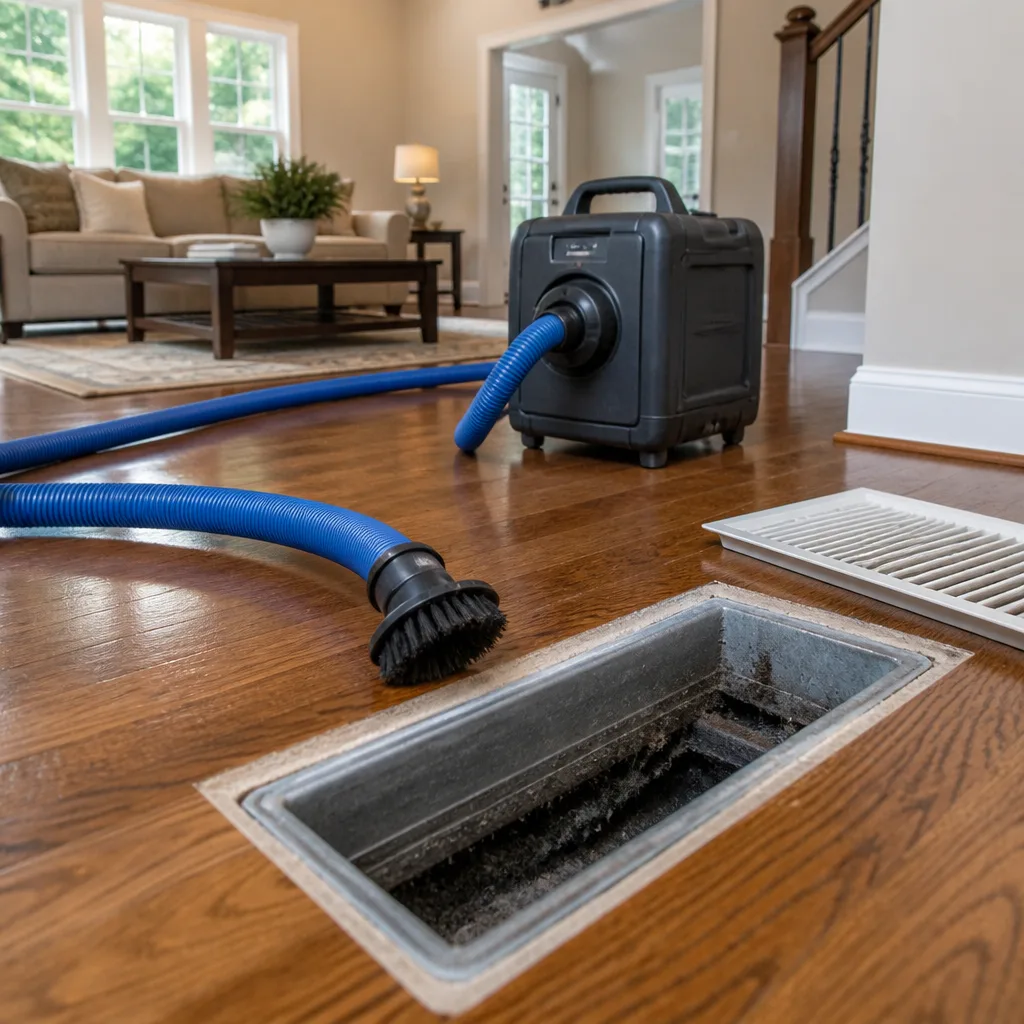 Whole-home duct cleaning
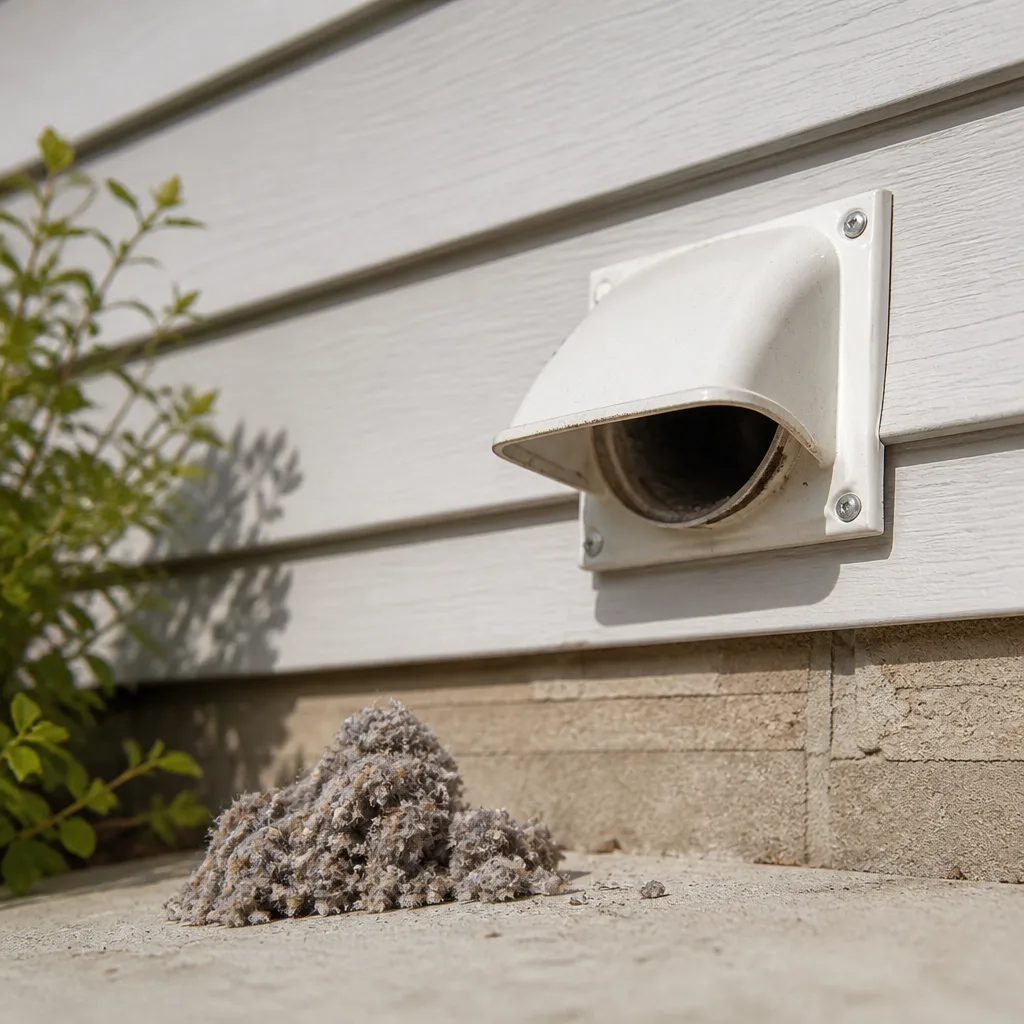 Dryer vent cleaning
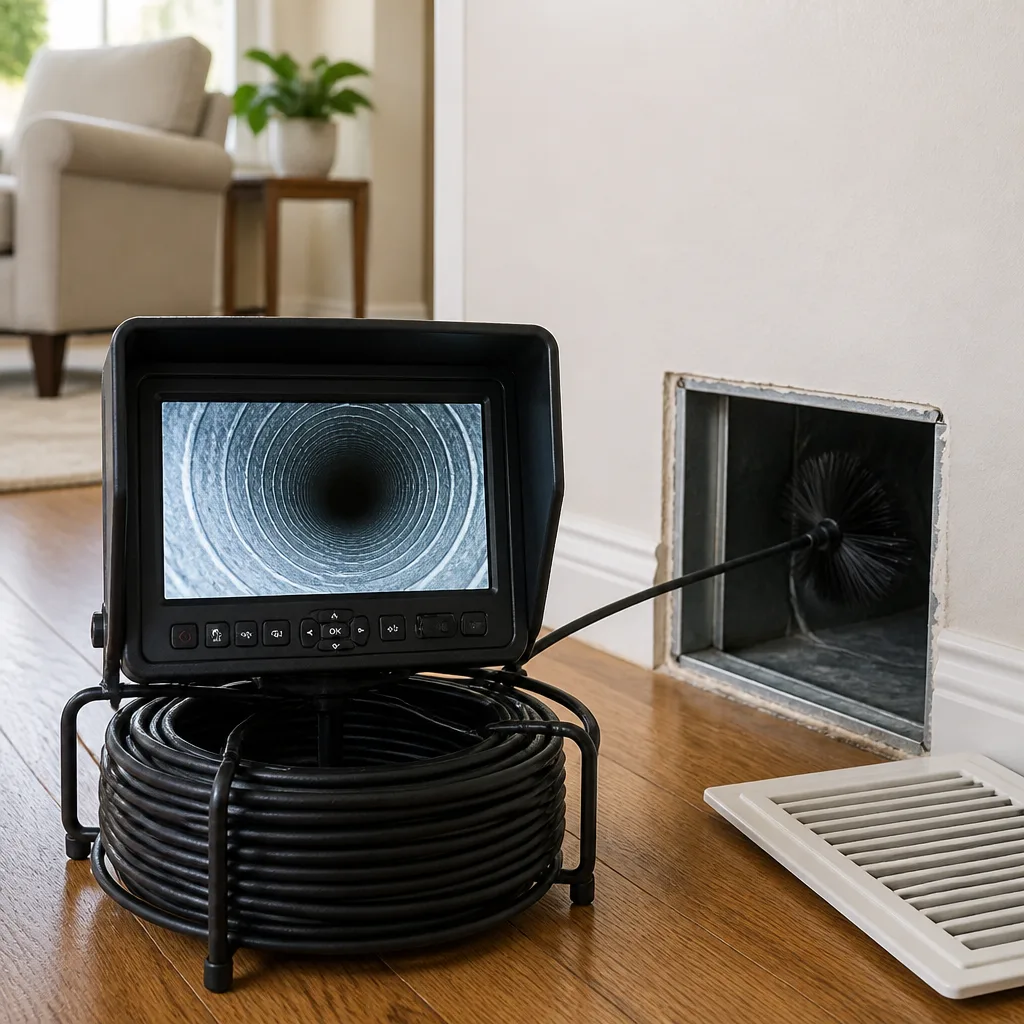 Camera inspection
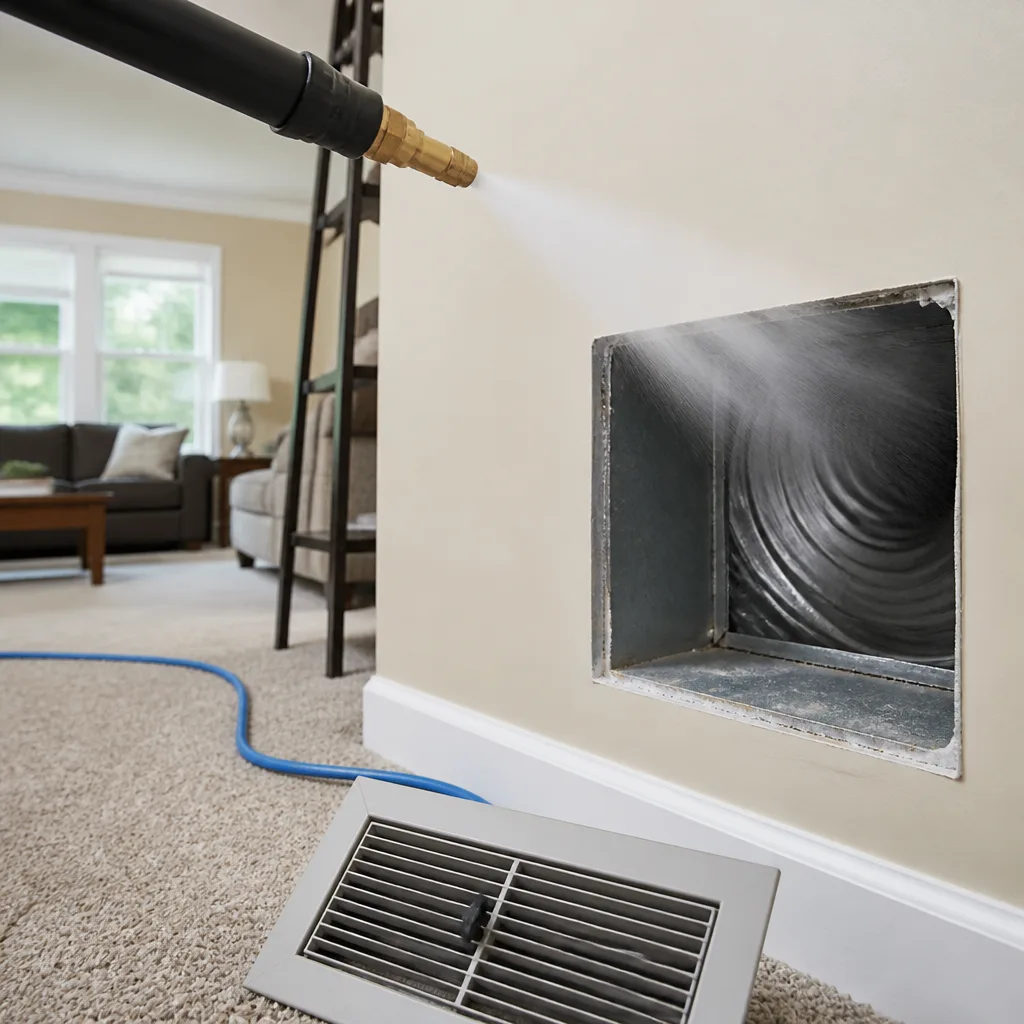 Sanitizing & deodorizing
Whole-system duct and dryer vent check with before-and-after photos - you see exactly what came out of your vents
That "$99 whole-house special" is a bait ad - the real number appears once they are in your hallway, or the "clean" is a shop-vac at the register. We photograph the inside of your ducts before and after instead.
DIY vs Professional Air Duct Cleaning: The Knoxville Homeowner’s Decision Guide
Here’s the part most duct-cleaning articles skip: a homeowner with a shop vac and a vent brush can genuinely clean the first 18 inches of a duct run. That’s not a knock on the professional side. It’s just what consumer equipment can reach before the physics stop cooperating. Duct cleaning isn’t a scrubbing contest won by elbow grease. It’s a problem of air pressure and particle displacement, and the honest answer to the DIY-or-pro question lives there. This guide explains that physics without talking down to you, and it tells you plainly what your own tools can do well and where they stop.
Quick Answer
DIY air duct cleaning is worth doing for register grilles, accessible boots, and the first foot or so of visible duct, but it cannot clean a full duct system because consumer vacuums can’t establish the negative pressure that carries dislodged debris to a collection point instead of into your living space. For post-renovation cleanup, water intrusion, mold, flex duct, or a new home purchase in Knoxville, professional cleaning with HEPA extraction and negative-air equipment is the right call. Everything in between is a judgment call this guide helps you make.
Styles & brands we work with
- Whole-home duct cleaning
- Dryer vent cleaning
- Camera inspection
- Sanitizing & deodorizing
Table of Contents
- Why Duct Cleaning Is a Physics Problem, Not a Cleaning Problem
- What Consumer Equipment Can and Cannot Do
- What DIY Legitimately Accomplishes (And Why It’s Worth Doing)
- When Professional Cleaning Is Non-Negotiable
- Why Knoxville’s Flex Duct Makes DIY Agitation Risky
- What to Do Between Professional Cleanings
- What Professional Cleaning Includes and Costs
- A Reasonable DIY Maintenance Routine in 6 Steps
Why Duct Cleaning Is a Physics Problem, Not a Cleaning Problem
Every duct system is a network of tubes carrying air that’s under constant pressure. Your furnace or air handler pushes air through the supply side, the return side pulls it back, and the entire loop has a designed pressure drop. Debris in that system doesn’t sit still. It clings to duct walls by a mix of adhesion and low-velocity tolerance, and it re-enters airflow whenever conditions shift. Cleaning a duct means disrupting that debris and then capturing it, and capture is the hard part. Agitation without capture just moves contamination from the duct wall into the airstream and out into the room you’re sitting in.
Professional duct cleaning relies on true negative air established inside the system while agitation happens. A HEPA-filtered vacuum creates pressure lower than ambient room pressure at the duct opening, so when rotary brushing or air whipping breaks debris loose, the pressure gradient carries it toward the vacuum rather than toward your registers. The tools are part of it. The pressure differential is the whole mechanism. Consumer vacuums, even large shop vacuums, can’t create that differential because their airflow and sealed connection to the duct are both too limited. That’s the honest reason DIY whole-system cleaning fails, and it has nothing to do with how hard you’re willing to work.
In our experience around Knoxville homes, this is where most DIY attempts go sideways. Someone rents a shop vac, pops the return grille, and runs the hose into the duct. The debris dislodges, but it doesn’t go into the vacuum bag. It travels through the return run and pushes out the supply registers into the living space. When you next see visible dust plumes from a vent, that’s often what happened. The fix isn’t a bigger vacuum. It’s a sealed, negative-pressure setup, which no rental unit and no shop vac can replicate.
What Consumer Equipment Can and Cannot Do
Consumer equipment has real limits, and knowing them tells you exactly where DIY stops and professional tools begin. Remember that the equipment matters as much as the technique. A shop vac does a lot of work well. It just can’t do this particular job past the first eighteen inches.
What a consumer vacuum can handle
- Loose surface dust inside register grilles and return covers
- Dust on duct boots (the transition fitting behind the register)
- The first visible run of duct before the elbow or branch
- The interior of the air handler cabinet’s accessible surfaces
- Dryer lint from inside the lint trap and just past the flex transition
What a consumer vacuum cannot handle
- Establishing negative air across an entire duct run (the CFM and static-pressure math is not close)
- Reaching past the first elbow or any branch
- Rotary brush agitation that scrubs duct walls without tearing flex liner
- HEPA-grade capture of the fine particulate that comes loose during agitation
- Containment when dislodged debris would otherwise re-enter the occupied space
Professional equipment operates on a different scale. Rotobrush rotary brush systems feed a rotating head down the duct to scrub walls mechanically while air travels with it. Nikro HEPA vacuums hold a sealed negative pressure at the access point and capture the dislodged debris in HEPA-rated filtration. Abatement Technologies negative-air machines hold the surrounding room at lower pressure so anything that escapes the duct is pulled into filtered containment, not blown into the home. These are the same classes of equipment used in commercial and remediation work. The comparison with a shop vac isn’t close, and that’s the point.
What DIY Legitimately Accomplishes (And Why It’s Worth Doing)
Here’s where we part company with the chorus that says never lift a finger on your own system. DIY duct maintenance has genuine value when it stays inside the right boundaries. Keeping grilles, boots, and accessible plenum surfaces clean reduces the dust load that your HVAC system is constantly pulling through itself. It also gives you a way to notice changes early. You see dark staining, moisture, or liner trouble while it’s still small.
What a good DIY step actually covers:
- Remove and wash every supply and return register grille in warm soapy water. Let them dry fully before reinstalling.
- Vacuum the boot behind each register with a brush attachment, reaching as far as the first elbow.
- Wipe down the accessible interior surfaces of the air handler cabinet (power off at the breaker first).
- Clean the accessible return plenum wall where dust films over. A damp cloth and mild detergent is enough.
- Clear and clean the dryer vent’s flexible transition where it meets the wall, without pushing a brush far down the rigid run.
- Record what you see. Photos of each register and boot become your baseline for next season.
Notice what’s not on that list: pushing a brush deep into a duct run. That’s the step that causes problems more often than it solves them, and it’s the one most homeowners reach for first. Grille cleaning, boot vacuuming, and plenum wiping are safe, low-cost, and genuinely useful. They’re also a great way to know when your system crosses into needing a professional visit. If you notice dark growth, moisture, or persistent dust after register cleaning in a Knoxville home, that’s the signal, not the deadline to buy more equipment.
When Professional Cleaning Is Non-Negotiable
Some situations don’t leave a choice. These are the conditions where a DIY attempt can make the problem worse and where professional cleaning is the right answer regardless of cost. When we walk a Knoxville home through these scenarios, we’re direct about the fact that a shop vac has no role in them.
- Post-water-intrusion. Any duct system that’s been exposed to water carries a real mold risk. HEPA extraction plus sanitizing follow-up is the only reliable path. Dry brushing without capture can aerosolize spores through the whole house.
- Post-renovation. Drywall dust, sawdust, and construction grit settle through the system. That fine particulate is exactly what consumer vacuum filtration can’t hold. A renovation typically warrants professional cleaning once work is finished and the system is running again.
- Documented mold growth. Visible growth inside a register, on a boot, or in the air handler cabinet means the system needs a trained professional assessment. Cleaning that isn’t contained can spread contamination into occupied space.
- New home purchase. You don’t know how the previous owner used the system. A professional cleaning before you move in gives you a verified baseline, which is a different outcome than “the previous owner said they cleaned it.”
- Persistent allergy or respiratory symptoms. If symptoms track with HVAC operation and register cleaning doesn’t change them, a full-system clean with HEPA capture is the next honest step.
- Dryer vent obstructions deeper than the transition. A blocked dryer vent has a real fire risk, and a consumer brush pushing a lint plug further down doesn’t fix that. This is one of the reasons we treat dryer vent cleaning as a dedicated service rather than tagging it onto duct work.
None of these scenarios is a sales framing trick. They’re the cases where the physics of the problem and the physics of consumer equipment are simply mismatched. If you can’t create negative air and capture the debris, you can’t clean the system, and the honest move is to call for one.
Why Knoxville’s Flex Duct Makes DIY Agitation Risky
A lot of Knoxville homes built in the 1990s and 2000s were built with flex duct on the branch runs. Flex duct is the flexible, ribbed, foil-jacketed tube you’ll find inside some ceilings and soffits, and it’s genuinely useful for routing around joists and tight chases. It’s also the single most common reason a homeowner’s DIY duct scrubbing attempt causes damage. The liner inside a flex run is a thin plastic film over a wire helix. Running a consumer brush into that run catches the liner at a rib, and the brush pulls a tear. Once torn, the liner lets the fiberglass insulation outside the liner enter the airstream, and suddenly you have a bigger problem than dust.
The rotary equipment that professional crews use (like the Rotobrush systems we run) is designed specifically for flex duct. The brush head diameter is smaller than the duct, the feed rate is controlled, and the technician feels resistance through the cable before reaching the point where a liner tears. That’s a trained-feel thing, not a spec thing. A consumer brush fed into the same run has no way to sense the difference between a soft rib and a stretched liner, and no way to reverse in time.
Knoxville’s summer humidity adds a second layer. Flex duct runs in attic spaces condense heavily when the attic sits at high humidity for long stretches, and the liner on a run that’s seen this for years is already more brittle than it was when installed. That’s why we walk flex runs carefully and check the liner condition on the way through. If the liner is already failing, cleaning without addressing it just moves the fiberglass. Our HVAC cleaning approach accounts for the liner and the cabinet together so the fix is complete.
If your Knoxville home has flex duct and you’ve been considering brushing it yourself, that’s the one scenario where we’d actively steer you away from a DIY attempt. Register and boot cleaning, yes. Brush down the run, no.
What to Do Between Professional Cleanings
The weeks and months between professional cleanings matter more than most homeowners realize. Recontamination is a rate, not an event. Every time the system runs, it pulls air through the return, and every bit of dust you allow into the return makes the next cleaning further away. A few straightforward habits slow the rate considerably without touching the equipment or voiding any warranty.
Slow recontamination without breaking anything
- Change your filter on the schedule the filter and system call for. A clogged filter reduces airflow, strains the blower, and lets more dust settle in the return.
- Keep return grilles clear of furniture, rugs, and curtains. A blocked return starves the system and raises duct static pressure.
- Vacuum your home with a HEPA-equipped vacuum regularly. New dust in the house is new dust in the ducts.
- Wipe down registers and boots monthly with a damp cloth. This is the single highest-value DIY habit.
- Fix any water intrusion into the HVAC or duct system promptly. A slow drip from a condensate line is a mold invitation.
- Have the system’s ductwork inspected after any renovation, roof leak, or major appliance failure that shares the mechanical space.
- Keep the dryer vent clear and watch for lint accumulation outside the exterior hood.
One more habit worth building: use a good filter in the right slot. If your system has a Honeywell or Aprilaire filter cabinet or a whole-home filtration unit, work with the correct filter for that cabinet rather than stuffing a generic filter into the grille. Homeowners in Knoxville who’ve installed Aprilaire humidity control or a Honeywell media filter get a much lower recontamination rate than those relying on the bargain-bin pleated filters. If you’re unsure what your cabinet accepts, ask before ordering. Filter fit affects both filtration and airflow, and the wrong combination can hurt more than help.
What Professional Cleaning Includes and Costs
Professional air duct cleaning in Knoxville is priced per system, not per vent, and the price is set by a written estimate after a walkthrough. That structure exists because per-vent pricing punishes larger homes and rewards cutting corners. A flat per-system price means the technician has already committed to doing the full job at a fixed number, which is the antidote to the bait-and-switch reputation this industry has earned.
A legitimate professional cleaning covers:
- A walkthrough and estimate before work begins
- Negative air established with Abatement Technologies containment
- Rotary brush agitation through supply and return runs with Nikro HEPA capture
- Air handler cabinet and blower cleaning where it’s in scope
- Register and grille removal, cleaning, and reinstatement
- Post-clean sanitizing option (a standard offering, not an upsell)
- Before-and-after photos of your own ducts as the record of work
Where DIY genuinely wins on cost is the maintenance layer: registers, boots, and filter changes cost almost nothing to do yourself. Where professional cleaning earns its price is in the inaccessible runs. If you call us, the technician walks the system and quotes a flat price per system before any work starts. If the scope changes once we’re inside, you hear about it before the price does. For a full breakdown of scope and estimates, see our air duct cleaning page. If your system also needs duct repair or sealing, we handle that in the same visit, which is the kind of scope most DIY steps can’t reach.
A Reasonable DIY Maintenance Routine in 6 Steps
This is the routine we recommend to Knoxville homeowners who want to stay involved with their system between professional cleanings. It’s honest about what it is: maintenance, not cleaning.
- Power the system down at the thermostat and the breaker before touching anything connected to the air handler or duct boots.
- Remove every register grille and wash it in warm water with mild soap. Dry fully before reinstalling. While the grille is off, this is your chance to see the boot and the first stretch of duct.
- Vacuum the boot behind each register with a soft brush attachment. Reach only to the first elbow. Don’t push past it.
- Wipe accessible plenum and return-wall surfaces with a damp cloth. The return plenum in most Knoxville homes is a reachable wall surface and a high pay-off clean.
- Replace the filter on the system’s schedule. Use the correct filter for your cabinet. A professional HVAC technician can confirm the type if you’re unsure.
- Photograph everything and write down what you see. Dark growth, moisture, or liner damage in your photos are the reasons to schedule a professional inspection. You’ve now got a record to compare against the next time.
Two safety notes. Turn the system off before doing any step, and never reach into an air handler’s blower compartment, which can cause serious injury if the system is powered. If you find mold growth, moisture, or liner damage in your photos, the next step is a professional inspection, not a bigger brush. A trained professional with HEPA equipment and containment is what that finding actually requires.
Common Mistakes to Avoid
- Pushing a brush deeper than the first elbow. Liner tears in flex duct are the most common damage we find after viral videos encourage homeowners to “clean their own ductwork.” The repair costs more than the cleaning did.
- Running a shop vac on a return without sealing the opening. The vacuum pulls dust out of the duct, but the open opening pulls house air back in, and the room ends up dustier than when you started.
- Spraying disinfectant into ducts without containment. A spray bottle doesn’t reach farther than the register, and the mist lands on your walls. Sanitizing needs HEPA extraction first and product application via fogger or wipe by a technician who knows the system.
- Skipping the dryer vent because it “looks fine” from the outside. The lint that matters is packed deep against the exterior hood or the transition fitting. A visual check from outside doesn’t see it, and the fire risk sits inside the run.
- Hiring per-vent pricing without written scope. A quoted per-vent figure sounds cheap, but scope creep (“oh, that doesn’t include the returns”) lands the invoice above the original flat-price quote. Ask for a written estimate per system.
- Cleaning ductwork right after a renovation without addressing construction dust first. HVAC systems pull construction particulate back into the ducts for days after a job. Schedule the cleaning after final cleanup, not before.
- Assuming sealing isn’t part of the job. In an older Knoxville home, leaky ducts lose a significant share of conditioned air to the attic or crawlspace. Cleaning is only half the fix if the ducts leak. Duct repair and sealing belong in the same visit when the assessment calls for it.
See the difference
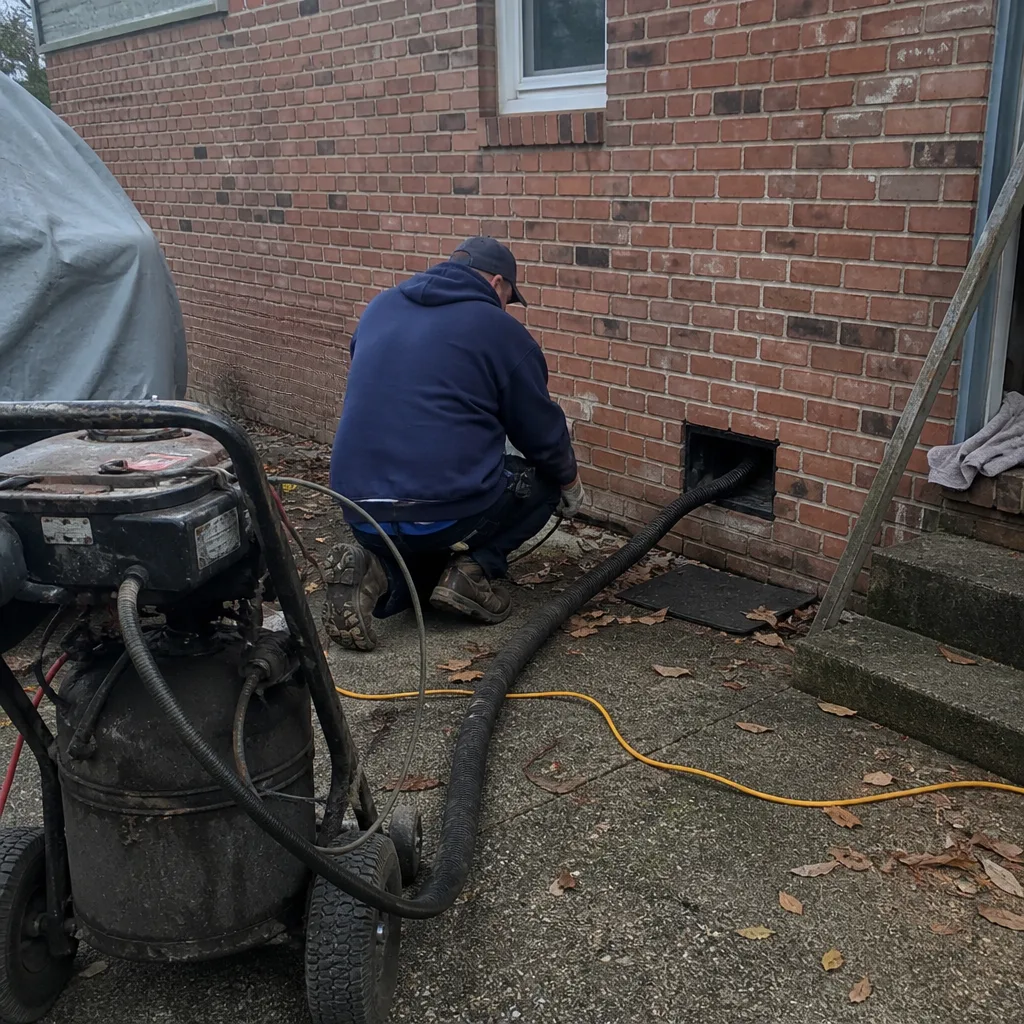 Before
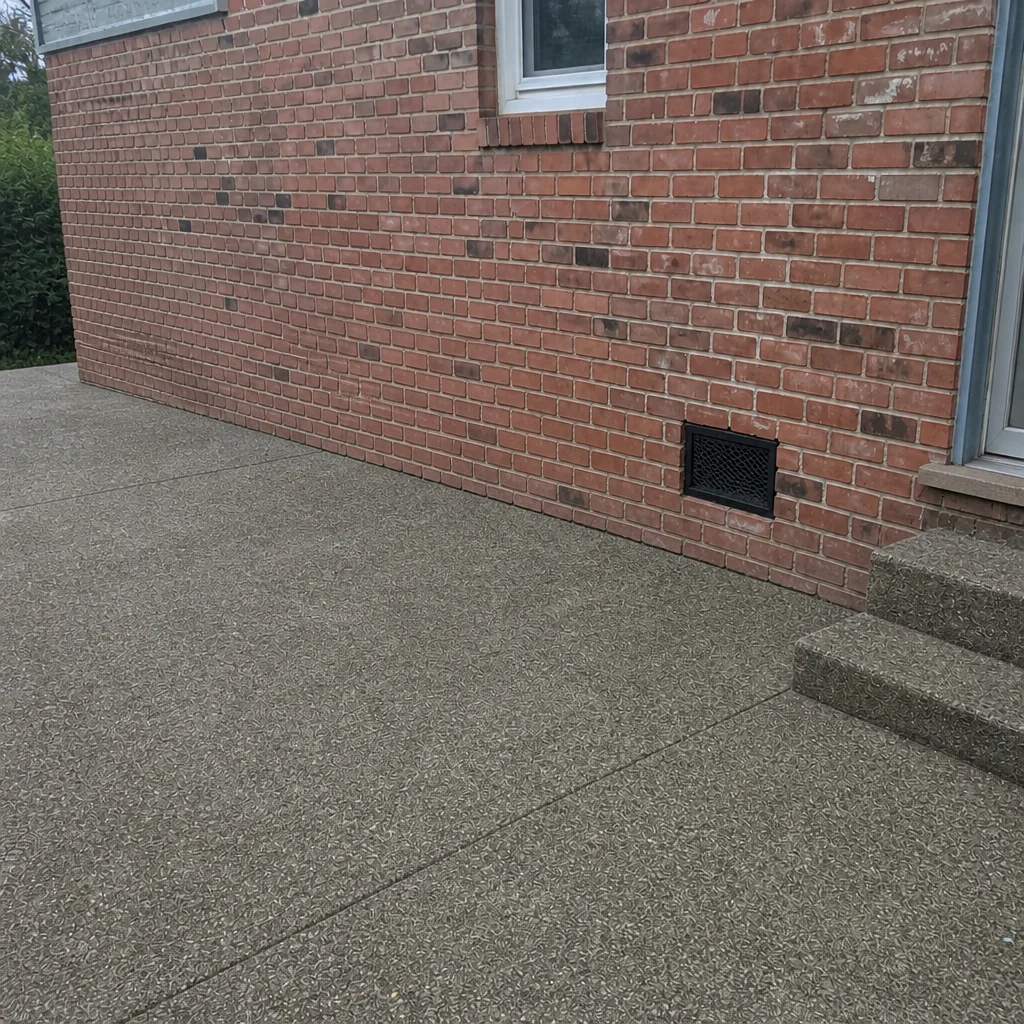 After
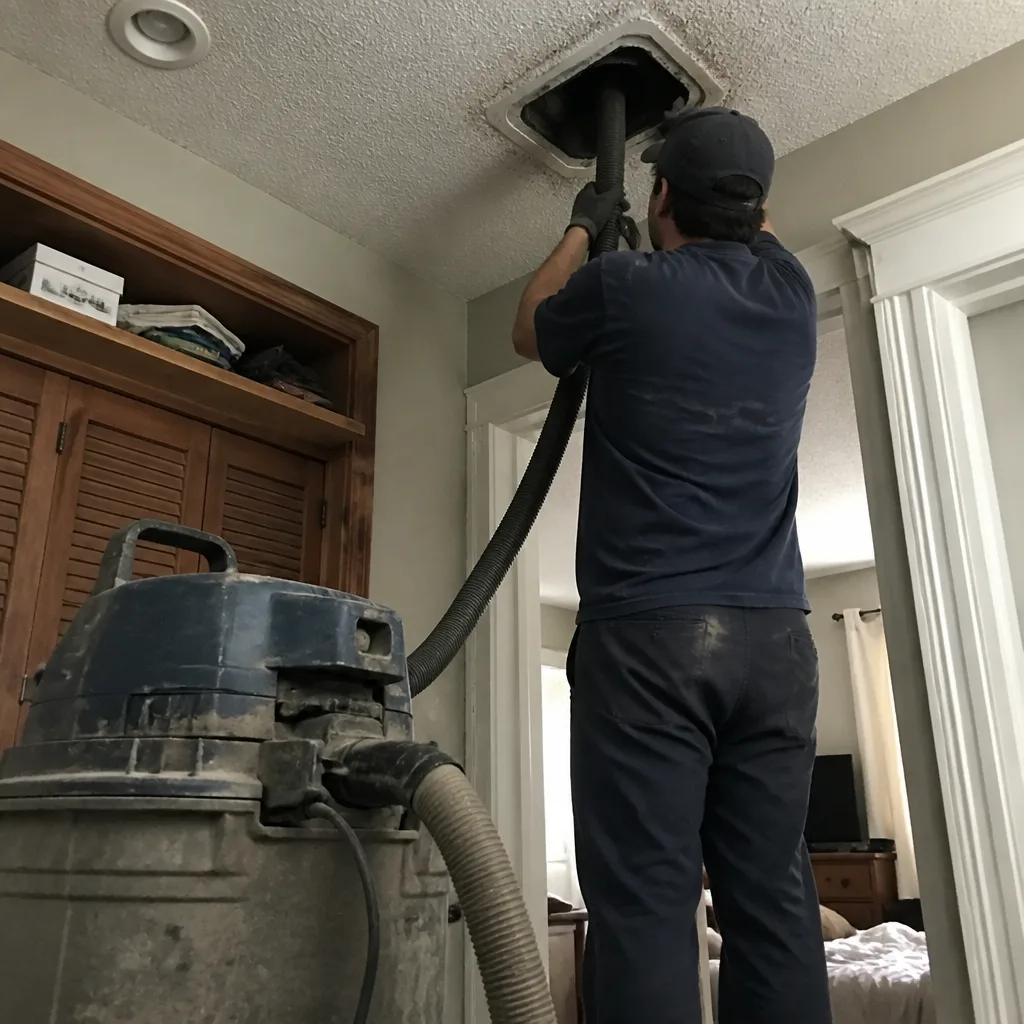 Before
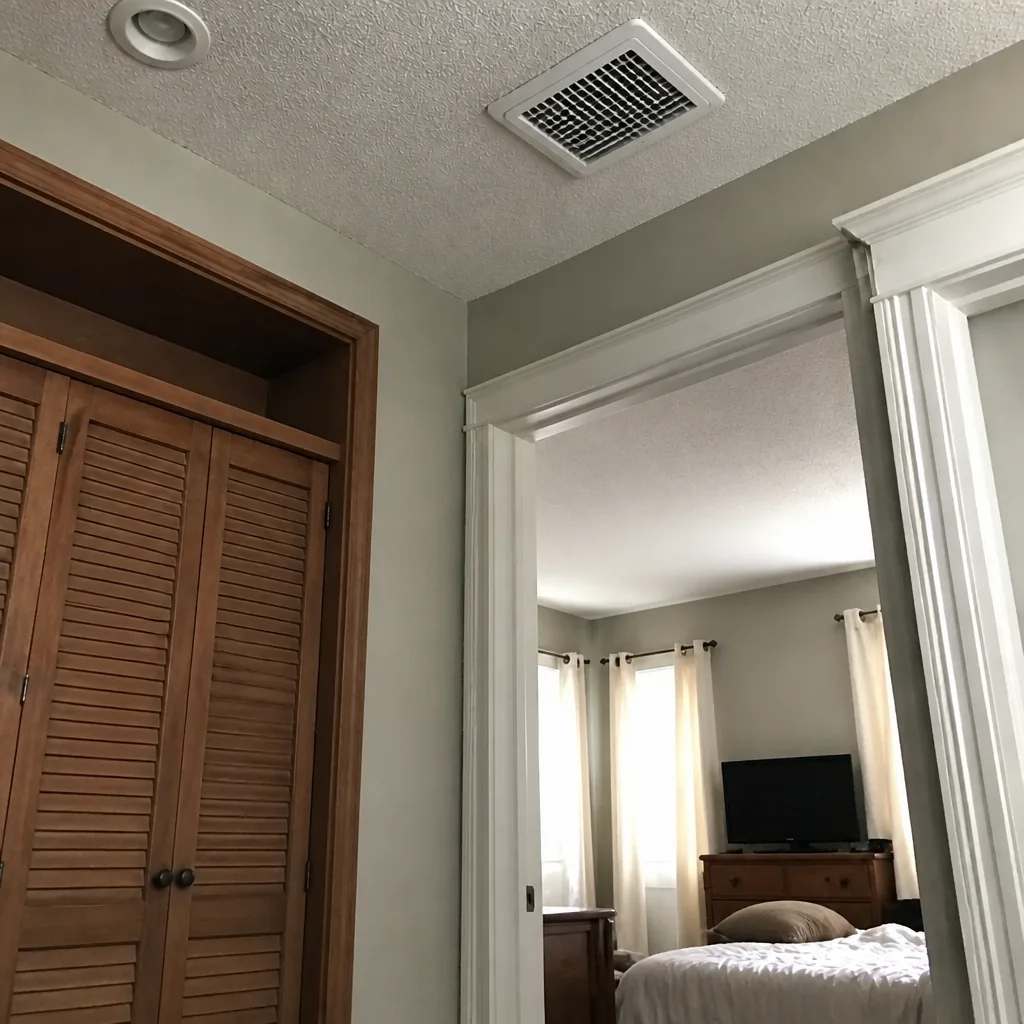 After
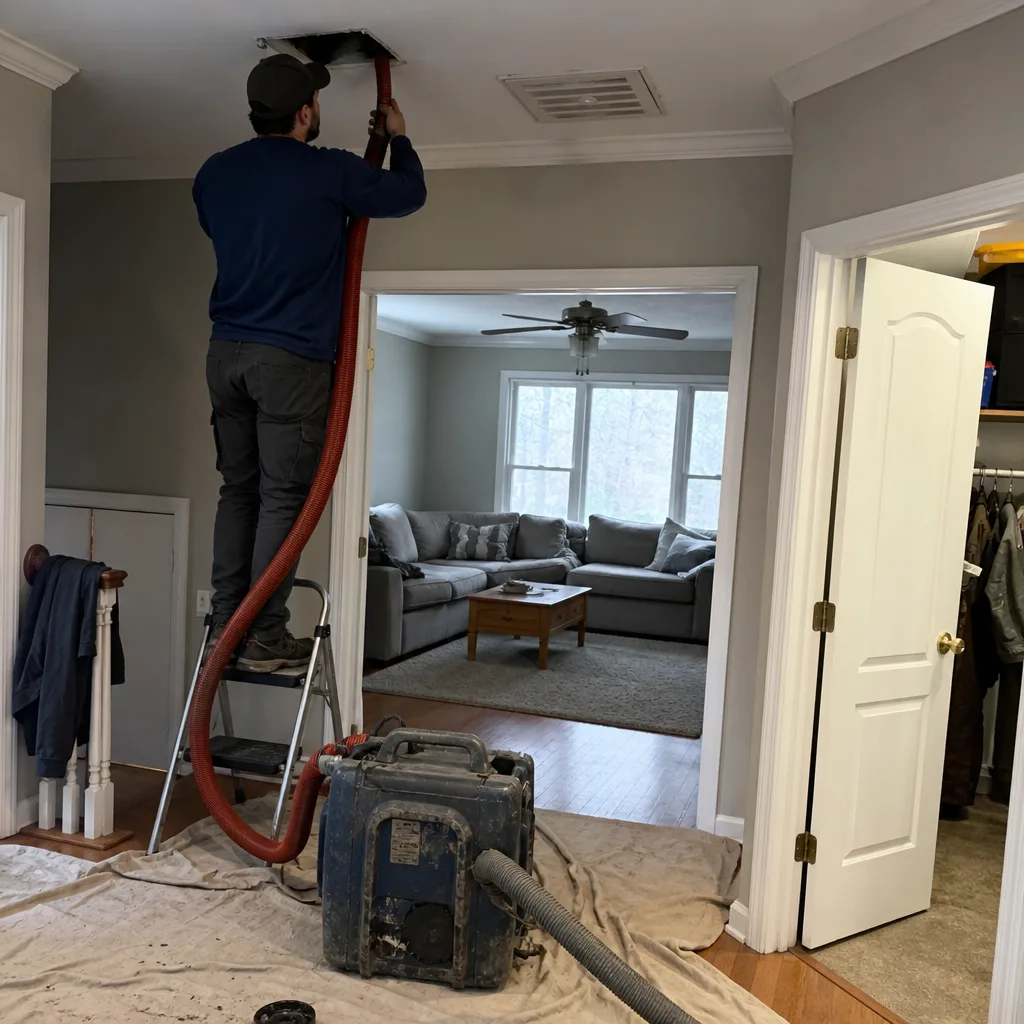 Before
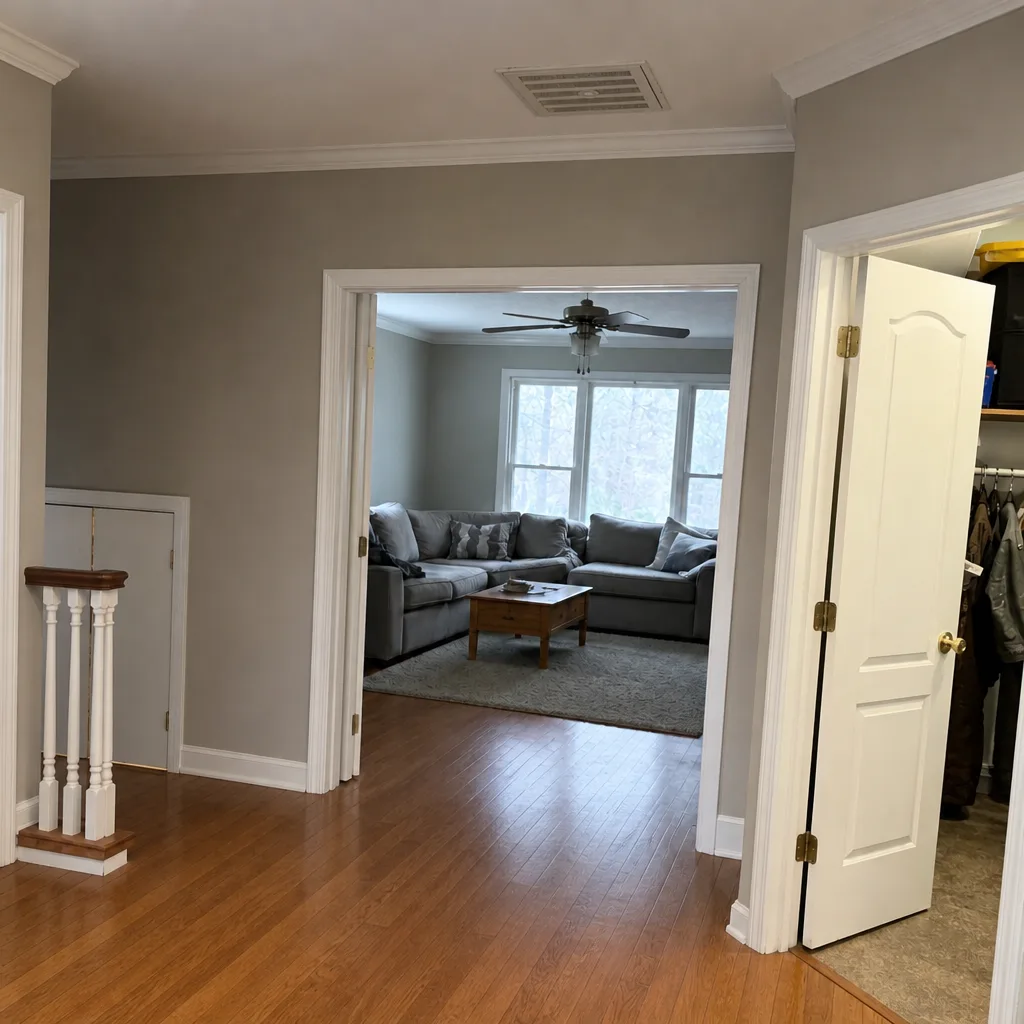 After
When to Call a Professional
Call a professional whenever a DIY attempt risks spreading contamination instead of capturing it. In practice, that means post-renovation, post-water-intrusion, any sign of mold, a new home purchase, flex duct anywhere in the system, and any persistent symptom set that tracks with HVAC operation. All of those are outside the reach of consumer equipment because none of them can be solved without negative air established inside the duct system and HEPA-grade capture of what comes loose. Register and boot cleaning stays a good habit no matter what, and it gives you a clear way to spot the moment when the system crosses into needing professional care. Air Duct Cleaning Knoxville Pros offers free estimates in Knoxville – call (844) 625-6998. We answer 24/7. Fast dispatch from 7am to 7pm, Sunday through Friday. Our technicians have up to 10 years of experience, and the local pro is licensed and insured as their state requires.
Frequently Asked Questions
You can clean registers, boots, and the first foot or so of duct, but a shop vac cannot clean a duct system because it can’t establish negative air pressure in the ducts. Without negative pressure, agitation pushes debris toward the registers instead of toward a collection point. The right answer for a full system is a professional clean with contained negative air, HEPA extraction, and rotary brush agitation.
Professional air duct cleaning in Knoxville is priced per system, not per vent, and the exact price comes from a written estimate after a walkthrough. A flat price per system is the structure that avoids the bait-and-switch problem where a teaser price turns into a larger invoice once the technician is inside. Call (844) 625-6998 for an exact quote – estimates are free.
Cheap quotes usually reflect smaller, cheaper equipment, missing scope, and per-vent pricing that excludes returns, boots, the air handler, or sanitizing. When you get a very low number without a written scope, the low number is for a partial job. Ask what equipment the crew uses (HEPA capture and negative air, or a shop vac and a swab), what scope is included, and whether the price is per system. The written estimate should match the invoice.
Ask for before-and-after photos of your own ducts. That’s the standard we hold our work to, and any professional shop should be able to provide it. A written scope before work, HEPA containment during work, and photographic proof after work together let you verify the job rather than trust a verbal claim. If a company won’t provide photos or a written scope, that’s your answer.
Most homes in Knoxville do well with a professional cleaning every few years, not every year, unless you’ve had a renovation, a water intrusion event, a new-home purchase, or a pet or allergy situation that changes the equation. The maintenance layer (registers, boots, filters, plenum wiping) you can do yourself in between keeps the recontamination rate lower. If you’re uncertain, an inspection with a free estimate gives you a straight answer without a purchase decision.
Yes, and it’s the single most important local consideration. Flex duct has a thin inner liner that tears easily under consumer brush agitation, and once torn, the insulation jacket can enter the airstream. Professional rotary equipment with a properly-sized brush head and controlled feed rate is designed to work inside flex liner without damaging it. A consumer attempt on flex duct is the highest-risk DIY step in this whole guide, and the one we’d steer you away from without hesitation.
The Bottom Line
DIY air duct maintenance is real, and it’s worth doing. Register cleaning, boot vacuuming, plenum wiping, and filter changes cost almost nothing and give you a clear read on how your system is really doing. What DIY cannot do is clean the full duct run, because consumer equipment can’t establish the negative pressure that carries dislodged debris to a HEPA collection point instead of into your living room. In Knoxville’s many homes with flex duct, the risk of a DIY brush attempt is liner damage, and that’s a repair bill nobody needs. Call a professional for post-renovation, post-water-intrusion, mold, new-home, or any flex-duct cleaning. Do the maintenance between. Verify the work with photos. That’s the honest line between the two.
If you’re in Knoxville and want a straight answer on your own system, Air Duct Cleaning Knoxville Pros offers a free estimate with a written scope and flat per-system pricing before any work begins. Call (844) 625-6998. We answer 24/7. Fast dispatch from 7am to 7pm, Sunday through Friday. For a full look at our services, start with Air Duct Cleaning Knoxville Pros.
Written by the team at Air Duct Cleaning Knoxville Pros.