
Emergency Air Duct Cleaning Near Me: What Knoxville Homeowners Should Do First
Calling a duct cleaner before your insurance adjuster has documented a sewage or smoke event in your duct system is one of the most common and costly mistakes Knoxville homeowners make after a home emergency. The right first move isn’t booking a cleaning – it’s shutting down the HVAC system and photographing everything before anyone touches the ductwork. If you’d rather have a qualified technician walk you through it, call (844) 625-6998. We answer 24/7.
What Counts as a Real Duct Emergency in Knoxville?
Most duct problems are urgent but not emergencies. A genuinely contaminated duct system involves contamination that is actively spreading through the home or that poses a health or safety risk the moment the system runs. In Knoxville, we see four scenarios that cross that line:
- Sewage intrusion into ductwork. A sewage backup that reaches the HVAC system spreads bacteria and odor through every supply register in the house. This is a Category 3 water event, and it requires containment before cleaning starts.
- Smoke and fire residue. Even a small kitchen or electrical fire leaves acidic soot inside return and supply ducts. Soot corrodes metal components and keeps releasing odor every time the system cycles.
- Active mold growth with HVAC spread. When visible mold is present near the air handler or inside duct liner, running the system distributes spores to rooms that were previously clean.
- Rodent or pest infiltration. Droppings, nesting material, and urine in ductwork are a genuine hazard. Rodents also chew through flex duct and insulation, so the contamination usually comes with physical damage.
Things like a musty smell, visible dust at the registers, or a recent renovation are worth scheduling – just not emergencies. The distinction matters because it determines whether you shut the system down and start a claim, or simply book a normal appointment.
The Four Scenarios at a Glance
- Category 3 water / sewage: Shut down the system. Do not run it. Document before cleaning.
- Fire or smoke residue: Shut down the system. Photograph before any cleaning. Contact your insurer.
- Active mold spreading through HVAC: Stop running the system in contaminated zones. Get an assessment first.
- Rodent intrusion: Shut down the system, document damage, then plan cleaning and repair together.
In all four cases, the sequence is the same: stop the air, document the damage, then clean. Clean first and you can make the indoor air quality problem worse instead of better.
Why You Shut the HVAC System Down Immediately
Running the HVAC system after a contamination event pushes contaminated air through every duct, register, and room in the home. A single cycle can spread smoke residue, mold spores, or rodent debris from a contained area into bedrooms and living spaces that were not affected. That’s why the first action after a sewage, fire, mold, or pest event is to switch the system off at the thermostat and, where it’s safe to reach, at the breaker.
This is also the step most Knoxville homeowners skip. People understandably want the system running to clear the smell, or to keep the house comfortable while they sort out next steps. In a genuine contamination scenario, comfort takes a back seat to containment.
Shutting the system down does three things:
- It stops contamination from spreading to unaffected rooms.
- It protects the evidence your insurance adjuster needs to see.
- It prevents further damage to HVAC components that contamination can corrode or clog.
Don’t attempt to vacuum or wipe out registers yourself before documentation. Consumer vacuums lack HEPA filtration, and they’ll aerosolize fine particulates back into the room. Real remediation uses equipment like Nikro HEPA vacuums and Abatement Technologies negative-air machines to capture debris instead of redistributing it. That’s a job for a qualified technician, and it starts only after the system is off and the damage is documented.
The Documentation Protocol: Protect Your Insurance Claim First
Before any cleaning begins, document the contamination. This is the single most important step for Knoxville homeowners filing an insurance claim after a sewage, fire, or water event. Once a crew starts cleaning, the physical evidence is gone, and adjusters can deny a claim they can’t verify. Skipping documentation can also void a policy’s coverage requirements even when the damage is genuine.
Here’s the order that protects you:
- Photograph everything first. Registers, duct openings, the air handler, and any visible contamination. Include wide shots and close-ups.
- Note the timeline. When the event happened, when you shut the system down, and what you observed at each stage.
- Get an adjuster or remediation professional on record before cleaning starts. Many policies require documentation before mitigation work begins. Ask your insurer directly what they need in writing.
- Keep air quality readings if they’re taken. If a remediation professional takes readings, keep the report; it’s strong supporting evidence for a claim.
- Save the written estimate. The estimate documents scope of work and helps your adjuster compare it to the claim.
We can’t tell you what your policy covers: that’s between you and your insurer. What we can tell you is that a documented, sequenced job is far easier to support on a claim than a rushed cleaning that erases the evidence.
What Equipment Post-Fire and Post-Flood Duct Remediation Actually Requires
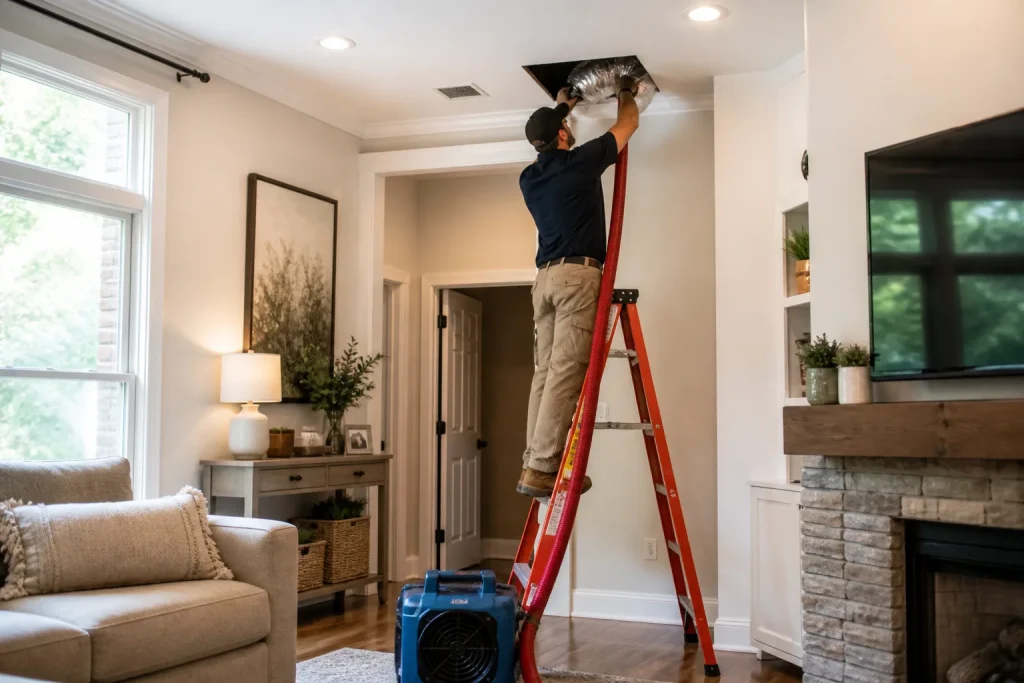
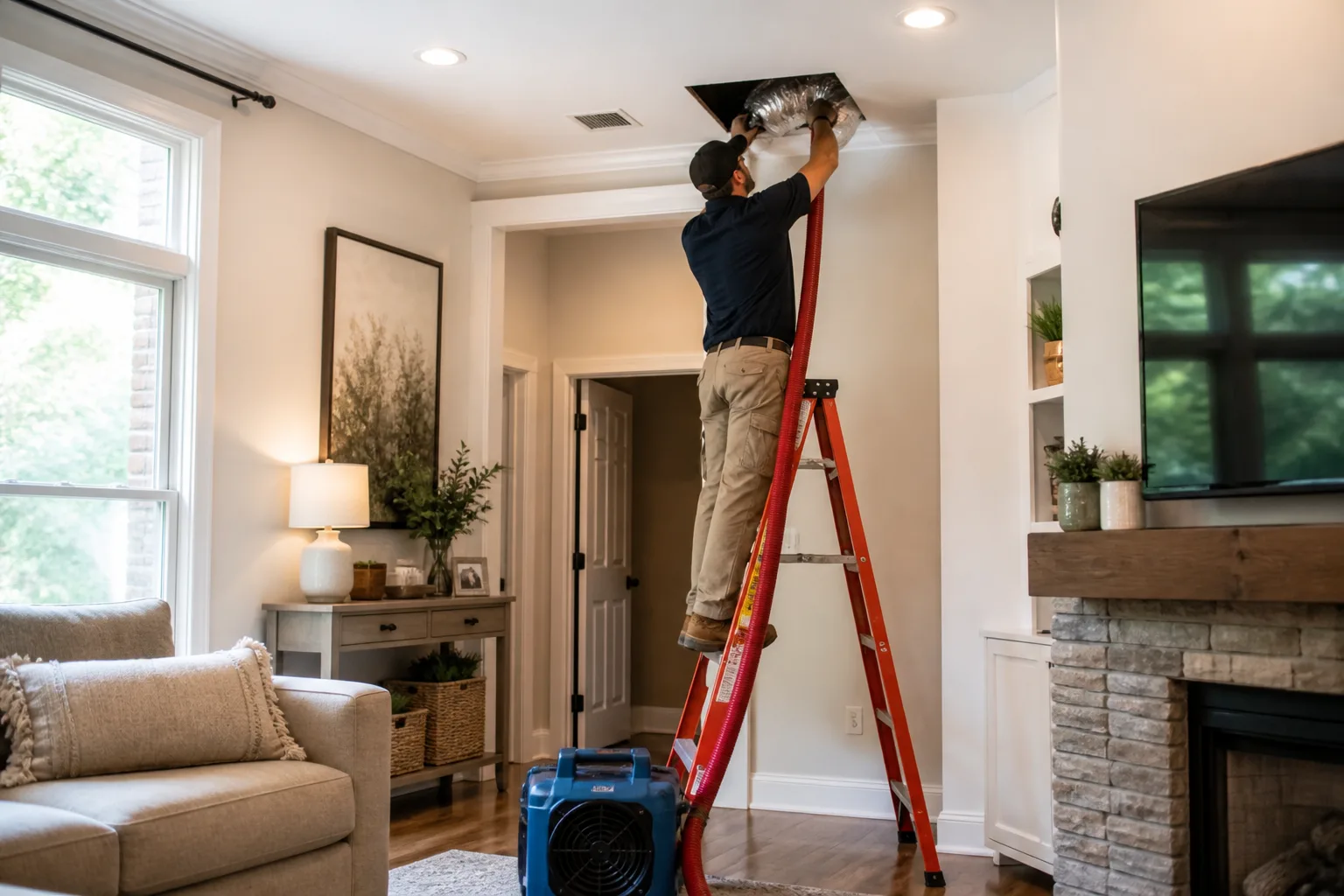
Standard duct cleaning and post-contamination remediation are not the same job. Standard cleaning uses rotary brushing and vacuum extraction to remove accumulated dust. Remediation after fire, sewage, or flood contamination requires HEPA-filtered extraction and negative-air containment on top of that, because the goal is capturing hazardous particulates, not just loosening them.
What a properly equipped remediation job involves:
- HEPA-filtered vacuum extraction to capture fine soot, mold spores, and biological contamination without releasing it back into the home. Nikro systems are built for this.
- Negative-air containment using Abatement Technologies equipment to hold contaminated air in the work zone while debris is dislodged.
- Rotary brushing with a system like Rotobrush to clean duct walls behind the initial contamination layer.
- Post-clean sanitizing to address residual biological contamination after the ducts are physically clean.
- Duct repair and sealing to close the gaps, tears, and joint failures that let contamination in and let cleaned air leak out.
If a company quotes a post-fire or post-flood duct job without mentioning HEPA filtration or containment, that’s a red flag. Standard tools do not meet the standard for contaminated ductwork. For more on our full-scope approach, see our HVAC cleaning page.
How to Vet a Same-Day Emergency Claim
Some of the companies that call fastest after a disaster are the least qualified. Use specific questions to separate qualified responders from opportunistic ones. Ask these before you agree to anything:
- “What equipment will you use?” A qualified answer names HEPA vacuums and negative-air containment. Vague answers or “shop vacuums” mean walk away.
- “Will you document the damage before cleaning?” The answer must be yes. Insist on it.
- “Do you offer duct repair and sealing as well as cleaning?” Post-contamination jobs usually need repair. A company that only cleans leaves you with damaged ductwork.
- “Can I have a written estimate before any work starts?” The price should be set per job by a written estimate, not quoted over the phone or revised on site.
- “Can you walk me through the sequence?” Shutdown, documentation, extraction, sanitizing, repair. That order is the sign of a qualified responder.
When to Call a Pro
Call a professional for any genuine contamination scenario: sewage, smoke, mold, or pests in the ducts. Also call if you’re unsure whether a situation qualifies – a quick conversation gives you a clear sequence to follow. We’re not going to pretend a dusty register is an emergency, and we won’t talk you out of a legitimate one.
Related Services in Knoxville
If your situation turns out to be an urgent-but-not-emergency dust or debris problem, our air duct cleaning page covers the standard process. If your dryer vent is the source of a lint buildup concern, dryer vent cleaning is the right call – it’s a fire-risk measure most duct-only operators skip. And to see everything we handle, start at Air Duct Cleaning Knoxville Pros.
The Bottom Line
If your Knoxville home has been through a sewage backup, a fire, an active mold problem, or a rodent intrusion, the sequence is the same: shut the system down, document the damage, then call a qualified professional. Skipping the shutdown step spreads contamination. Skipping documentation can cost you an insurance claim. Our technicians have up to 10 years of experience, and we use Rotobrush and Nikro systems, Abatement Technologies containment, and full-scope repair and sanitizing – because cleanup after contamination isn’t a job for a shop vacuum and a garden hose.
If you’re in Knoxville and need help, Air Duct Cleaning Knoxville Pros offers free estimates – call (844) 625-6998. We answer 24/7. Fast dispatch from 7am to 7pm, Sunday through Friday.
Frequently Asked Questions
Yes. Sewage that reaches the HVAC system is a Category 3 contamination event and requires immediate shutdown of the system followed by professional remediation. Call a qualified duct remediation professional right away, and document the damage before cleaning starts so your insurance claim stays intact.
Coverage depends on your specific policy and the cause of the contamination. Many policies cover remediation after a covered event like a fire or water backup, but they usually require documentation before work begins. Contact your insurer promptly and ask what they need in writing. Call (844) 625-6998 for a free estimate – we can give you the written scope your adjuster will want to see.
No. Running the system after a contamination event spreads contaminated air into every room and can worsen the indoor air quality problem. Shut the system off at the thermostat first, then contact a professional. For a normal dusty-duct situation, running the system is fine – but for sewage, smoke, mold, or pest contamination, it’s not.
Cost depends on the scope: number of systems, extent of contamination, and whether repair and sealing are needed. We set one flat price per system in a written estimate before any work starts, with no per-vent pricing and before-and-after photos of your own ducts. Call (844) 625-6998 for a free estimate – we’ll walk you through the scope.
Written by the team at Air Duct Cleaning Knoxville Pros.
Need Air Duct Cleaning Help?
Call Air Duct Cleaning Knoxville Pros - the local pro we connect you with is licensed and insured, here with fast help in Knoxville.
(844) 625-6998