
Last updated November 25, 2026
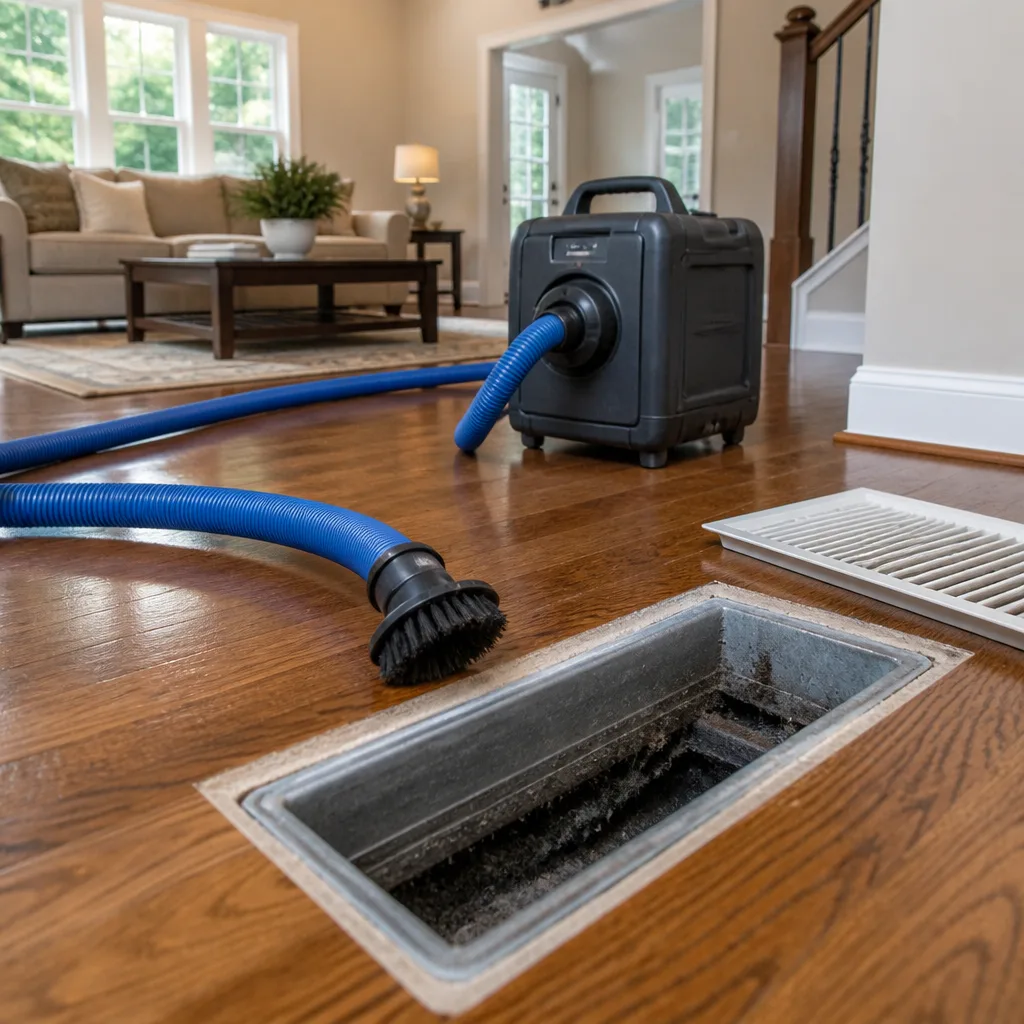 Whole-home duct cleaning
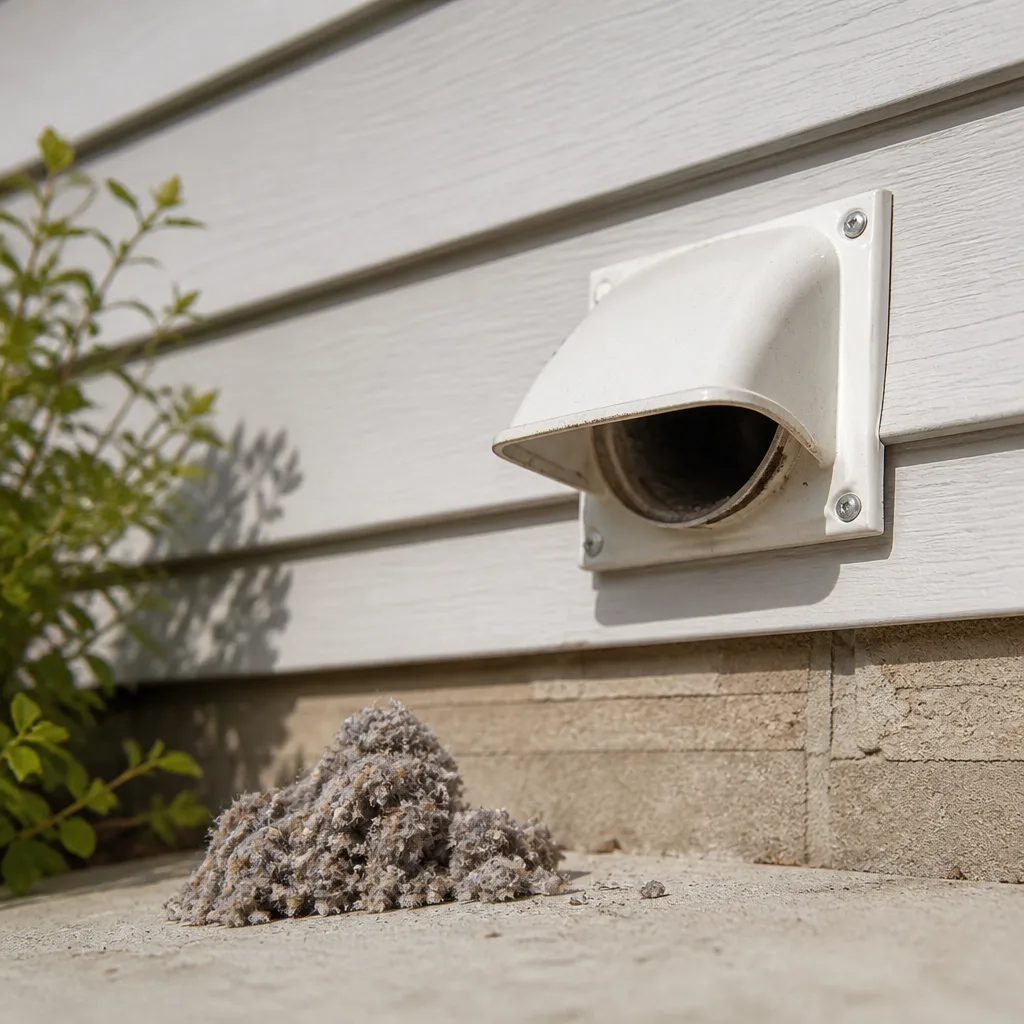 Dryer vent cleaning
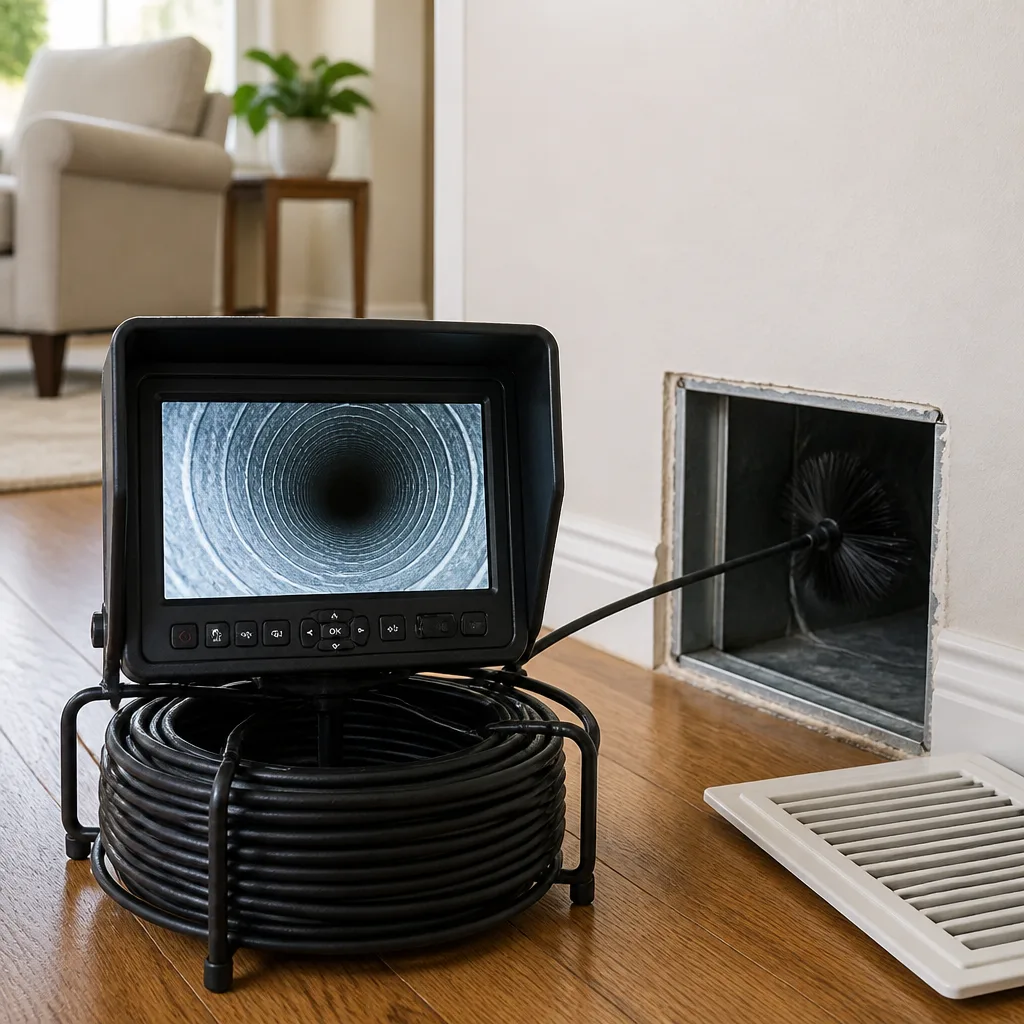 Camera inspection
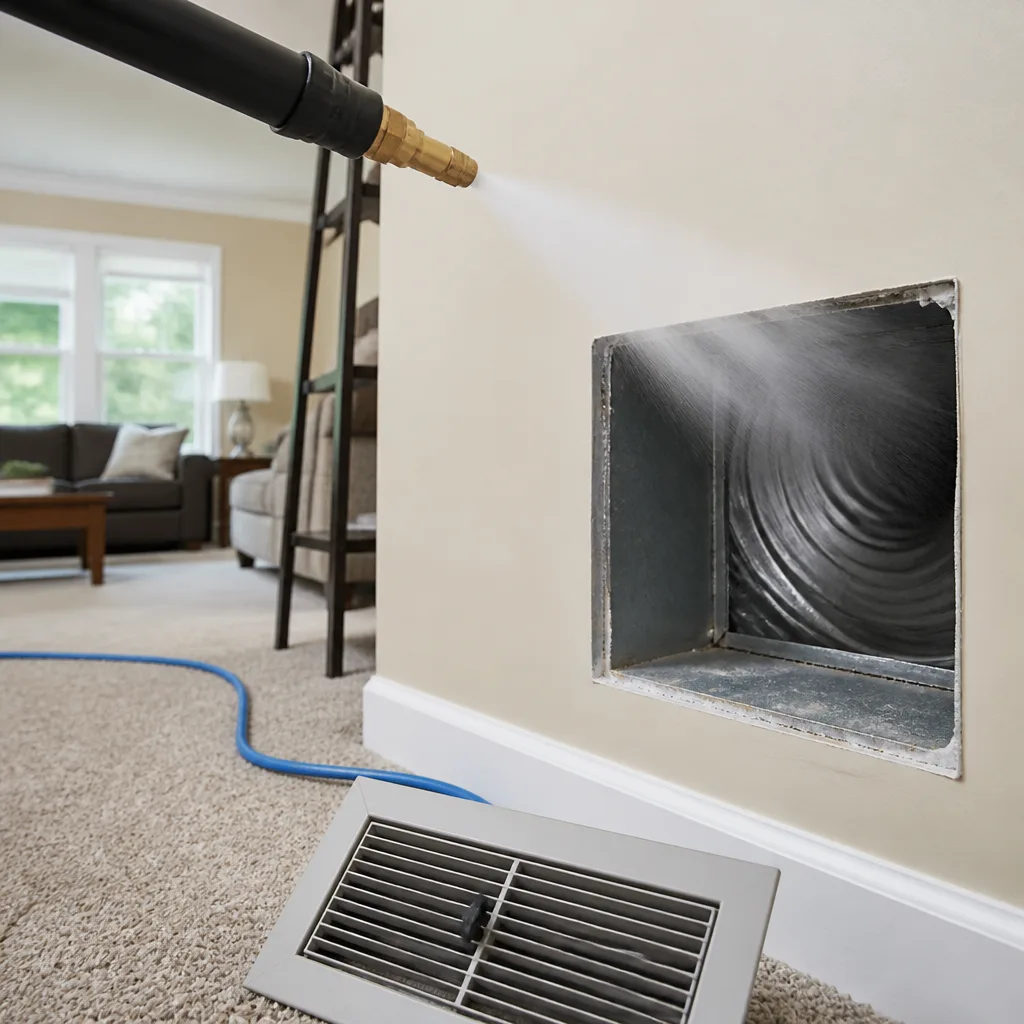 Sanitizing & deodorizing
Whole-system duct and dryer vent check with before-and-after photos - you see exactly what came out of your vents
That "$99 whole-house special" is a bait ad - the real number appears once they are in your hallway, or the "clean" is a shop-vac at the register. We photograph the inside of your ducts before and after instead.
The Complete Guide to Air Duct Cleaning in Knoxville
A shop vac and a hose brush can produce a receipt that looks identical to a job done with a Rotobrush and a HEPA vacuum, and that’s the problem. Most Knoxville homeowners shopping for duct cleaning are comparing prices on services that share a name but almost nothing else. One is surface dusting with a portable vacuum. The other is a mechanical, contained process that establishes negative pressure before anything gets agitated, uses rotary tooling to break debris loose from the duct wall, and verifies the result afterward. This guide walks through what the second kind of job actually involves in East Tennessee’s climate, from access strategy to post-job measurement, and how to tell which one you’re being sold. It’s written from Knoxville for Knoxville, so the parts about humidity, tree debris, and mixed housing stock are specific rather than generic.
Quick Answer
Professional air duct cleaning in Knoxville is an equipment-dependent mechanical service: a crew establishes negative pressure with a HEPA-filtered vacuum, agitates the duct interior with rotary brushing and compressed air, captures dislodged debris in containment equipment, then verifies the result with a visual and pressure-based inspection. A legitimate job typically takes a few hours for a single system and is priced as a whole-system service, not per vent. If a provider can’t tell you what equipment they’ll bring and how they’ll prove the work was done, that’s your signal to keep looking.
Styles & brands we work with
- Whole-home duct cleaning
- Dryer vent cleaning
- Camera inspection
- Sanitizing & deodorizing
Table of Contents
- Why Knoxville’s Climate Makes Duct Cleaning Different
- The Mechanical Sequence of a Professional Job
- What Rotary Tooling Actually Does to Duct Walls
- NADCA Standards and What Knoxville Crews Skip
- How Much Does Air Duct Cleaning Cost in Knoxville?
- How to Read a Post-Job Inspection Report
- The Full Air Pathway: Ducts, HVAC, and Dryer Vents
- How Often You Really Need It Done
Why Knoxville’s Climate Makes Duct Cleaning Different
East Tennessee sits in a humid subtropical band, and that single fact reshapes what collects inside a home’s ductwork. In drier climates the dominant contaminant load is mineral dust and arid grit that stays loose and blows through. Here, moisture is the driver. A Knoxville HVAC system pulls in humid outdoor air through every return cycle, and dust particles that would otherwise stay free-flowing instead clump, adhere, and set against the galvanized steel of the duct wall. That matters because adhered debris is what a handheld brush can’t reliably remove. It smears rather than lifts.
The organic load is different too. A hardwood canopy of oak, hickory, and maple mixed with pine produces a debris profile in the Knoxville area that’s part pollen, part pine resin particulates, and part leaf litter breakdown from gutters, roof valleys, and yard work. Pine pollen in particular is fine and sticky. It rides in on return air and bonds to any surface already carrying a moisture film. Homes near the river corridors and older tree-lined neighborhoods tend to carry a heavier load than new construction on cleared land, though both eventually need the same attention.
The housing stock adds a variable most guides ignore. Knoxville has a deep bench of mid-century ranch homes with original sheet metal trunk lines, plus a wave of renovation-era homes where the HVAC was retrofitted into tight chases and knee walls. Older galvanized ducting develops seams and small penetrations that let supply air leak into a crawlspace or attic. That’s a two-part problem: contaminated ducts and a leaky envelope. Cleaning alone won’t fix the second part. Seal and repair first or alongside, or you’re cleaning a system that keeps re-introducing the same material. We handle air duct cleaning with that in mind, which is why we look at the whole pathway rather than just the runs.
- Humidity effect: Clumped, adhered debris rather than loose dust; resists handheld brushing
- Organic load: Pollen and pine particulates that bond to any moist surface
- Housing variable: Original mid-century sheet metal with seams that leak and retrofit chases that trap debris
- Practical result: Knoxville jobs trend toward more wall adhesion and more leak repair than dry-climate markets
The Mechanical Sequence of a Professional Job
Here’s the part most providers never explain, and the part that separates a real job from a voucher redemption. Order of operations is not a detail. It’s the whole thing. The critical rule: negative air pressure gets established before agitation begins, not after. If you agitate first, you’re just lofting debris into the living space and hoping it settles somewhere convenient. We’ve seen the aftermath when that happens: a fine film of dust on every horizontal surface that takes days to clear.
- Inspect and map. Identify every return, every supply register, the trunk lines, and any accessible duct runs. Note the equipment layout, the register count, and any obvious leaks or disconnected runs before a single tool unloads.
- Establish containment and negative pressure. An Abatement Technologies negative-air machine and a Nikro HEPA vacuum are connected at a central access point or the plenum. This creates a pressure differential that pulls air into the duct system and out through a HEPA filter rather than into the room.
- Seal and protect. Registers get covered or fitted with access ports. Openings that won’t be tooled directly are sealed so both supply and return sides hold the pressure differential once the agitation starts.
- Agitate each run. Rotary brushing and compressed air are fed through each run, working from the trunk outward to the register. Debris is loosened off the wall and carried to the collection point by continuous negative airflow.
- Clean the mechanical components. Blower wheel, evaporator coil surface, and drain pan area are addressed because they’re part of the air pathway. A clean duct ending at a dirty coil is a half-clean system.
- Sanitize if specified. Post-clean sanitizing is offered as a standard option when the condition of the system warrants it, not as an impulse add-on.
- Inspect and hand off. Visual verification before any register goes back on. That’s the moment to ask questions, not after the sign-off.
None of this is fast in the way a coupon ad suggests it is, and that’s the point. The sequence is why HVAC cleaning and duct cleaning belong in the same visit. The blower, coil, and housing are the other half of the air pathway, and once they’re clean the whole system is clean together.
What Rotary Tooling Actually Does to Duct Walls
A brush on the end of a drill and a rotary brush system look related from a distance. They behave entirely differently against adhered debris on a duct wall. The difference is in the rotation, the drive, and the way the tool is fed through a run under load.
A handheld drill brush spins fast and light. Pressed against clumped Knoxville debris, it converts most of its energy into smearing. The bristles skid across the top layer, soften it, and push it into the corner seams where airflow won’t pull it out. It’s roughly equivalent to a broom on wet concrete, which is a useful image for East Tennessee humidity. The surface can look cleaner while the adhered layer just shifts position.
The Rotobrush BioSpin works differently because it’s a rotary brush system fed through a flexible drive shaft with adjustable rotation, matched to duct size. The bristle pattern is designed to contact the full circumference of the duct wall at once. Rotation rate and feed speed can be tuned to the material inside the run. It doesn’t just dust: it abrades the adhered layer off the metal, and the continuous negative pressure behind it carries the debris to the collection machine before any of it settles.
We name the equipment because the tools matter as much as the technician. A rotary brush system doing the mechanical work with a Nikro HEPA vacuum pulling behind it is the same method used in commercial buildings, scaled down for a residential plenum and trunk. It’s also why the results hold up. Cleaned ducts that get surface-brushed come back visibly fouled faster than ducts that were mechanically abraded, and any homeowner who wants to compare their first inspection to a follow-up will see it.
NADCA Standards and What Knoxville Crews Skip
The National Air Duct Cleaners Association publishes ACR 2021, the “Assessment, Cleaning, and Restoration” standard. It’s the working reference for what a compliant job includes: source assessment, negative pressure, agitation, mechanical component cleaning, and verification. It’s a voluntary standard, but it’s the line that separates a documented process from a van with a vacuum in it. When we’re evaluating a Knoxville market where the price spread between providers can be hundreds of dollars, the standard is the honest way to make a comparison.
In our experience, the ACR steps most frequently skipped by low-cost crews are the least visible ones. That’s not a coincidence. Each one adds time and equipment cost that don’t show up on a photo of a smiling technician.
- Establishing negative pressure first. Skipped when the crew reverses the order and agitates before containment, which is faster and worse.
- Cleaning the mechanical components. The blower wheel and coil are often untouched because they’re inside the air handler and not always accessible.
- Verification after cleaning. A final visual inspection and a documented pass. Crews racing through a same-day route tend to skip the documentation entirely.
- Source assessment. A quick “before” look that identifies wet spots, mold, disconnected runs, or pest intrusion. If the assessment never happens, the cleaning may be addressing the wrong material.
- Leak identification. A duct cleaning that doesn’t flag leaking seams leaves the system re-contaminating itself. That’s why repair and sealing get addressed in the same visit with us.
Ask any Knoxville provider which standard they work to and which steps they document. A crew that knows the answer without hesitation is a crew that runs the process. A crew that doesn’t will still take the call.
How Much Does Air Duct Cleaning Cost in Knoxville?
Air duct cleaning in Knoxville is priced per system, not per vent, and a whole-system job typically runs within an honest band rather than a teaser headline number. The final price is set by a written estimate after the crew assesses the system, because run length, register count, access difficulty, and current debris condition all move the number. What you should not see is a coupon price that quietly becomes something else once the technician is on site.
| Service | Typical Estimate Band | What Moves the Price |
|---|---|---|
| Single-system air duct cleaning | Whole-system, priced per job | Register count, trunk length, access points |
| Vent-only cleaning (no mechanical components) | Lower end of band | Fewer access points, no coil or blower work |
| HVAC component cleaning added | Higher band | Blower and coil accessibility |
| Duct repair and sealing | Quoted separately, in same visit | Extent of seam and joint leakage |
| Dryer vent cleaning | Separate line item | Roof or wall termination, run length, lint load |
| Post-clean sanitizing | Optional add | System condition, square footage |
Two things to hold onto here. First, a per-vent price is almost always a red flag. If the number is based on how many registers the provider can count, the job is defined by optics instead of by work. Second, no job gets a final number from a phone call. The written estimate after the on-site assessment is what sets the price, and nothing changes after that without a conversation.
If a quote is dramatically lower than others you’ve gotten in Knoxville, ask what’s included. Often the answer is that negative pressure is being run differently, the mechanical components aren’t being cleaned, and the verification step doesn’t happen. The number isn’t cheaper; it’s smaller because the scope is smaller. That’s why we price the whole system as a system.
How to Read a Post-Job Inspection Report
A post-job report should tell you three things: what was cleaned, what condition it was in, and how the crew verified the result. Most vulnerable point in the whole service is the handoff. If the report is a single line reading “cleaning completed,” it’s not a report. Real documentation shows before-and-after visuals of your own ducts, not stock photos, plus the crew’s findings on the mechanical components.
Two measurements help you read the mechanical outcome, and it’s fine to ask about them directly:
- CFM (cubic feet per minute): the airflow rate through the system at the registers. A restricted system with debris-clogged runs and a fouled blower wheel will show lower CFM than one that’s been cleaned. It’s a directional signal, not a precision diagnostic on its own.
- Static pressure delta: the pressure difference across the air handler between return and supply. Higher static pressure means the system is working harder to move air through a restricted pathway. A meaningful delta change post-cleaning suggests the restriction actually dropped.
Neither number alone proves a clean system. Together with a visual verification and the crew’s notes on leaks and components, they give you a defensible picture. Ask for those three things in one place and the value of the service becomes concrete rather than assumed. Air quality you can verify, not just assume. Before-and-after photos of your own ducts plus the findings note should be standard, not extra.
The Full Air Pathway: Ducts, HVAC, and Dryer Vents
A house’s air pathway isn’t the ducts alone. It’s the return grilles, the return and supply runs, the plenum, the air handler, the blower wheel, the evaporator coil, and, on the exhaust side, the clothes dryer vent. A cleaning that stops at the register face is addressing one segment of a longer system. That’s the frame we work from on every job, and the reason the service lineup at Air Duct Cleaning Knoxville Pros covers the full pathway in one call rather than one piece of it.
Dryer vents deserve their own mention because most duct-only operators skip them. A dryer vent accumulates lint the same way a return duct accumulates dust, and it’s a documented fire risk when lint builds up enough to reduce airflow or come into contact with heat. The National Fire Protection Association treats regular cleaner vent clearing as a fire-prevention measure, and there’s no reason to leave it out of a call that’s already addressing the rest of the exhaust side. When we’re in the house doing dryer vent cleaning, we check the exterior termination and the run length, because a crushed or disconnected vent line is a common find in older Knoxville homes where the dryer was repositioned during a renovation.
On the filtration side, whole-home systems get part of the picture. Familiarity with Honeywell and Aprilaire equipment means we can look at a home’s existing filtration and humidity controls and advise on whether the filter setup is matched to the duct system rather than fighting it. A high-MERV filter on a system with leaking return seams is pulling dirty air through the leaks before it ever reaches the media. Seal first, then filter. The order gets reversed more often than you’d think.
How Often You Really Need It Done
Most Knoxville homes do not have a fixed interval that applies year after year. Duct cleaning is condition-based, not calendar-based. The right schedule depends on what’s in the system and what’s happening in the house. A household with pets, a recent renovation, an allergy sufferer, or a home with visible dust accumulating at registers may need attention in a year or two. A home with a sealed system, a well-maintained filter, and no significant source of debris can go considerably longer. A once-a-year cleaning plan sold to everyone is a sales structure, not a recommendation.
Certain events trigger a cleaning regardless of the last visit. A remodel that involved drywall dust, moving into a home you didn’t build, a pest intrusion into the ductwork, water intrusion into a crawlspace or attic that reached a duct run, or a HVAC replacement all reset the clock. So does any visible mold growth or a musty odor coming from the registers. Any of those situations warrants a professional assessment, not a homeowner vacuum attempt.
The practical recommendation is to know the state of your system. Get a visual inspection every few years, keep the filter changed on schedule, and let the condition of the duct interior drive the decision. That approach is honest about the fact that Knoxville’s humidity does add to the load, and it doesn’t pretend a fixed calendar works equally for a rental duplex and a family home with two dogs.
We should be direct about the safety side too. Air ducts themselves are not dangerous to inspect, but the mechanical components around them are. The blower wheel, the capacitor, and the wiring inside an air handler can cause a serious shock if handled without the system isolated and the power off, and any wet-spot assessment that turns up a leak in a crawlspace needs to be handled with the same care as any other electrical or moisture problem. That’s work for a trained professional, not a homeowner with a shop vac and a weekend. If you’re unsure what you’re looking at, stop and call someone qualified.
Common Mistakes to Avoid
- Buying a coupon price instead of a scope. A headline number that doesn’t state what’s included usually means the mechanical components aren’t being cleaned and negative pressure is applied lazily. Ask for the scope of work in writing before you book.
- Hiring a provider who can’t name their equipment. “Professional equipment” is a marketing line. Rotobrush and Nikro are a specific set of tools with specific capabilities. If a crew can’t tell you what they’ll bring, you have no way to know what you’re buying.
- Cleaning without addressing leaks first. Knoxville’s older galvanized ducting develops seam and joint leaks that re-contaminate a freshly cleaned system. If a provider doesn’t flag leaks, the cleaning cycle just got shorter.
- Skipping the duct open-access inspection at handoff. A register goes back on without a visual check is a red flag in its own right. Ask to see the before-and-after photos of your own ducts while the crew is still on site.
- Assuming a high-MERV filter fixes a dirty system. Filtration helps maintain clean ducts. It doesn’t clean them. It also can’t compensate for a return leak pulling unfiltered air into the system.
- Cleaning the ducts but leaving the blower and coil untouched. The air handler is part of the pathway. A clean duct ending at a dirty coil is a half-clean system, and the CFM reading will confirm it.
- Over-scheduling it. Annual cleaning sold to every home, regardless of condition, is a sales structure. Condition-based cleaning is more honest and often means less frequent work.
See the difference
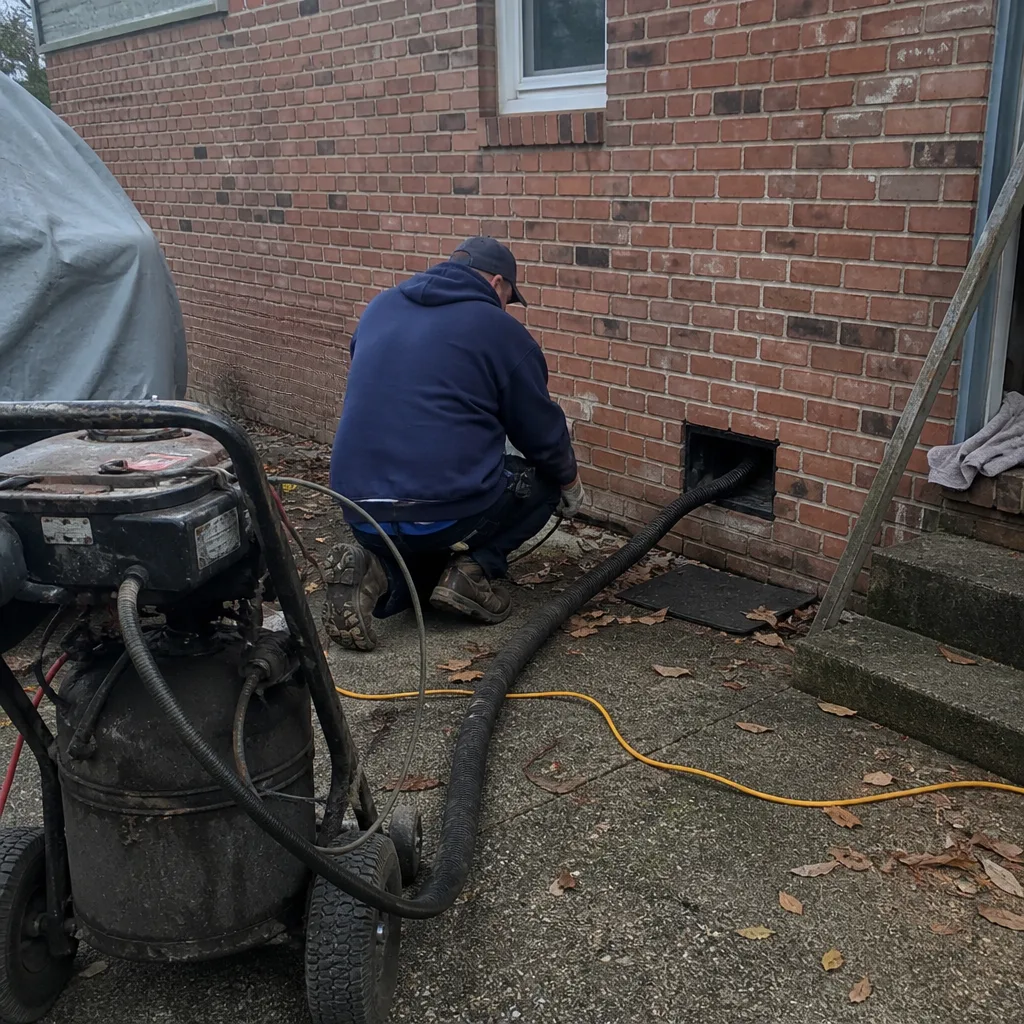 Before
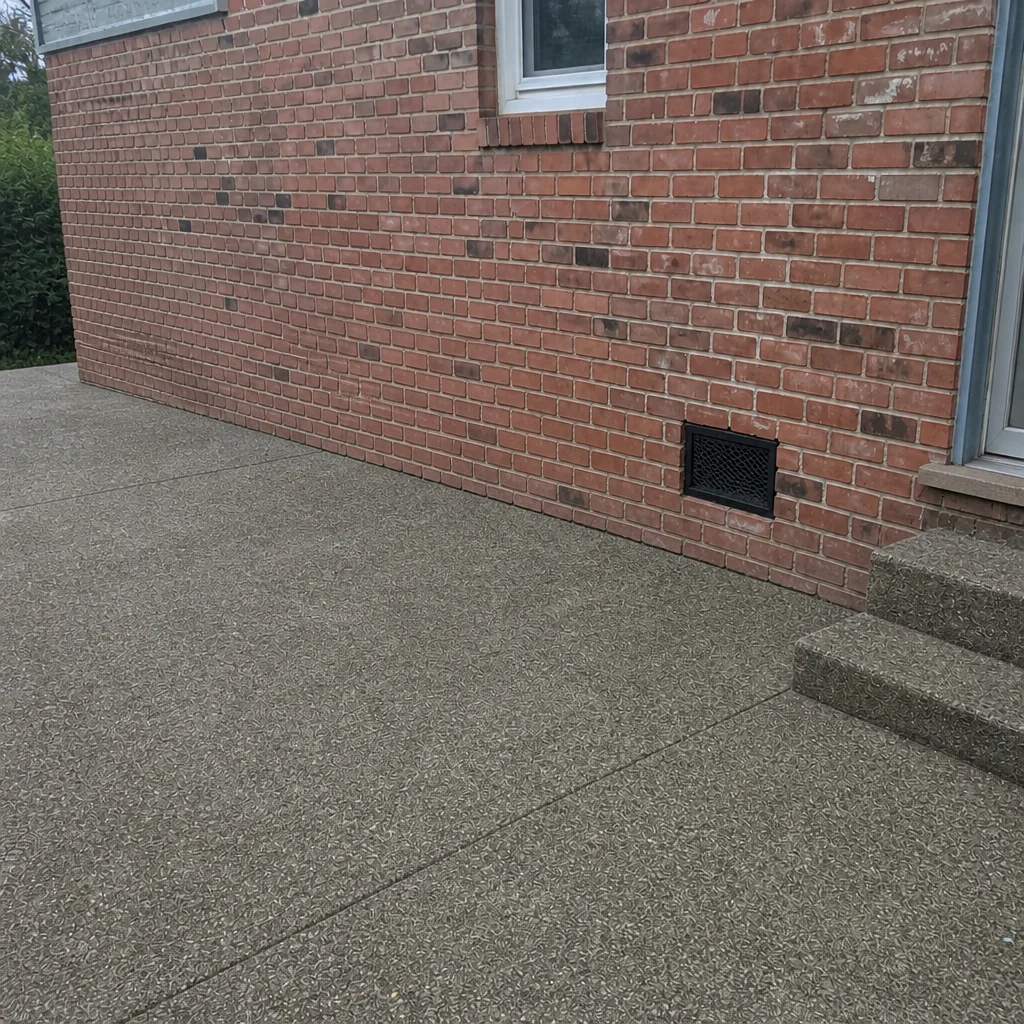 After
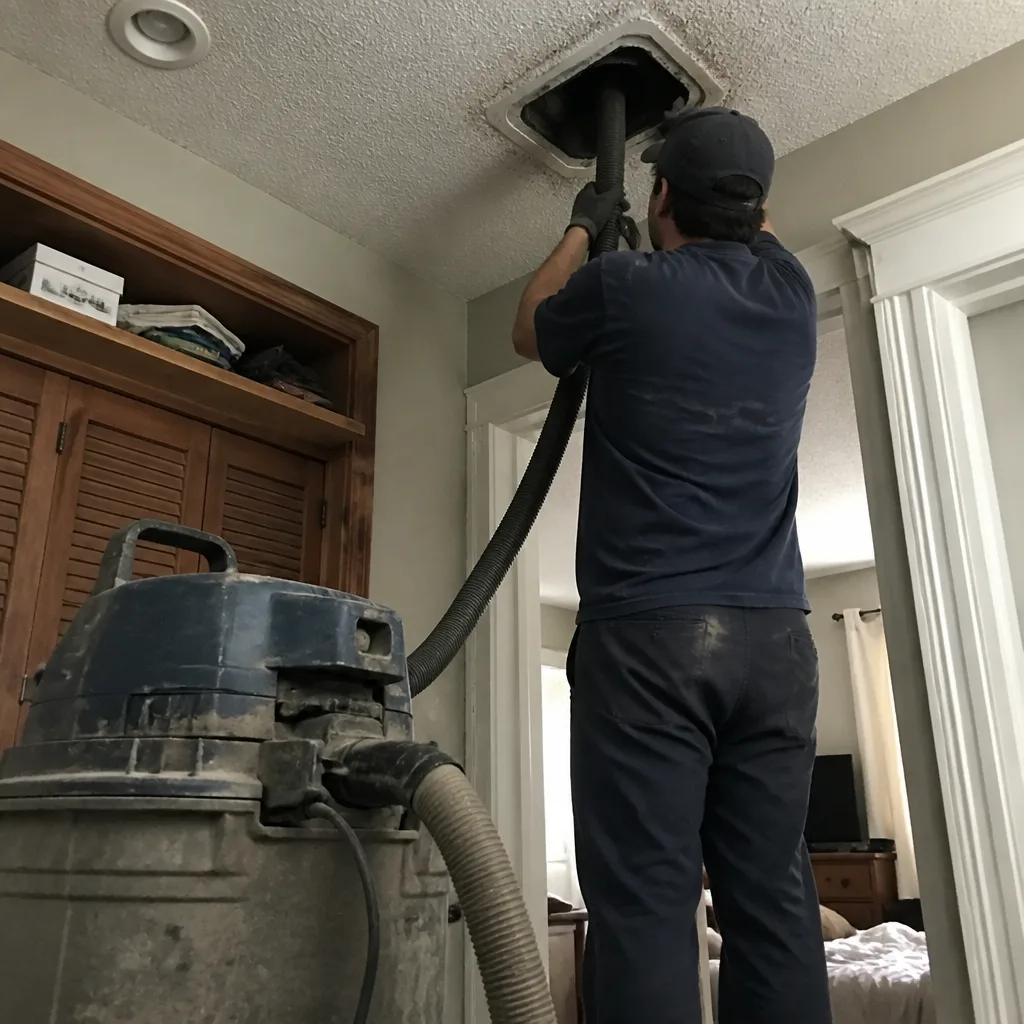 Before
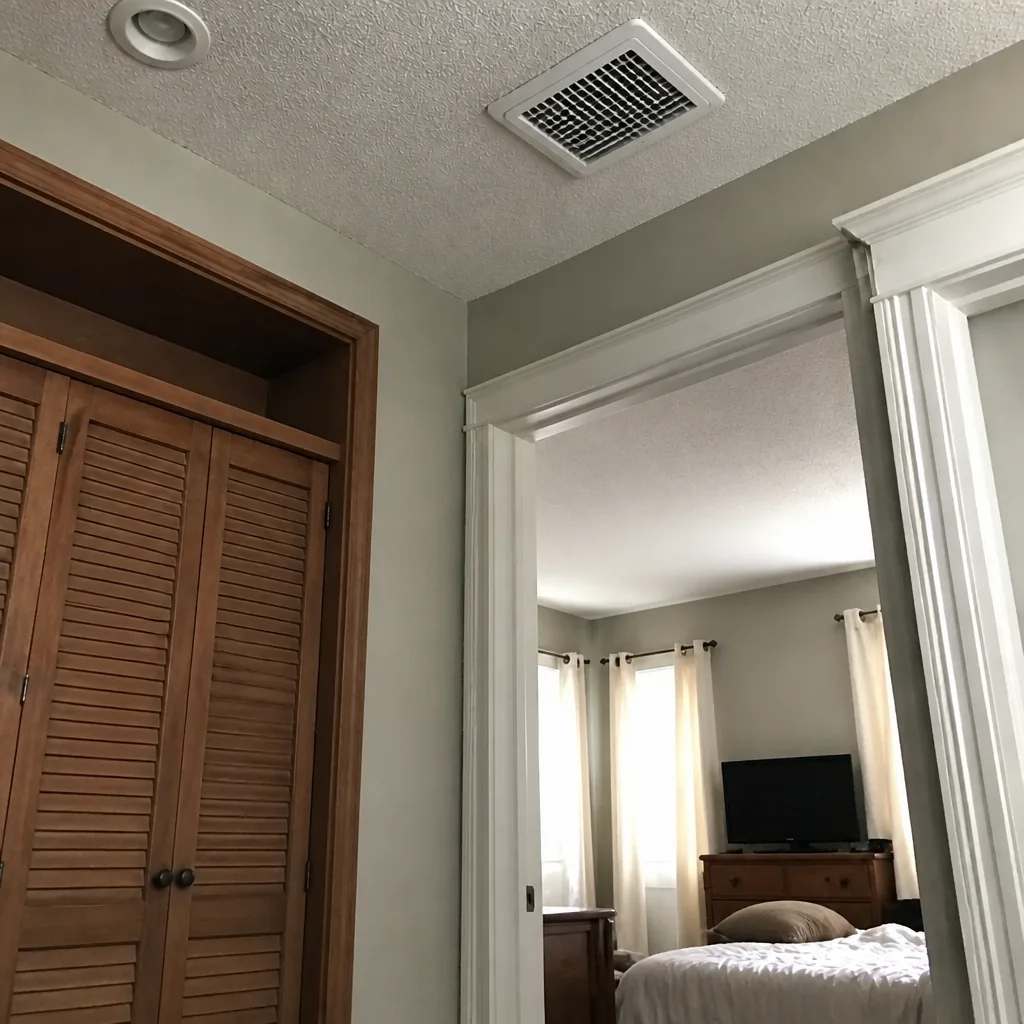 After
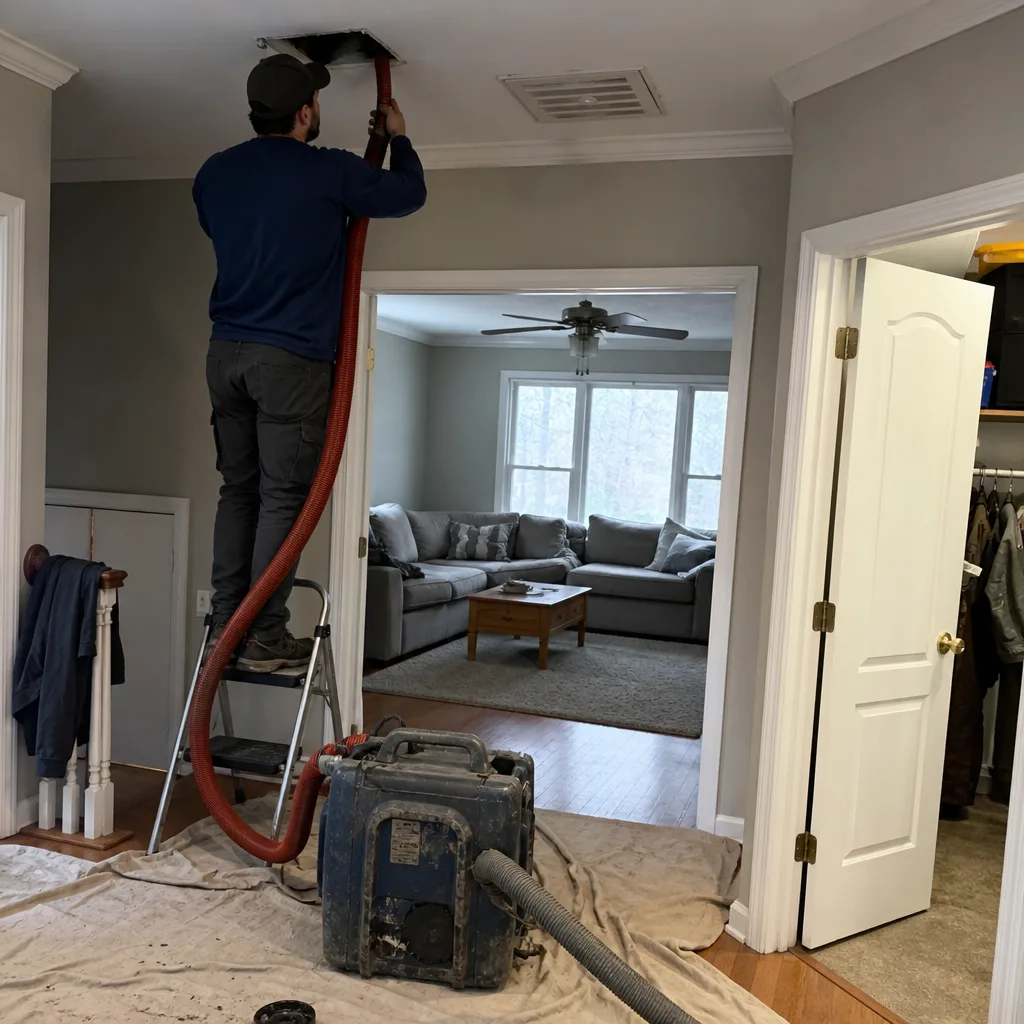 Before
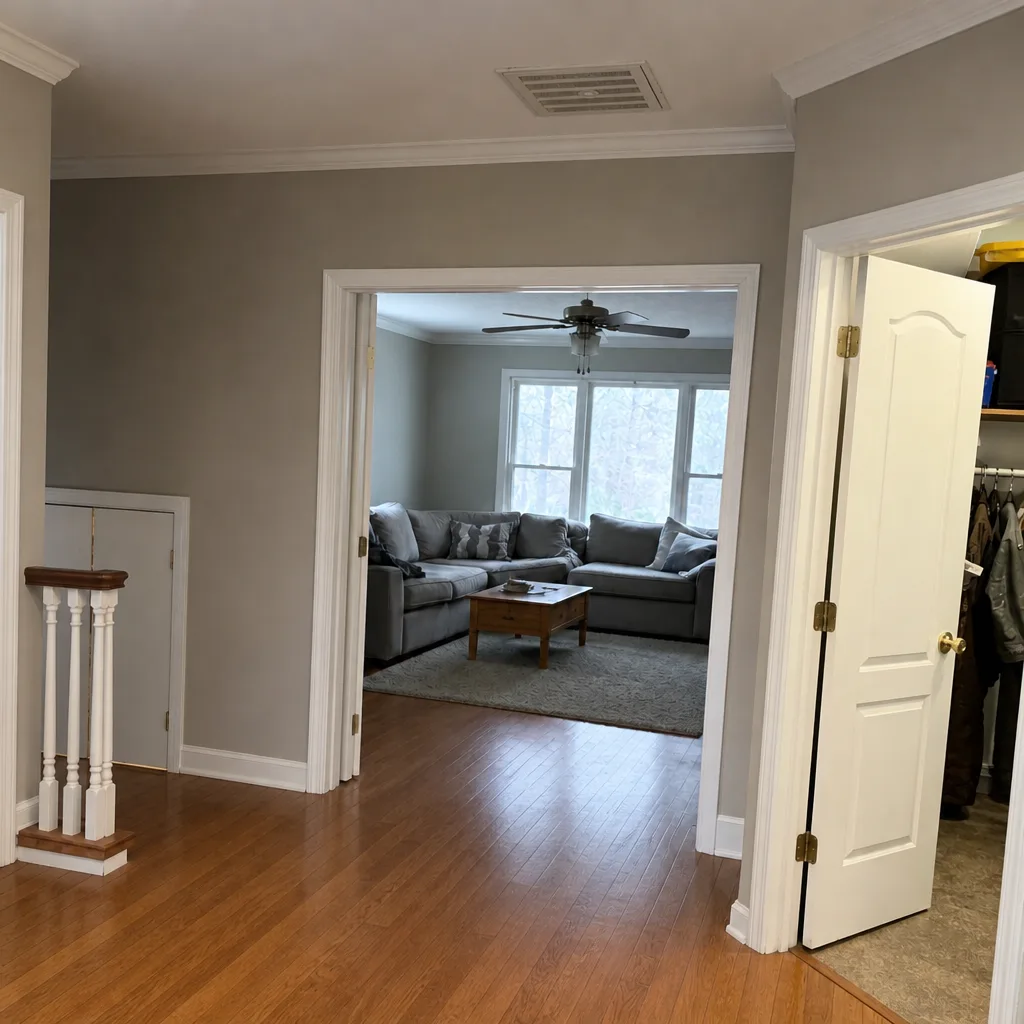 After
When to Call a Professional
Call a professional when you see visible dust buildup on the duct interior at the register boots, when a musty or stale odor comes out of the supply registers when the system starts, or when there’s visible mold growth anywhere in the duct system or on the coil. Call after any renovation that produced appreciable drywall dust, after a pest intrusion into ductwork, or after water intrusion reached a duct run in a crawlspace or attic. Call when a household member has persistent respiratory symptoms that their doctor has tied to indoor air quality, or when you’ve just bought a home and don’t know its service history. And call if your dryer takes noticeably longer to dry a load than it should, which often points to a restricted vent line that’s also a fire risk.
For any of those situations, the first step is a professional on-site assessment. Air Duct Cleaning Knoxville Pros offers free estimates in Knoxville. Call (844) 625-6998. We answer 24/7. Fast dispatch from 7am to 7pm, Sunday through Friday.
Frequently Asked Questions
Air duct cleaning in Knoxville is priced per system by a written estimate after an on-site assessment, not by a headline price or a per-vent count. The final number depends on register count, trunk run length, access points, and current debris condition, plus any repair, sealing, dryer vent, or sanitizing work added to the visit. Call (844) 625-6998 for an exact quote; estimates are free.
Cheaper quotes usually cover a smaller scope, not a better deal. The common shortcuts are skipping negative pressure setup before agitation, leaving the blower wheel and coil untouched, and omitting the post-job verification and documentation. A crew doing all of that in a few hours on a low price is almost certainly not doing all of it. Call (844) 625-6998 for an exact quote; estimates are free.
Before-and-after photos of your own ducts, taken by the crew on site, plus a short written report that notes what was found and how it was verified. Ask for the CFM reading and the static pressure delta from before and after. Those three items together make the work visible. A single line reading “cleaning completed” is not documentation. Call (844) 625-6998 for an exact quote; estimates are free.
Condition-based, not calendar-based. Pet owners, allergy sufferers, and homes with recent renovations often need it in a year or two. Homes with a sealed system and well-maintained filters can go considerably longer. The right move is a visual inspection every few years and a cleaning decision based on what the inspection finds, not a fixed annual plan. Call (844) 625-6998 for an exact quote; estimates are free.
It changes what’s inside the ducts, not just how much. Sustained humidity causes dust, pollen, and organic particulate to clump and adhere to duct walls instead of flowing through as loose debris. Adhered material is what a handheld brush smears rather than lifts, so the mechanical removal step matters more here than in dry-climate markets. Call (844) 625-6998 for an exact quote; estimates are free.
Yes, if it hasn’t been cleaned within the past year or two. A dryer vent is part of the same exhaust pathway, and lint buildup is a documented fire risk the NFPA treats as preventable through regular vent clearing. It also restores drying performance. Combining it with the duct visit means one call instead of two. Call (844) 625-6998 for an exact quote; estimates are free.
Yes. Duct repair and sealing can be identified and addressed in the same visit. This matters in Knoxville because older galvanized ducting in mid-century homes often develops seam leaks that let supply air escape into a crawlspace or attic and pull unfiltered air back into the system. Cleaning without addressing those leaks shortens how long the cleaning lasts. Call (844) 625-6998 for an exact quote; estimates are free.
The Bottom Line
Air duct cleaning is mechanical work, not a commodity, and the difference shows up in the tools and the sequence. Negative pressure gets established before agitation. Rotary brushing abrades adhered debris off the duct wall rather than smearing it. The blower and coil get cleaned because they’re part of the pathway. And the result gets verified with before-and-after photos plus CFM and static pressure readings, not a one-line receipt. In Knoxville, the humid climate, organic load, and older housing stock all push the same direction: the tools and the order of operations are the entire value. If a provider can’t name the equipment and describe the sequence, keep looking.
Air Duct Cleaning Knoxville Pros brings Rotobrush and Nikro HEPA equipment plus Abatement Technologies containment to every job, and our technicians have up to 10 years of experience. One flat price per system, agreed before work starts. Before-and-after photos of your own ducts. If you’re ready to know the actual condition of your system, call (844) 625-6998. We answer 24/7. Fast dispatch from 7am to 7pm, Sunday through Friday. Closed Saturday.
Written by the team at Air Duct Cleaning Knoxville Pros.