
Last updated November 25, 2026
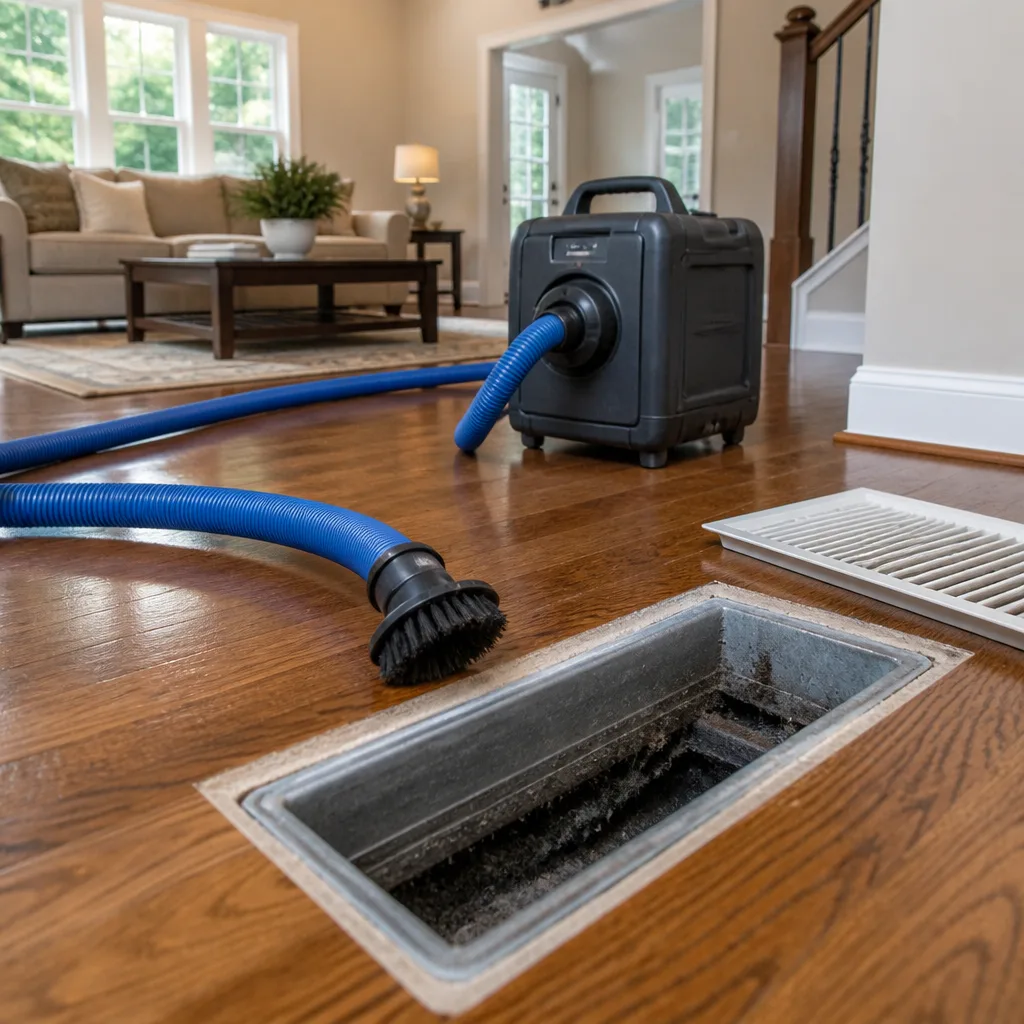 Whole-home duct cleaning
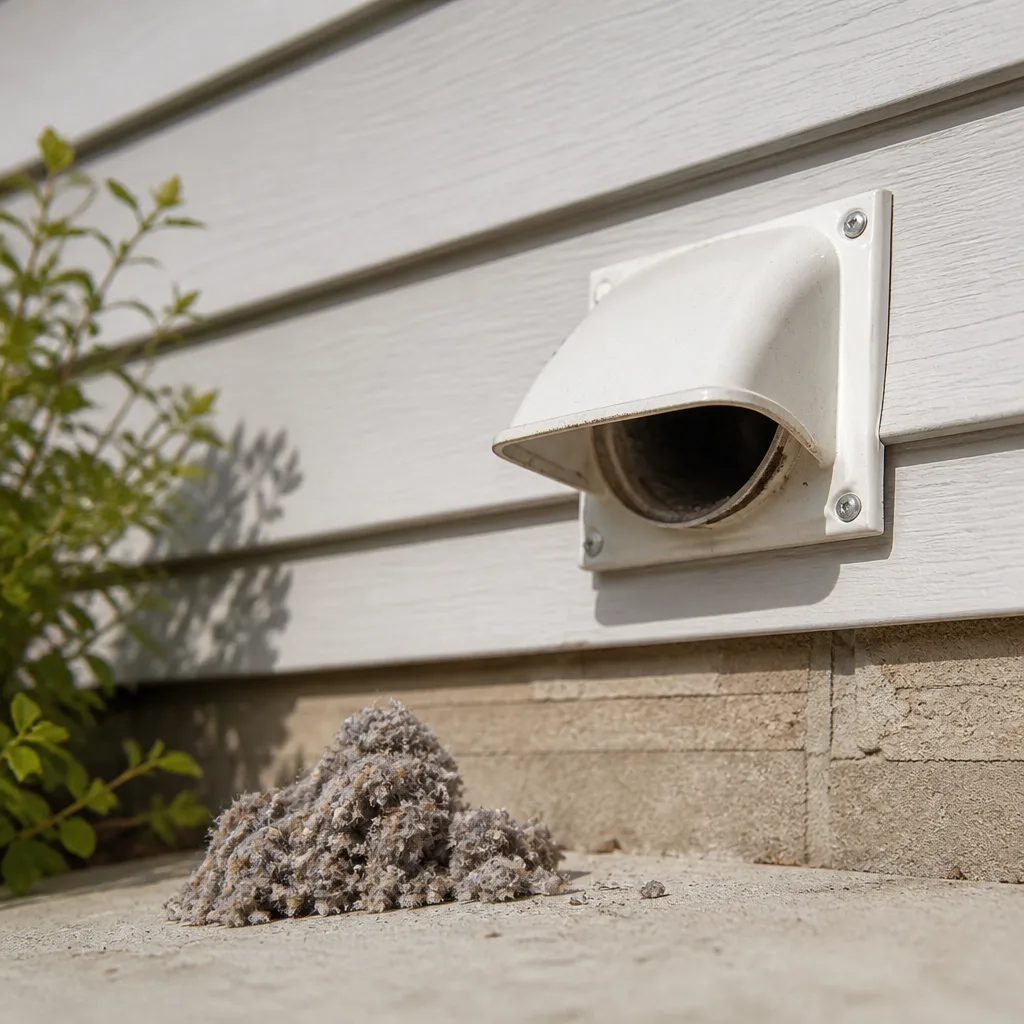 Dryer vent cleaning
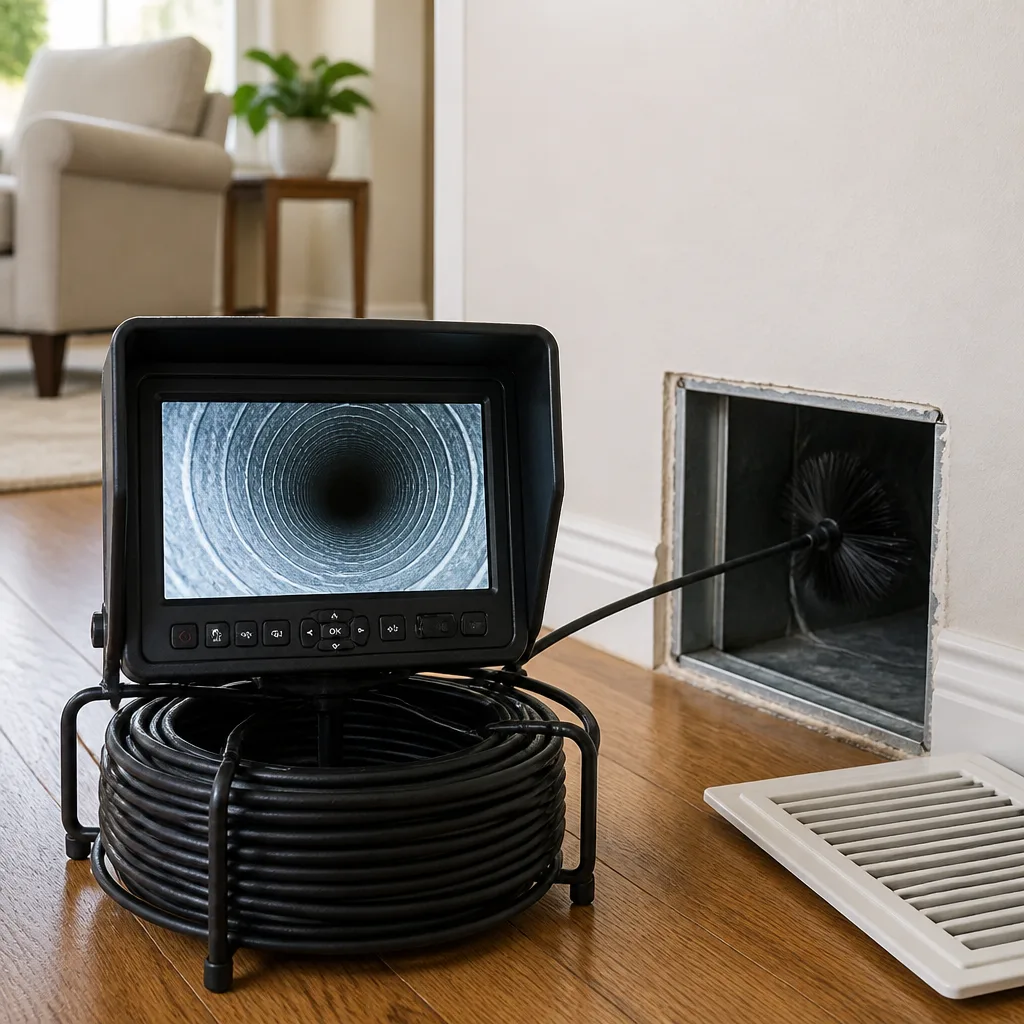 Camera inspection
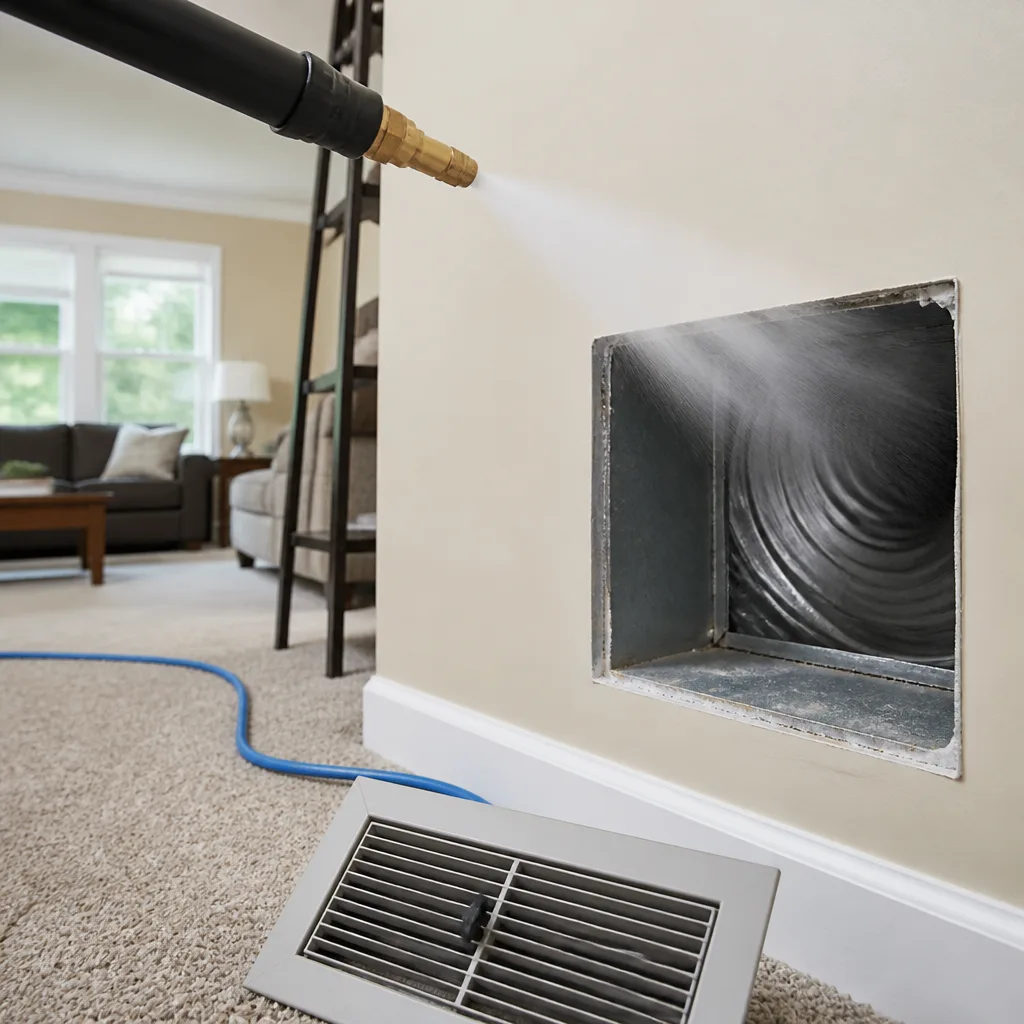 Sanitizing & deodorizing
Whole-system duct and dryer vent check with before-and-after photos - you see exactly what came out of your vents
That "$99 whole-house special" is a bait ad - the real number appears once they are in your hallway, or the "clean" is a shop-vac at the register. We photograph the inside of your ducts before and after instead.
Air Duct Cleaning Maintenance Schedule: What to Do and When
The advice you’ll find almost everywhere says to clean your ducts every three to five years. That number gets repeated like a rule of law, but it started life as a research caveat, not a maintenance schedule. The original EPA guidance on air duct cleaning was written to answer a specific question about whether cleaning helps, and it tacked a rough interval onto the answer to keep people from treating it as an annual chore. What it was never meant to be is a clipboard your HVAC system fills out. In Knoxville, where cooling season runs long and the same system pushes conditioned air for more hours each year than it would in a colder climate, that generic interval can be genuinely wrong. Here’s how to build a schedule that actually fits your home.
Quick Answer
Most homes in Knoxville need a professional duct cleaning every two to five years, and the right number for your house depends on runtime hours, pets, occupants, renovations, and filter grade rather than a fixed calendar. Systems in humid, high-cooling-hour homes with pets or young children tend toward the shorter end; low-occupancy homes with good filtration and sealed ducts can stretch toward the long end. After any major renovation, flooding, or pest intrusion, clean regardless of where you are on the schedule.
Styles & brands we work with
- Whole-home duct cleaning
- Dryer vent cleaning
- Camera inspection
- Sanitizing & deodorizing
Table of Contents
- Why Runtime Hours Matter More Than the Calendar in Knoxville
- The Four Variables That Actually Drive Duct Fouling
- How Your Filter’s MERV Rating Changes the Schedule
- Post-Event Triggers That Override the Calendar
- What a Technician Should Document at Every Cleaning
- Maintenance Tasks Homeowners Can Do Between Cleanings
- Building Your Decision-Based Schedule
- Common Mistakes to Avoid
- When to Call a Professional
Why Runtime Hours Matter More Than the Calendar in Knoxville
A duct system doesn’t collect debris because a certain number of months have gone by. It collects debris because air has moved through it. A system that runs 1,800 hours a year will foul at a very different rate than one that runs 900 hours, even if the calendar says the same thing. In Knoxville, the long cooling season pushes most central systems well into the higher range. June through September alone can account for more blower hours than a full year of a northern climate’s temperate months, and that’s before you count shoulder-season cooling in May and early October.
There’s also the humidity piece. East Tennessee summers are humid, and a system pulling that humid air through cold evaporator coils produces condensate. When that condensate meets dust and biological material on the coil and nearby duct surfaces, it creates a slightly sticky film that holds onto debris instead of letting it settle out. That’s not a scare tactic; it’s just how a wet surface behaves compared with a dry one. Homes here tend to accumulate material in the return trunk and near the coil faster than the raw dust count would suggest.
What does this mean practically? Your schedule should be measured in total blower hours, not years. If you know your system runs a fan setting (not auto), your hourly total is even higher because the blower keeps moving air whether or not the compressor is engaged. That’s not automatically bad; constant circulation can help filtration. But it does mean the ducts see more air and more upstream dust.
- Long cooling season: more annual runtime in Knoxville than in cooler climates, which compresses the effective cleaning interval.
- Humid summers: wet coil surfaces and nearby duct walls hold onto debris longer.
- Fan-on settings: constant circulation adds more air movement and more opportunity for debris to deposit.
- Older, leaky ductwork: gaps pull attic and crawlspace air into the system, loading filters and ducts faster.
None of this means you need to be cleaning every year. It means you should stop thinking about “three to five years” and start thinking about the actual load on your system. That load is what the rest of this guide helps you estimate.
The Four Variables That Actually Drive Duct Fouling
In our experience, four factors explain most of the variation in how quickly a duct system loads up. Weigh them together and you get a defensible interval for your home. Weigh only one of them and you get the generic advice everyone else gives.
1. Occupancy
Every person in a home sheds skin cells, hair, and lint, and every person adds to the particulate load the HVAC system has to filter. A family of five with kids in and out of the yard all summer pushes more debris into the return air than a retired couple living in the same square footage. More occupants means more shed material and more hours the system runs to keep the house comfortable.
2. Pet Load
Pets are the single fastest accelerator most homeowners underestimate. A dog or cat adds hair and dander to the air in volumes that a pleated filter captures some of but not all. Multi-pet homes in Knoxville with long coat seasons tend to see duct debris accumulate two to three times faster than pet-free homes of the same size. If you have more than one pet that sheds, treat the shorter end of the interval as your baseline.
3. Renovation and Construction Activity
Any interior work that generates dust – drywall, sanding, flooring removal, insulation replacement – will get pulled into the return system while the equipment runs. Even well-taped-off jobs leak. If you’ve had work done in the last two years, that’s a fouling event on top of your normal load.
4. System Runtime
We covered this above, but the practical point is that runtime hours are your most reliable single number. Most smart thermostats and newer system controllers can report blower hours. If yours can, use that instead of a guess.
Putting the Variables Together
Here’s a rough decision grid. Treat it as a starting point, not a prescription.
- Shorter interval (2 to 3 years): Two or more occupants including children, one or more shedding pets, humid-run system, MERV 8 or under filtration, recent renovation or an older leaky duct system.
- Middle interval (3 to 4 years): Two to three occupants, no pets or one low-shedding pet, MERV 10 to 13 filter, sealed ducts, no recent renovation.
- Longer interval (4 to 5 years): One or two occupants, no pets, high-MERV whole-home filtration, well-sealed ducts, verified clean baseline at the last cleaning.
If your setup lands across multiple columns, weight toward the shorter one. Missing the schedule later is more expensive than cleaning a year early. For a full picture of what a professional cleaning actually involves, see our air duct cleaning page.
How Your Filter’s MERV Rating Changes the Schedule
Filter grade changes both how quickly your ducts foul and how often the filter itself needs attention. It’s a two-variable problem most advice ignores.
A MERV 8 pleated filter catches larger dust, hair, and pollen. It protects the equipment adequately and doesn’t restrict airflow much. But it also lets a substantial fraction of fine particulate past it, and that fine particulate is what settles into duct surfaces downstream. Homes running MERV 8 tend to need their ducts cleaned more frequently than homes running higher grades, all else equal.
A MERV 11 to 13 filter catches much more of that fine particulate. Duct surfaces stay cleaner longer, which stretches the cleaning interval. The trade-off is that the filter itself loads up faster. If you jump from MERV 8 to MERV 13, don’t carry the same filter-change cadence with you. Check it more often, not less. A filter that’s visibly gray after a month means the system is working hard to move air.
There’s a limit worth understanding. High-MERV filtration is good up to the point where the pressure drop across the filter starts to strain your blower. Some older systems don’t have the static pressure headroom for a MERV 13 in a standard filter slot. This is why the filter question and the duct question belong together. If you’re running a whole-home filtration cabinet – Honeywell and Aprilaire both make well-known systems – the manufacturer’s MERV ceiling for that cabinet is the number that matters, not the biggest number you can buy.
One more interaction: a filter bypass gap around the frame lets unfiltered air flow past a high-MERV filter, which defeats the purpose. If your ducts keep getting dirty despite a good filter, check the seal at the filter rack before blaming the ducts.
Post-Event Triggers That Override the Calendar
You can have a perfectly good schedule and still need to clean out of order. These events reset the clock. Clean whenever one of them happens, then restart your interval from that date.
- Renovation dust. Any interior demolition or construction that ran while the HVAC was active pulls debris into the return system. Even with plastic sheeting and tape, fine drywall dust makes it in. Schedule a cleaning once the job is done and the dust has settled, and consider running the system on fan-only briefly with the filter in place before the cleaning to move loose material out of the air.
- Flooding or water intrusion. Water that reaches ductwork in a crawlspace or basement creates a moisture environment that’s completely different from normal dust fouling. Cleaning after water damage isn’t just cosmetic; it’s about drying and verifying the duct run isn’t holding moisture. Sanitizing after a verified dry-out is a standard step for this kind of cleaning.
- Pest intrusion. Rodents, squirrels, and insects use duct runs as highways. Droppings, nesting material, and dead specimens need to be physically removed, and surfaces then cleaned and sanitized. This is a case where the cleaning needs to be verified visually, so make sure before-and-after photos are documented.
- HVAC equipment replacement. When you replace a furnace, air handler, or coil, the contractor usually has to open the plenum and access the ducts. That’s the right moment to clean the entire system so the new equipment starts fresh. Installing new equipment without cleaning the ducts feeding it means the new blower handles old debris.
- Moving into a new home. You don’t know the previous occupants’ habits, whether they had pets, or what was done in the house. A baseline cleaning gives you a clean starting point and documented condition you can schedule from.
- Extended vacancy followed by re-occupancy. Vacant homes accumulate dust and often develop pest or moisture issues. Clean before moving in, not after.
For dryer vent-specific triggers – lint buildup, longer-than-usual dry times, a vent flap that doesn’t open fully – those are separate from your HVAC duct schedule. dryer vent cleaning is a fire-risk measure and deserves its own cadence. Even a well-maintained HVAC system benefits from annual dryer vent inspection.
What a Technician Should Document at Every Cleaning
Here’s the overlooked part of scheduling: the visit itself should produce the data you need to set the next interval, not a guess. If a cleaning company can’t or won’t document what they found, you’re flying blind on the next schedule.
Ask for the following. A reputable operator will provide it without being asked twice.
- Before-and-after photos of each duct run. Not one hero shot of the cleanest pipe. Photos of the registers, the return trunk, and the coil area before and after. This is how you verify the work was actually done.
- Coil condition notes. Clean or fouled, wet or dry, any visible damage. The coil area photo tells you whether a surface sanitizing step is worth doing.
- Static pressure readings. A simple before-and-after static pressure reading across the filter and the coil shows how much the system was being restricted and whether the cleaning improved airflow. This is a real number a technician can capture on-site.
- Return-air grille condition. How much lint and debris was sitting on the face of the returns, and at the return trunk, is one of the fastest proxies for how hard the system was loading. Note it.
- Any identified duct leakage or disconnection. Gaps and disconnected runs are likely to be the biggest reason your ducts got dirty in the first place. If your cleaning company only cleans and doesn’t repair, you’re kicking the can. We handle duct repair and sealing in-house so this gets fixed while we’re in.
- Recommended next interval and reasoning. The technician who saw the system should leave you with a concrete recommendation and the factors behind it.
If you want to understand what equipment produces credible documentation, that’s the difference between a proper job and a pass with a shop vac. The equipment matters as much as the technician on the day. Rotobrush rotary brushing through each run and Nikro HEPA extraction back at the truck, with Abatement Technologies negative-air containment keeping dislodged debris from spreading through the house while the work is happening, is the same method used in commercial and remediation settings.
We put the same rigor into HVAC cleaning – coil, blower, and drain pan – because a duct cleaning that leaves a dirty coil isn’t really a clean system.
Maintenance Tasks Homeowners Can Do Between Cleanings
You don’t need a technician on site to keep your system in better shape between visits. A handful of simple habits blunt the rate of fouling and give you early warning when the schedule needs to move up.
Register vacuuming and grille checks
Vacuum the return-air grilles with a brush attachment every few months; they collect visible lint on the face of the grille long before the ducts downstream are loaded. Do the same with supply registers. If a supply register shows visible dark streaking inside the vanes, note it. That’s early dust deposition and a signal that the load is climbing.
Filter checks on a schedule you actually keep
Check your filter monthly, not quarterly. A filter that’s gray and matted after one month is working hard; replace it. A filter that’s still soft and light-colored after three months is doing its job. Let the filter tell you its replacement interval, not the calendar, and adjust your duct cleaning interval based on whether you’re on a MERV 8 or higher filter grade.
Dryer vent visual inspection
Every few months, pull the dryer out and look at the duct run where it connects to the dryer. A lint filter screen only catches most of the lint; the rest moves into the vent run. If you see heavy lint accumulation inside the flexible section, or if clothes are taking longer to dry than they used to, schedule a dryer vent cleaning. Knoxville homeowners with longer vent runs – common in homes where the dryer is on an interior wall rather than an exterior one – should check more often.
Watch the static pressure signals
You don’t need a gauge. Your system tells you the story. Longer run times to reach the same setpoint, weaker airflow at the far registers, or a whistling filter slot all point to restriction. If those show up, have the system checked – it may be the filter, the coil, or the ducts.
Post-renovation habits
During any interior work, close supply and return registers nearest the work area and tape them off. Run the system normally with a fresh filter in place if the work area is well contained. Change the filter immediately after the work is done, and schedule a cleaning once dust has settled.
Building Your Decision-Based Schedule
Here’s how to put the pieces together into a starting schedule for your home right now.
- Establish a baseline. If you’ve never had the ducts cleaned or you just bought the home, book a cleaning with documented before-and-after photos. You need a starting photograph before you can schedule from one.
- Note your variables. Write down occupants, pets, filter MERV, whether your ducts are sealed, and any recent renovations. That’s your scoring sheet.
- Score to an interval. Use the short/middle/long grid above. Where multiple variables pull toward the short end, choose the short end.
- Log it. Put the next cleaning date on the calendar now, with a note on which variables drove the chosen interval.
- Recalibrate after each cleaning. Every documented cleaning updates your baseline. If the technician found heavy fouling at 2.5 years, you were on schedule; if they found light accumulation at 4 years, you can push the next interval out. This is the decision-based loop: the schedule gets calibrated by the evidence each visit produces, not guessed in advance.
This is why a single national interval can’t serve every home in Knoxville. The variables here – cooling season length, humidity, aging housing stock with varying duct sealing – create too much spread. The point of scheduling is to tie the interval to evidence, not to a number someone else’s climate produced.
If you want a hand reading your own system’s signals, the easiest starting point is a free estimate. Call (844) 625-6998. We answer 24/7. Fast dispatch from 7am to 7pm, Sunday through Friday.
Common Mistakes to Avoid
- Treating the 3-to-5-year figure as gospel. That number came out of research context, not a maintenance schedule. Apply it to a Knoxville home with two pets and long cooling hours and you’ll be overdue. Use the variable grid instead.
- Skipping the filter upgrade check. Going from MERV 8 to MERV 13 without checking whether your system can handle the pressure drop is a classic mistake. A filter that strains the blower is worse than a filter that’s a little undersized for the job.
- Cleaning only the ducts and leaving the coil. If your cleaning company only runs a brush through the runs and never touches the evaporator coil or blower wheel, you’re leaving the dirtiest parts behind. The full picture is the whole air pathway.
- Ignoring the dryer vent. Plenty of duct cleaners stop at the HVAC. The dryer vent is a separate, serious fire-risk item, and it needs its own cadence. Ask about it explicitly.
- Not asking for photos. “Trust us” isn’t documentation. If a company can’t show before-and-after images of your own ducts, you have no way to verify the work or calibrate the next interval.
- Missing the post-renovation cleaning. A remodel that ran the HVAC for weeks while sending drywall dust into the returns resets your clock. If you don’t clean after the job, that fine dust keeps circulating.
- Forgetting the pest and moisture triggers. Rodent intrusion or water in the crawlspace is a different problem from ordinary dust loading, and it can’t wait for the calendar. Clean, sanitize, and fix the entry path.
When to Call a Professional
Some cleaning jobs belong to a homeowner with a vacuum and a Saturday. Many don’t. Call a professional when the situation involves shared air that runs through the whole system, when you can’t verify the state of the duct interior yourself, or when the conditions suggest biological or pest contamination. If you’ve had a renovation, water intrusion, rodent activity, or an HVAC replacement, call a pro. If you’ve never had the ducts cleaned in a home you just bought, call a pro. If your pets are heavy shedders and you can see debris at the returns, call a pro.
Air Duct Cleaning Knoxville Pros offers free estimates in Knoxville – call (844) 625-6998. Our technicians have up to 10 years of experience, and every job starts with a written estimate and a documented before-and-after record.
See the difference
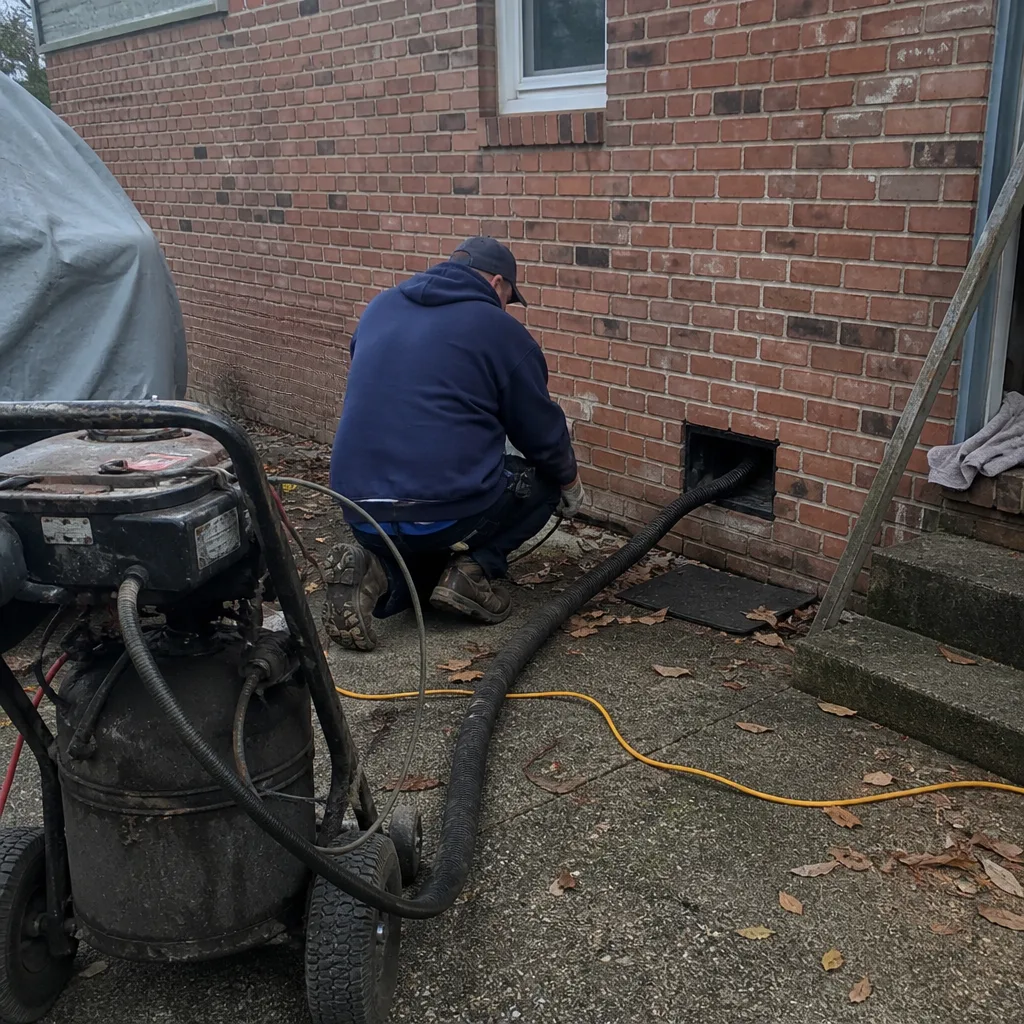 Before
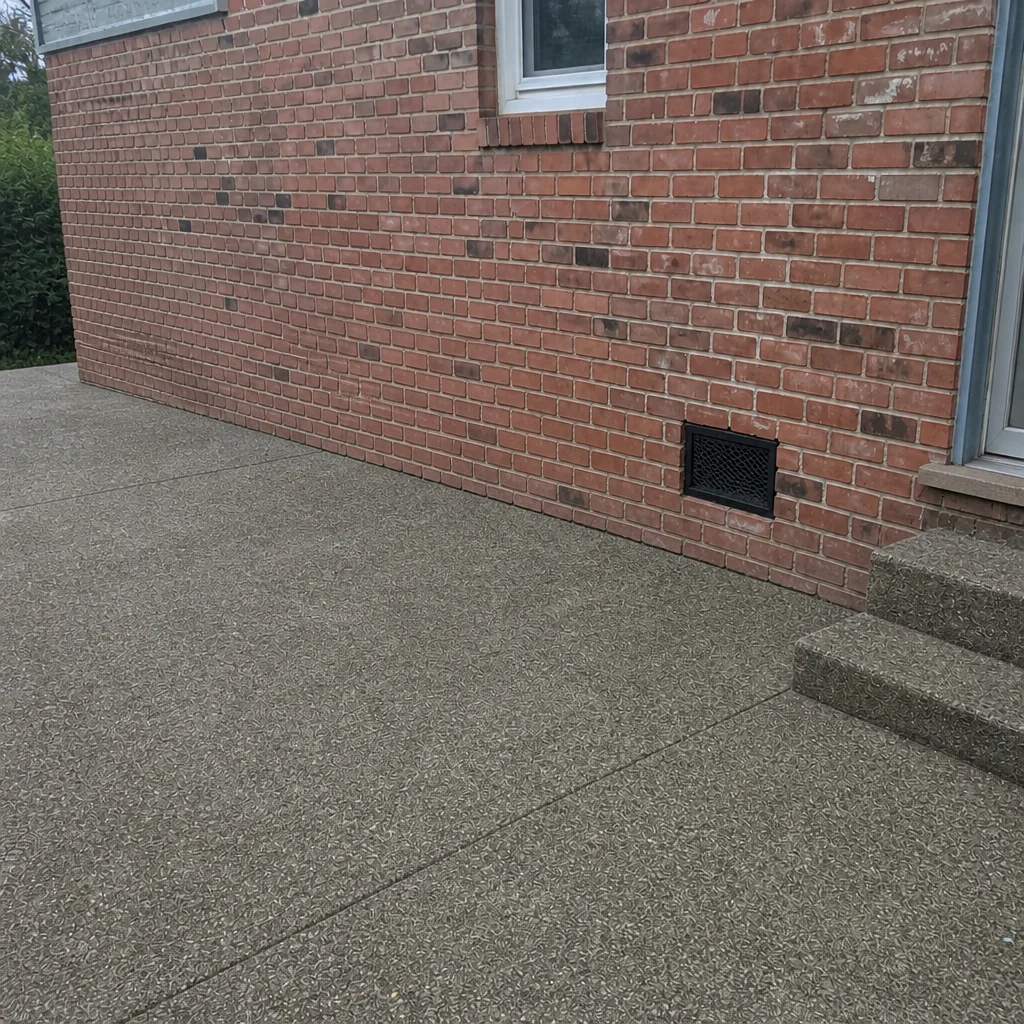 After
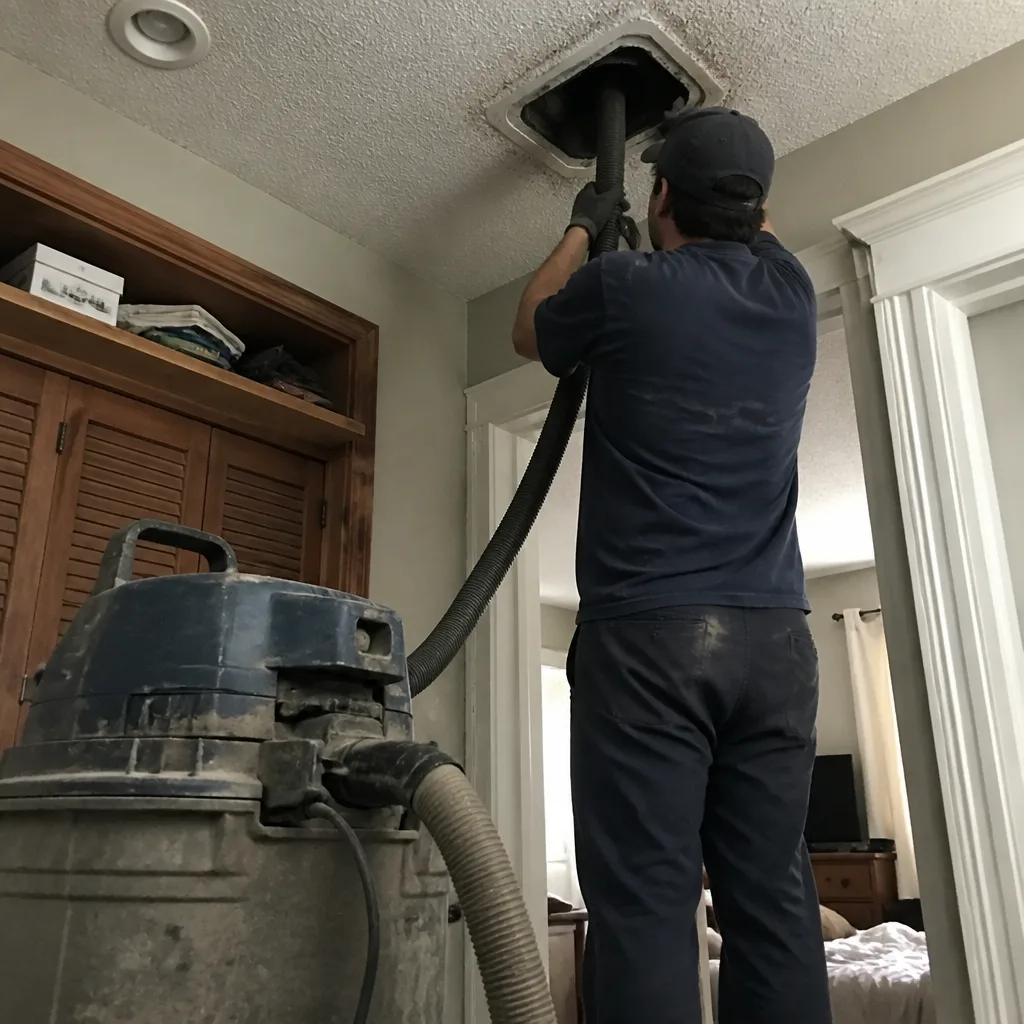 Before
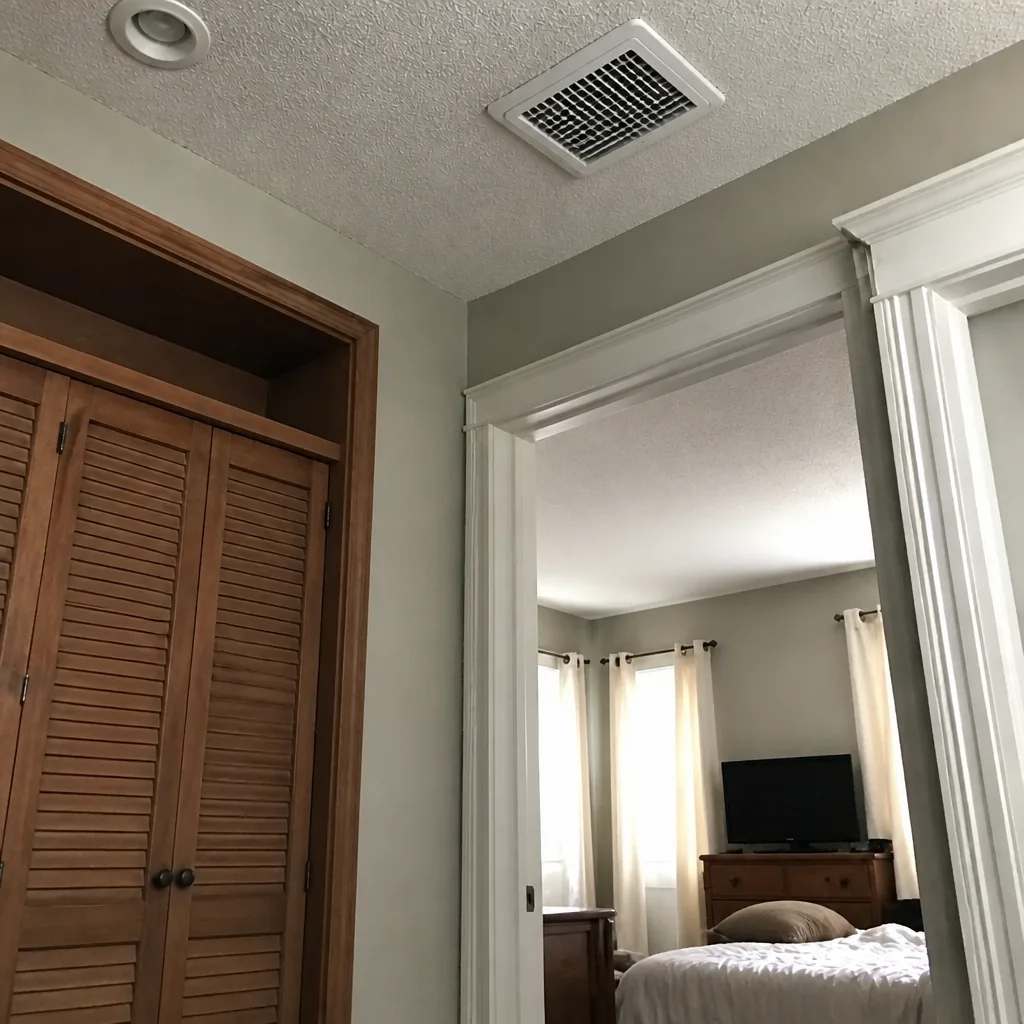 After
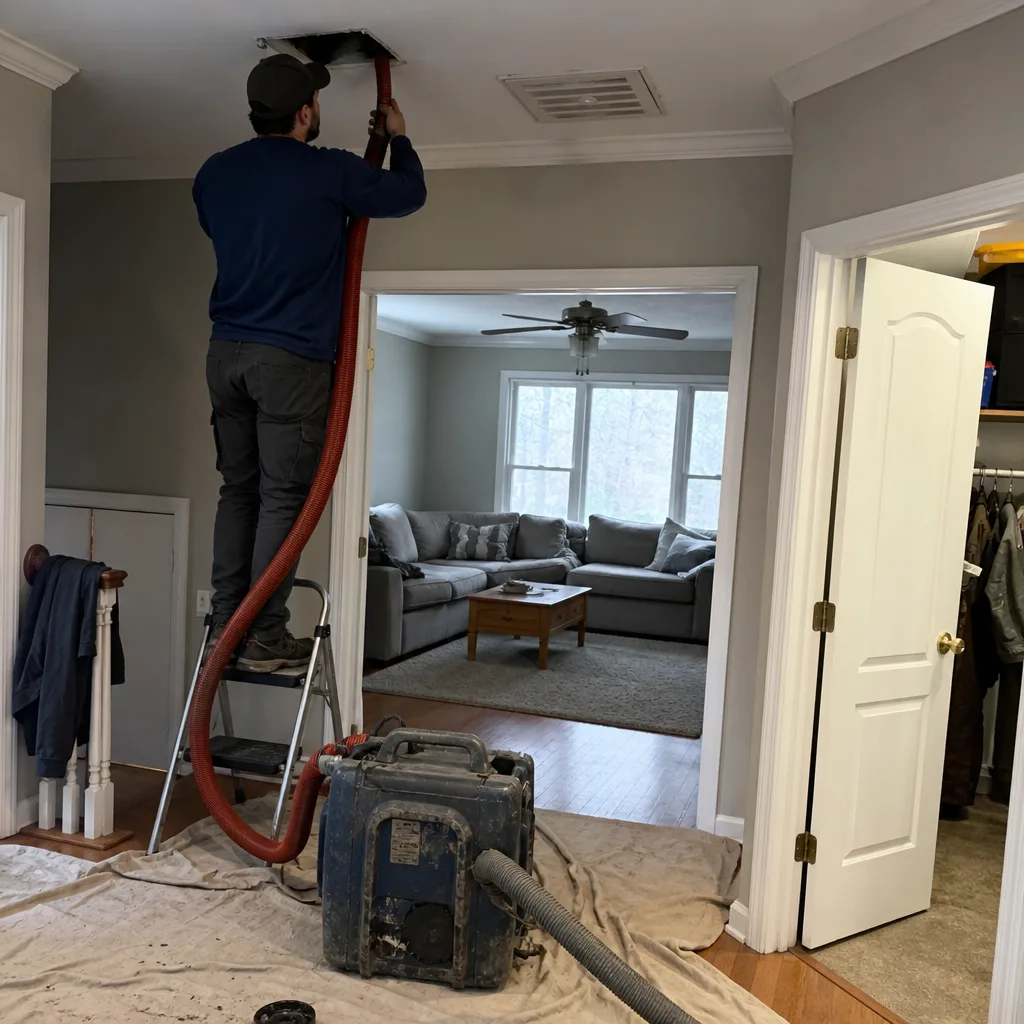 Before
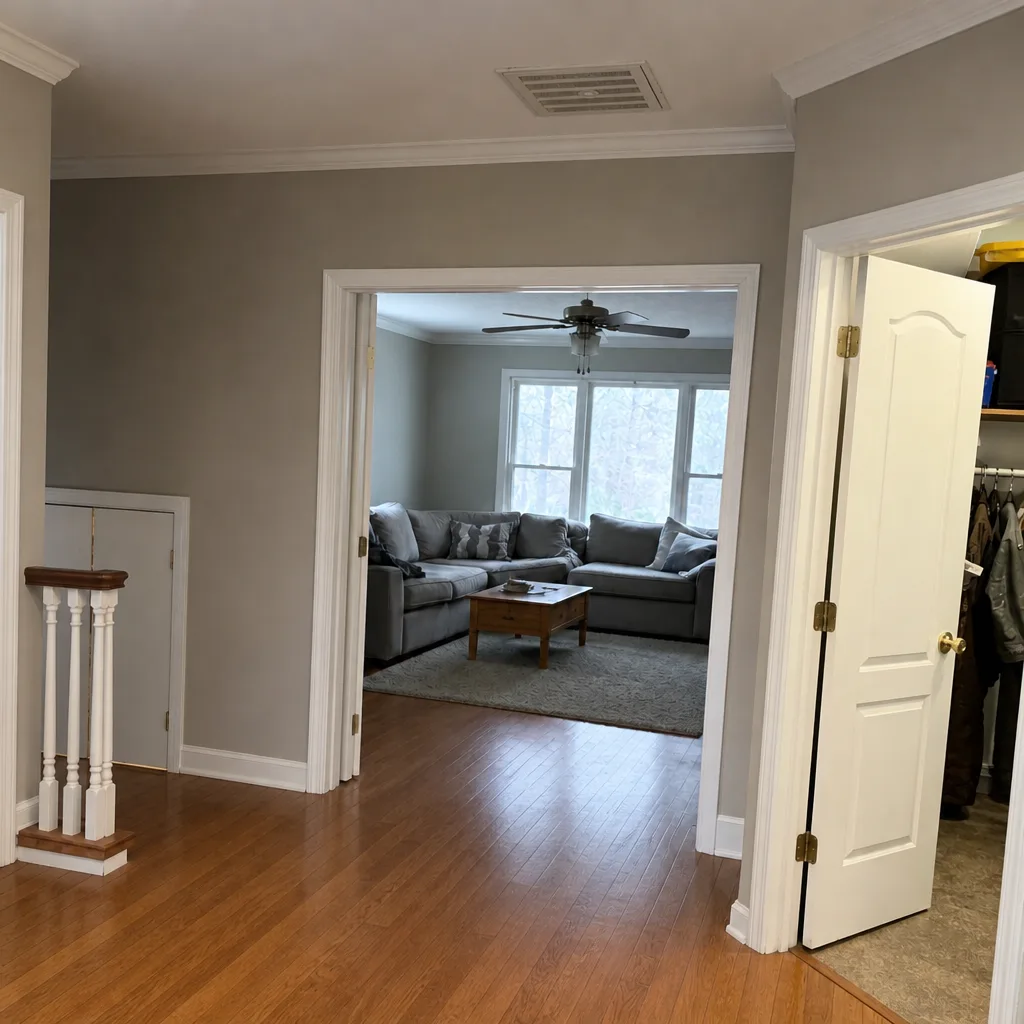 After
Frequently Asked Questions
Every two to five years for most homes, driven by runtime hours, pets, occupants, renovation history, and filter grade rather than a fixed calendar. Knoxville’s long cooling season and humid summers push most systems toward the shorter end of that range.
That figure traces to a research caveat about cleaning, not a maintenance recommendation. It was a broad, conservative answer rather than a calibrated interval. It’s not wrong as a rough ballpark, but it ignores the variables that make the biggest difference in your specific home.
Yes, all else equal, a MERV 11 or 13 filter keeps more fine particulate out of the ducts and stretches the interval. The trade-off is that you need to check and replace the filter more often. Confirm your system can handle the pressure drop before upgrading beyond what it’s rated for.
Schedule a duct cleaning once the work is done and the dust has settled, and change the filter immediately. Renovation dust that gets pulled into the return system resets your cleaning clock regardless of where you were on schedule.
Yes. Dryer vents accumulate lint and are a recognized fire-risk item separate from the HVAC duct schedule. Have them inspected at least annually, more often if the vent run is long or you notice longer dry times.
Before-and-after photos of your own ducts, coil notes, and return-air grille observations from a proper cleaning are how you judge. If you can’t see documentation, you can’t verify the work was needed or done. Call (844) 625-6998 for a free estimate and a documented baseline.
The Bottom Line
The generic three-to-five-year duct cleaning interval is a starting point, not a rule. In Knoxville, long cooling seasons and humid summers mean your system accumulates debris faster than a northern climate, so runtime hours – not the calendar – should drive your schedule. Weigh occupancy, pet load, renovation history, and filter grade together, then set your interval from the evidence each cleaning produces. Document before-and-after photos, coil condition, and static pressure at every visit so the next interval is calibrated, not guessed. Between cleanings, check your filter monthly, vacuum your registers, and inspect the dryer vent. When you need a documented, equipment-serious cleaning, call (844) 625-6998 for a free estimate.
We name the equipment we use because the tools matter as much as the technician. Rotobrush rotary brushing through every run, Nikro HEPA extraction to capture what the brush loosens, and Abatement Technologies negative-air containment to keep dislodged debris out of your living space – the same method used in commercial settings. From the duct opening to the dryer vent cap, we clean the full air pathway.
Call (844) 625-6998. We answer 24/7. Fast dispatch from 7am to 7pm, Sunday through Friday. You get one flat price per system agreed before work starts, before-and-after photos of your own ducts, and a free written estimate. See how we approach a full system at Air Duct Cleaning Knoxville Pros.
Written by the team at Air Duct Cleaning Knoxville Pros.