
Last updated November 25, 2026
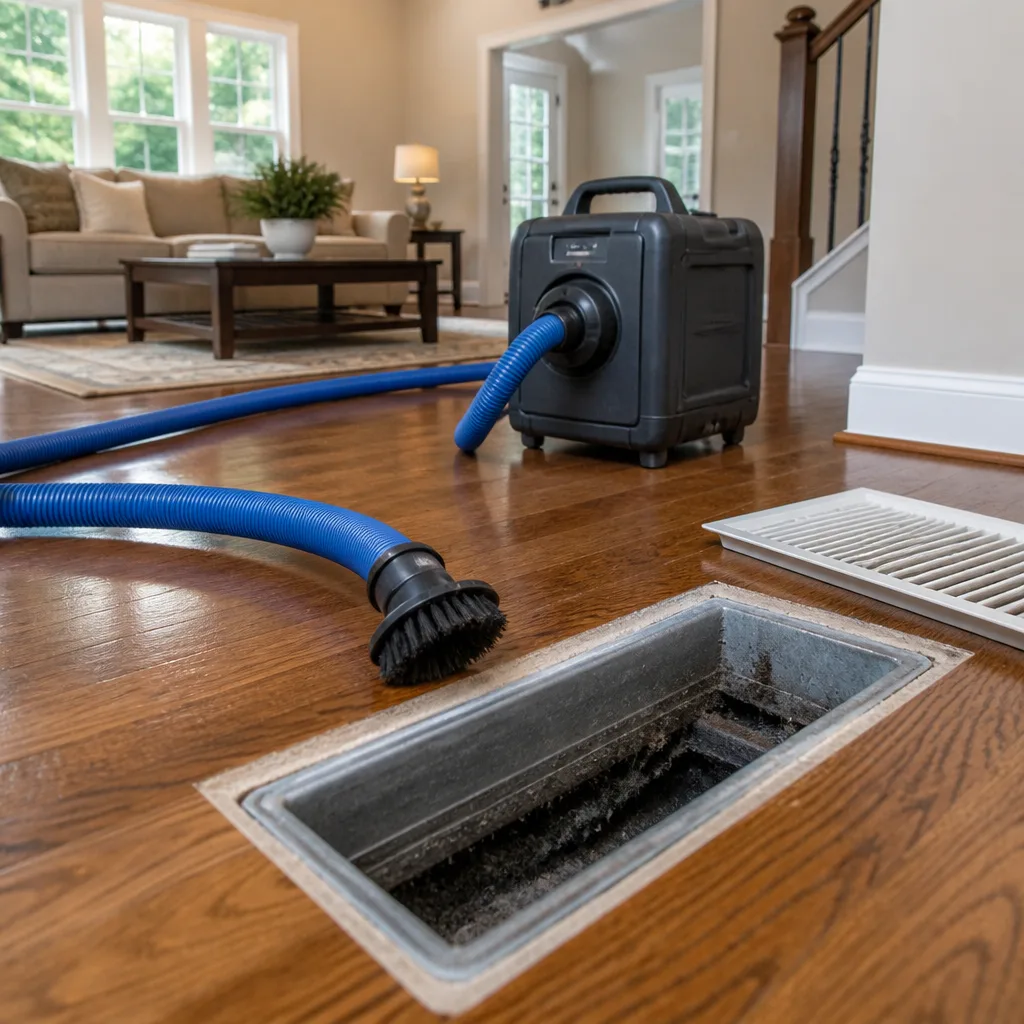 Whole-home duct cleaning
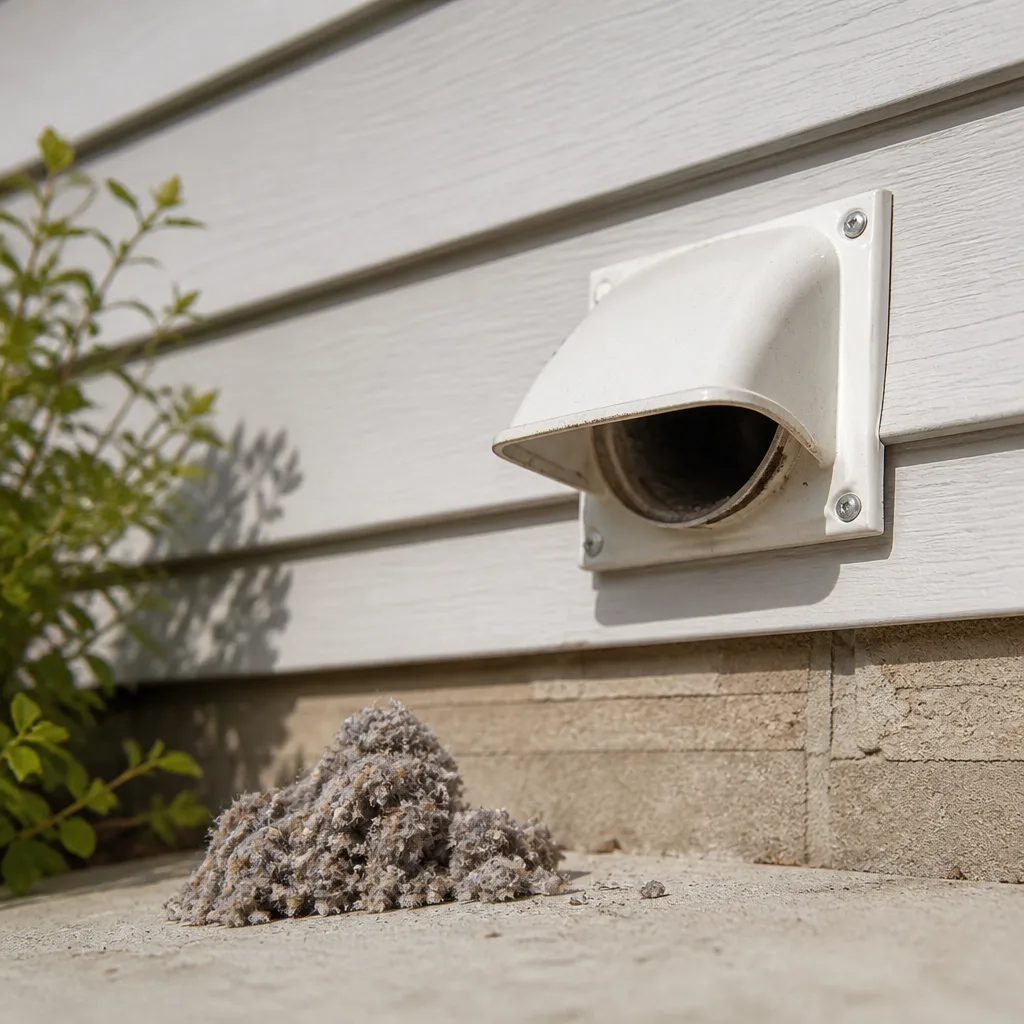 Dryer vent cleaning
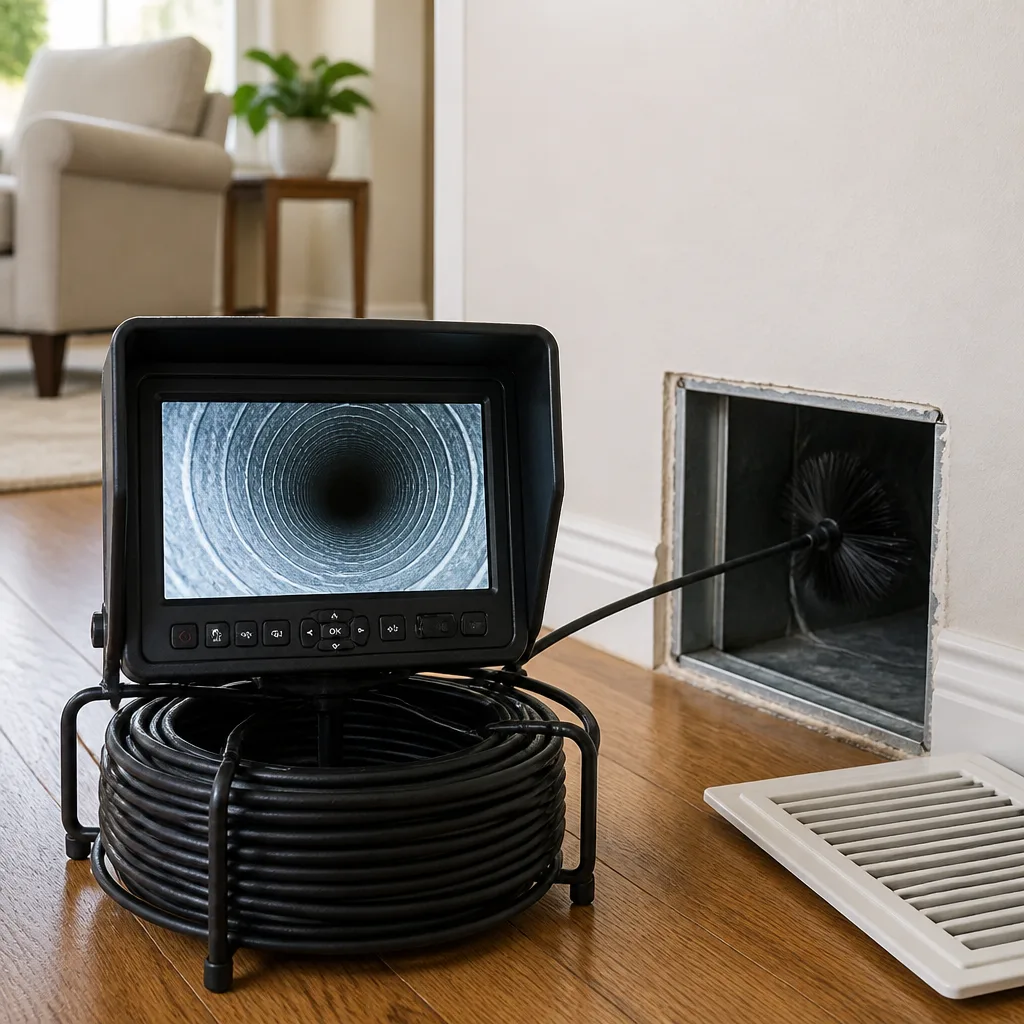 Camera inspection
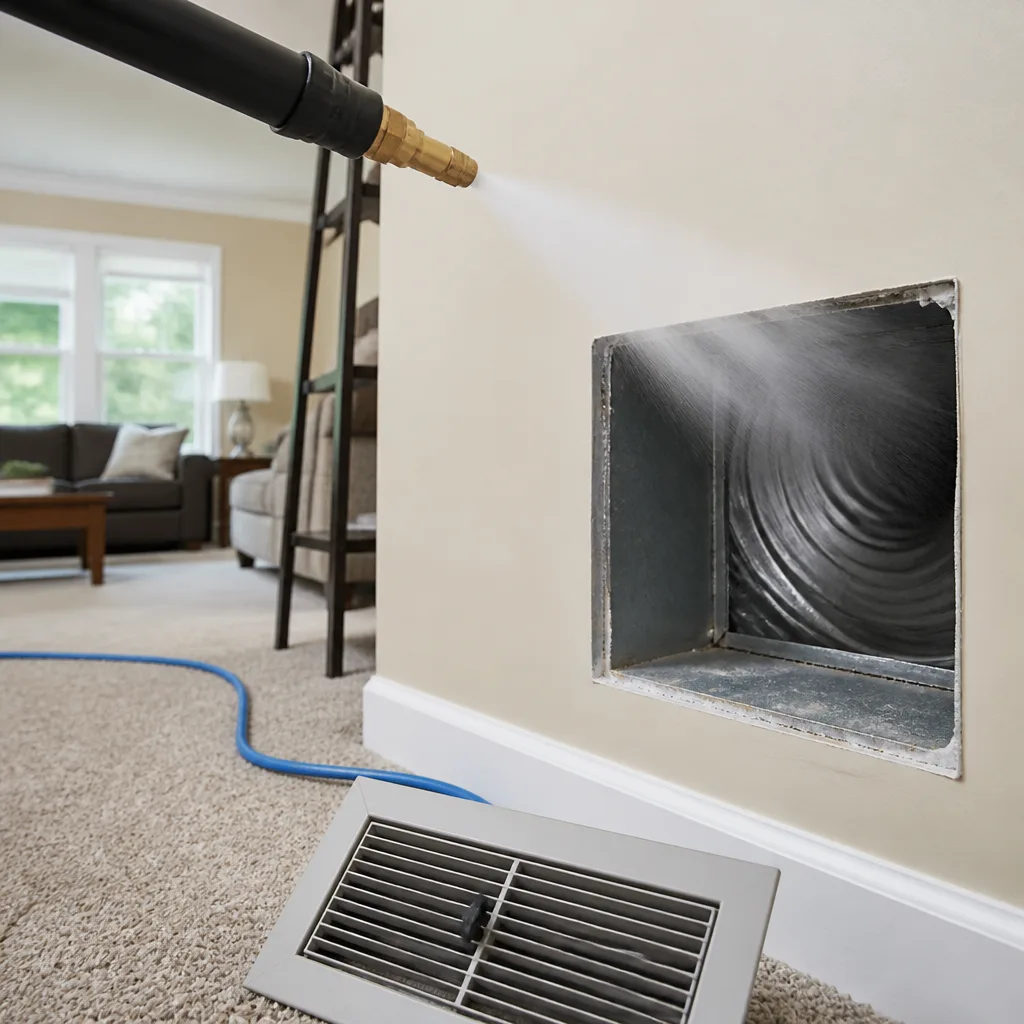 Sanitizing & deodorizing
Whole-system duct and dryer vent check with before-and-after photos - you see exactly what came out of your vents
That "$99 whole-house special" is a bait ad - the real number appears once they are in your hallway, or the "clean" is a shop-vac at the register. We photograph the inside of your ducts before and after instead.
Air Duct Cleaning Warning Signs: A Knoxville Homeowner’s Reference Guide
By the time you can smell a contaminated duct system, you’ve already been breathing its output for weeks. That’s the part most homeowners miss. The dramatic signals people watch for – visible mold at a register, a heavy musty odor filling the hallway – show up late in the process. The early warnings are quieter. They show up in how your filter loads, how long your system runs, and how one room feels warmer than the rest of the house. This guide walks through the mechanical and air-quality signals that come before contamination turns visible, written from what we see on jobs around Knoxville.
Quick Answer
The earliest signs of a contaminated duct system are usually operational, not visual: a filter that loads unevenly or clogs faster than usual, run cycles that stretch longer, rooms that heat or cool unevenly, and a faint musty smell you notice only at certain registers. Visible dust streaks at return grilles and smell at the air handler appear later. If two or more of those signals show up together, it’s worth having the system inspected.
Styles & brands we work with
- Whole-home duct cleaning
- Dryer vent cleaning
- Camera inspection
- Sanitizing & deodorizing
Table of Contents
- How to Read a Clogged Filter for Clues
- HVAC Performance Changes That Point to Duct Restriction
- What Musty Smell Location Tells You
- Visual Warning Signs at Return Grilles by Duct Material
- Post-Renovation Signals: Drywall Dust Migration
- Signs Specific to Knoxville Homes
- Common Mistakes to Avoid
- When to Call a Professional
How to Read a Clogged Filter for Clues
A dirty filter is not automatically bad news about your ducts. Where it matters is in how the filter loads. Pull your filter and look at the pattern before you throw it out. A MERV-8 filter that’s gray-brown and evenly coated across the entire pleat face usually means ordinary ambient dust from living space getting pulled in. That’s normal. A filter that’s dark in one patch, clean in another, or heavily loaded on only one side tells you something is coming from the system, not the room.
Here’s how to read the loading pattern:
- Even gray film across the whole face: standard household dust. Filter replacement schedule is the only fix needed.
- Dark stripe or blotch on one side: contamination is being pulled through one section of return duct, often where a joint has loosened or a run has collapsed.
- Black or charcoal-colored loading: usually indicates soot or fireplace pull-back, or a combustion appliance sharing air. Worth checking further.
- Filter caked within four to six weeks of replacement: the system is pulling from much more dust than normal. Duct inspection is warranted.
- Visible lint or fibers caught on the filter face: often a sign of loose duct liner or deteriorating flex duct internal coating.
Repeatedly swapping filters faster than you should is the single most common way we see homeowners spend money without fixing the source. In Knoxville’s humidity, a filter that loads heavily also dries slower and can support microbial growth if it stays soaked. Change the filter, then read the next one.
HVAC Performance Changes That Point to Duct Restriction
Airflow problems show up as behavior, not contamination. A restricted duct system – one where debris or a crushed run is limiting how much air can move – makes the equipment work harder for less result. These are the changes to watch for:
- Longer run cycles. The system runs noticeably longer than it used to for the same thermostat setting. If you’d normally hit setpoint in twenty minutes and now it takes forty, duct restriction is one possible cause.
- Uneven room temperatures. One bedroom stays cool while the hallway runs warm, and the gap has widened gradually. That points to a specific branch duct losing pressure.
- Weak airflow at some registers but strong at others. A single weak register suggests a problem in that drop; many weak registers suggest a main trunk issue.
- Higher static pressure. This is a technician measurement, not a homeowner one, but it’s the number that separates “dirty ducts” from “ducts that are choking the blower.” A professional static pressure reading before and after cleaning shows real proof the work mattered.
- Blower running louder or a whistling sound. The blower is working to overcome resistance. Worth investigating before it fails.
Knoxville’s shoulder-season humidity makes run cycles stretch anyway, so compare against your own system’s past behavior, not a neighbor’s. If the pattern has shifted gradually over a year, that’s a signal. If it changed overnight, that’s likely a mechanical issue, not duct contamination, and a professional should look at it.
What Musty Smell Location Tells You
Where you smell something is more diagnostic than whether you smell it. That’s because duct contamination is rarely uniform. A faint musty smell at the supply registers in one or two rooms usually points to contamination in that branch of the system – a section of flex duct with a damp patch, or a boot where condensation has collected. A musty smell that hits you only near the air handler, in the closet or utility space, usually points to the evaporator coil, the drain pan, or the return plenum rather than the ducts themselves.
Break it down this way:
- Smell at some supply registers, not others: localized contamination in specific runs.
- Smell at all supply registers: contamination in the main trunk, or a coil issue spreading through the system.
- Smell only at the return grille: contamination in the return plenum or filter housing.
- Smell only at the air handler: the coil, the drain pan, or standing moisture at the base.
- Smell seasonally, when AC starts up in spring: damp liner or condensation that hasn’t dried out over winter.
East Tennessee summers are humid enough that any section of duct running through an unconditioned attic or crawlspace stays damp for months. If you smell anything at a register and it intensifies on humid days, the moisture source is worth tracking down before the next cooling cycle.
Visual Warning Signs at Return Grilles by Duct Material
Return grilles are the fastest visual diagnostic in most homes. Look at the grille face and, if you can, shine a light into the opening. What you see tells you a lot about duct material and how it’s aging – and Knoxville homes carry a mix of the three common types.
Flex Duct
Flex duct is the most common material in newer Knoxville builds and in additions. The failure mode here is the inner liner. Look for fine dark speckling on the inside of the duct interior, condensation stains at low points, or the liner peeling away from the wire coil. Flex duct also collapses if it’s kinked on installation, and a collapsed section won’t show visually at the register but will show up as weak airflow to that room.
Sheet Metal
Sheet metal runs through older Knoxville homes and their crawlspaces. Look for streaks of dark dust along the seams and joints, which is where gaps open up and either debris enters or air leaks out. Wide dust shadows around the register neck on sheet metal usually mean the joint seal has failed.
Fiberboard (Duct Board)
Fiberboard interior surfaces are porous, so they trap and hold dust rather than letting it slide. A return register with a fuzzy gray face – the board itself starting to look darker than when it was installed – is a sign the material is saturated. Fiberboard that’s absorbed moisture and never dried can also begin to break down at the surface, which is a reason to get a professional opinion sooner rather than later.
Post-Renovation Signals: Drywall Dust Migration
Drywall dust is the most under-estimated contaminant in duct work. It’s fine enough to pass through typical filter media and it settles into duct interiors within the first heating or cooling cycle after a renovation. Most homeowners do the right thing – change the filter, wipe the surfaces – and assume the system is clean. Then two weeks later the smell and the dust film come back.
Watch for these signals within the first cooling or heating cycle after any renovation:
- White or light gray dust settles on horizontal surfaces directly below supply registers, even after cleaning.
- Filter loads unusually fast in the first two weeks post-renovation, then again after the next filter change.
- A faint chalky smell at registers, distinct from any construction adhesive or paint smell from the work itself.
- Visible drywall dust ring around the perimeter of a supply register boot where it wasn’t sealed tight during the work.
- No change after two or three filter changes – a strong sign the dust is now seated in the duct interior rather than the airstream.
Any substantial renovation in Knoxville – kitchen tear-outs, bathroom remodels, drywall patching after storm damage – can do this. New homeowners arriving to a recently renovated house should treat the whole air pathway as needing verification, not assumption. That includes the supply ducts, the returns, and the dryer vent line, which is a separate fire-risk concern and a service every homeowner should put on their list. We cover the full pathway when we’re in – from air duct cleaning through to the dryer vent cap – so one visit addresses the whole system instead of one piece of it.
Signs Specific to Knoxville Homes
Knoxville isn’t a hard climate, but the specific mix here – humid summers, valley air, mixed housing stock, and a lot of dirt crawlspaces – produces warning signs you don’t see the same way in drier parts of the country.
- Crawlspace humidity. Many Knoxville homes have duct runs through an open crawlspace that sees the same moisture load as the yard. Flex duct that’s picking up condensation in summer will show damp spots at low points and a musty smell that peaks in July and August.
- Valley pollen and road dust. Spring pollen load in Knoxville is heavy, and any house near a major corridor pulls in road dust through the return. Filters load quickly in April and May, which makes filter-load reading more useful – you can compare an early-spring filter against a fall filter and see the pattern.
- Older housing stock with original sheet metal. Neighborhoods with mid-century homes often still have their original sheet metal runs and the seams have decades of small separation. Dust shadows at the seams are common and correctable with duct sealing.
- Renovation-heavy neighborhoods. In areas seeing consistent remodeling activity – older bungalow blocks, and the neighborhoods around the university and downtown – drywall dust migration into ducts is a specific risk worth checking after work is done.
- Attic and crawlspace duct runs. Knoxville’s climate is mild enough that a lot of ductwork lives in unconditioned space. Every one of those feet of duct is a place where contamination can originate before it ever reaches a register.
What we look for in a Knoxville home is rarely dramatic. It’s a specific pattern of small signals that line up: a filter loading irregularly, one room running warm, a smell at two registers on humid days, and a renovation three months back. When those line up, the answer is rarely “wait another year.” The full scope of HVAC cleaning addresses the air handler, coil, and plenum alongside the ducts, which is where localized problems at the equipment end actually live.
Common Mistakes to Avoid
We see the same mistakes repeatedly when homeowners first investigate duct contamination. Most of them start with good intentions.
- Judging the system by visible dust alone. If you wait for visible dust trails at every register, you’re two or three heating seasons late. The filter pattern and performance signals come first.
- Treating a fast-loading filter as a filter problem. Changing the filter more often is fine. Assuming that’s the whole fix is the mistake – faster loading is a symptom, not a cause.
- Skipping the air handler while cleaning the ducts. A coil with biological growth, drained into a pan that never completely dries, will re-contaminate cleaned ducts within a cooling season. Clean the whole pathway or don’t bother.
- Trusting a quote with no equipment named. Ask specifically what equipment will be used. A shop vacuum and a brush are not the same service as a rotary brush system paired with a HEPA-filtered collection unit. That’s why we name what we run – because the tools matter as much as the technician.
- Assuming a recently renovated house is clean. Drywall dust migration is invisible in the first month and obvious by the second heating cycle. A new home or a post-renovation home should be inspected before you assume.
- Ignoring the dryer vent because the ducts look fine. The dryer vent is the highest fire-risk segment of the entire air pathway and has nothing to do with your supply ducts. Dryer vent cleaning should be checked on its own schedule, not folded into a duct assessment that never looks at it.
- Choosing on price alone. The lowest quote almost always reflects the least equipment. That’s a process-quality trade-off, not a bargain.
When to Call a Professional
You don’t need to call us for a filter that’s evenly dirty. You do need a professional inspection when two or more of these are true: the filter loads irregularly or fast; airflow is weak at specific registers; a musty smell appears at some registers but not others; visible darkening appears at a return grille in a home with fiberboard or flex duct; or a substantial renovation finished within the last six months. Any of those patterns alone justifies an inspection, and two or more together usually means the system has been running with contamination for a while. A professional assessment with a proper static pressure reading and visual scope of the duct interior will tell you what you’re dealing with before you spend anything on the work.
Air Duct Cleaning Knoxville Pros offers free estimates in Knoxville – call (844) 625-6998 to schedule. We answer 24/7. Fast dispatch from 7am to 7pm, Sunday through Friday. The local pro is licensed and insured as their state requires, the written estimate sets one flat price per system before any work starts, and you’ll see before-and-after photos of your own ducts when the job is done.
See the difference
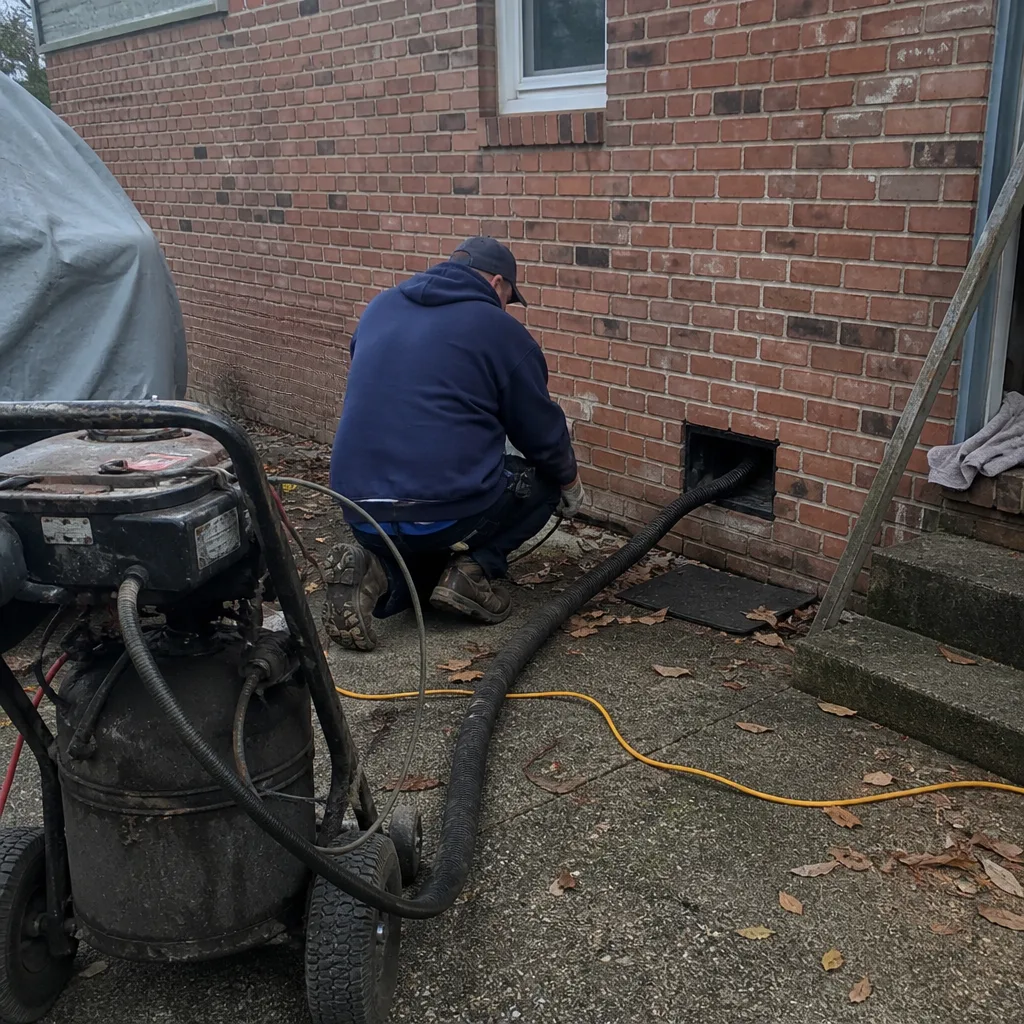 Before
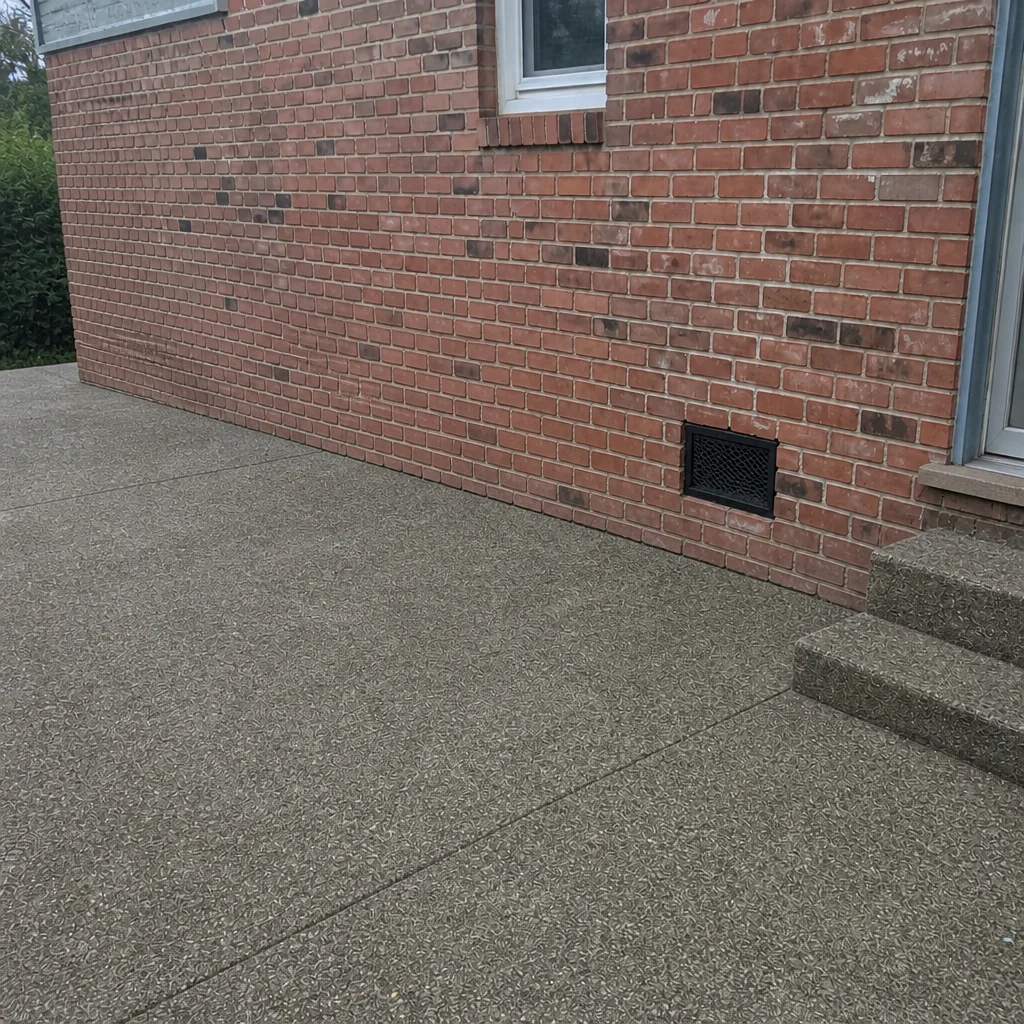 After
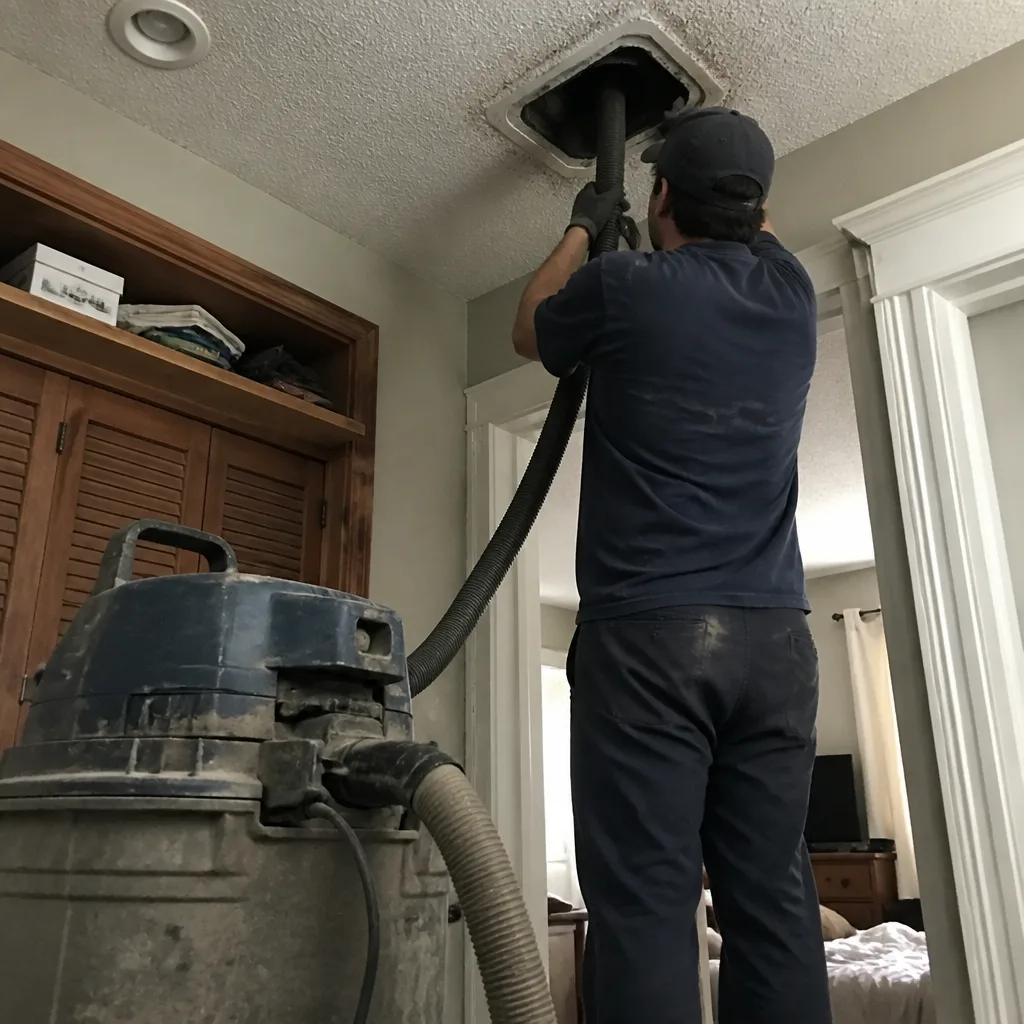 Before
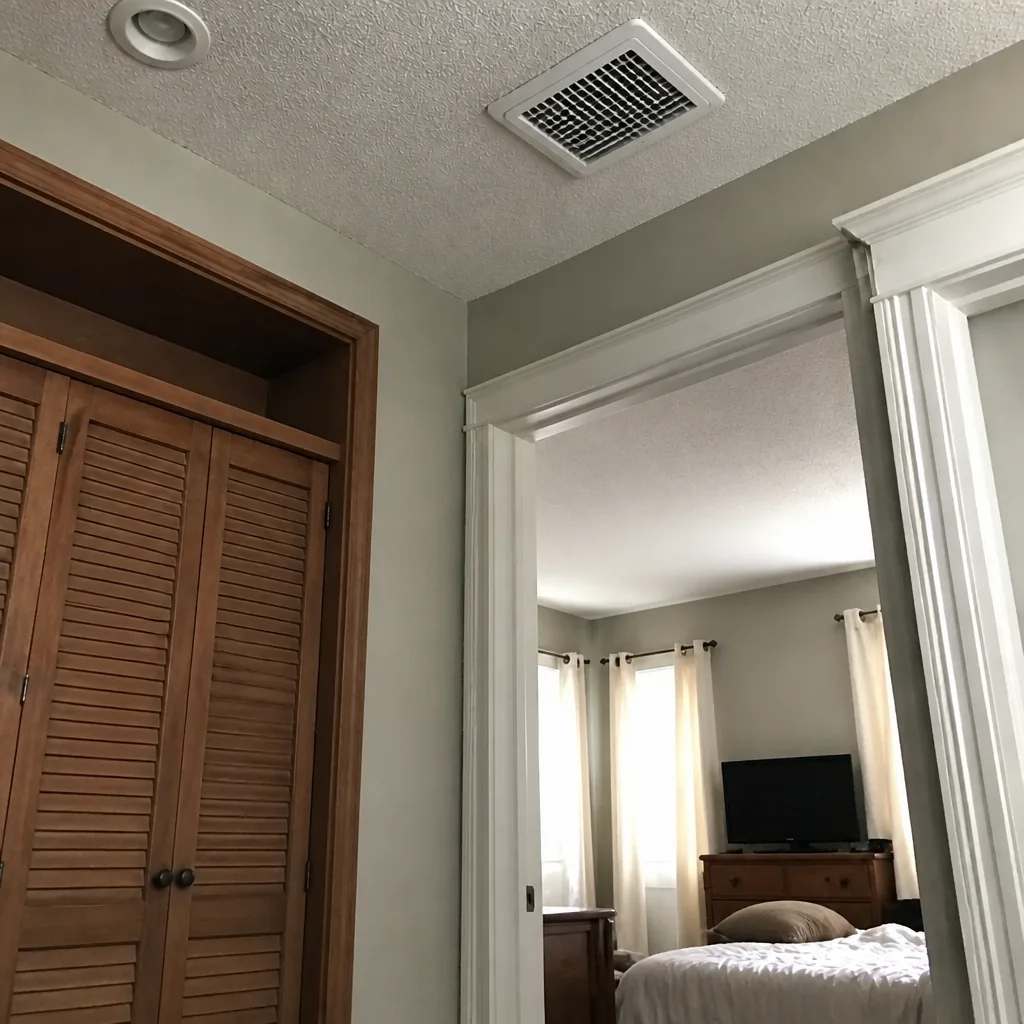 After
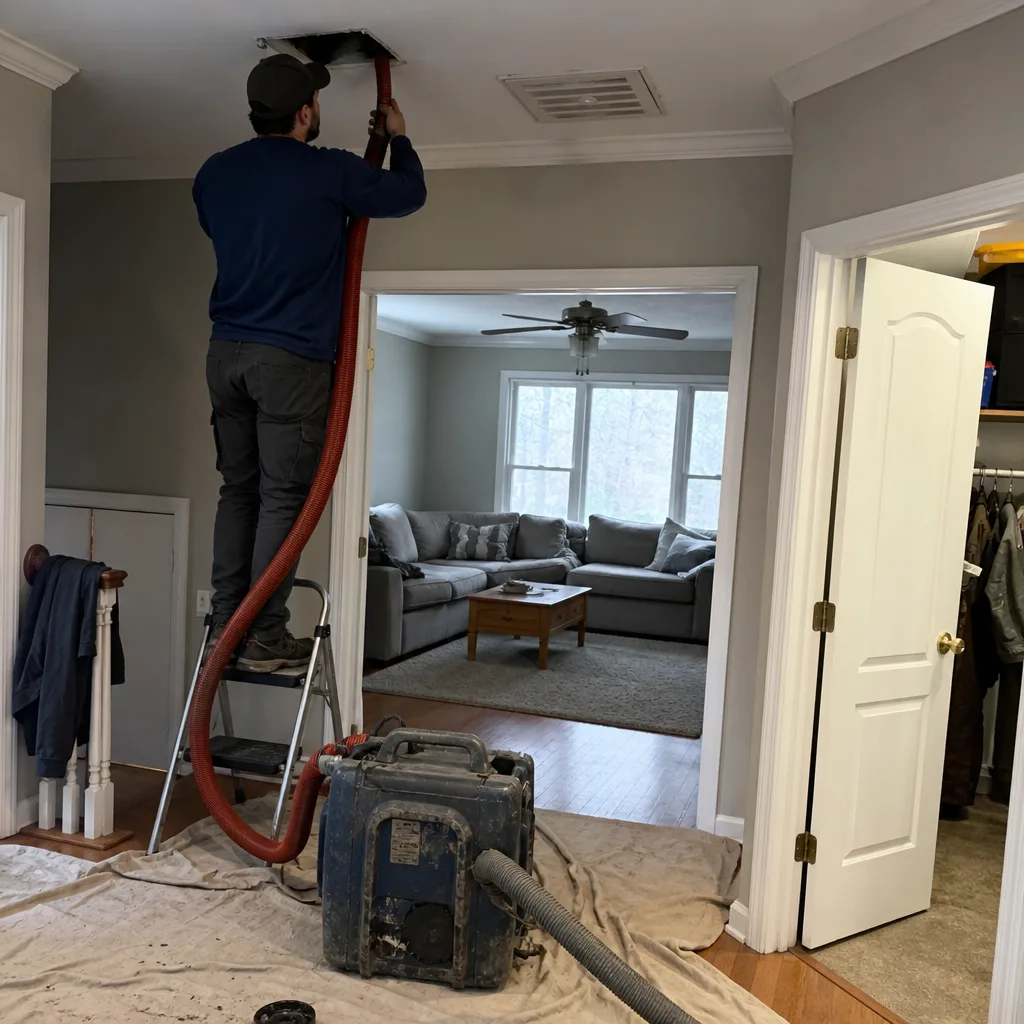 Before
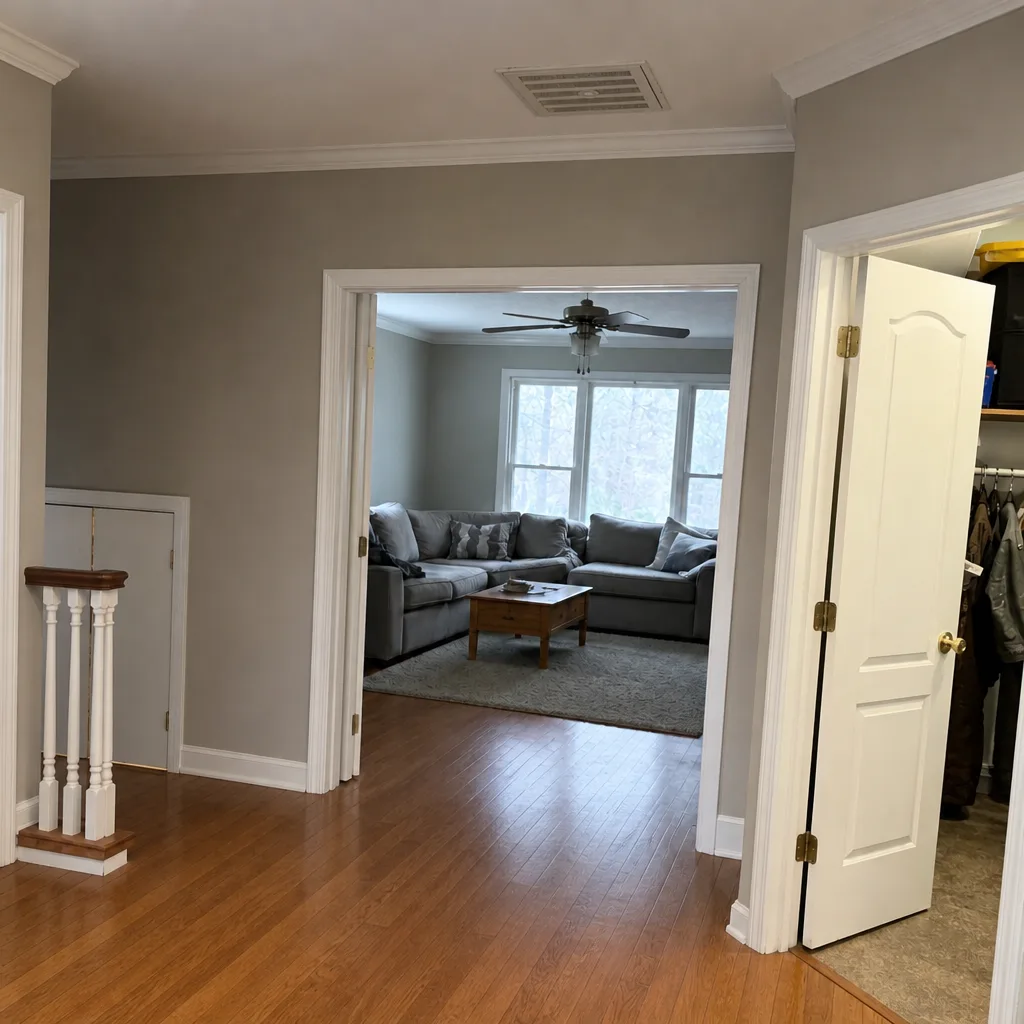 After
Frequently Asked Questions
Two specific signals in combination are the strongest indicators: a filter that loads irregularly or much faster than usual, and uneven airflow or temperature between rooms that has developed gradually. Visible dust at return grilles and a musty smell make the case stronger. If you’re only seeing one of these signals, inspection is still worthwhile, but if two or more are present, the case for professional cleaning is strong. Call (844) 625-6998 for a free estimate – the inspection itself will tell you whether cleaning is warranted.
Most residential air duct cleaning jobs in Knoxville fall in the general range of a few hundred to over a thousand dollars depending on square footage, the number of registers and returns, and whether the air handler and dryer vent are included. Whole-system pricing from a professional operation reflects the equipment involved – rotary brushing, HEPA extraction, negative-air containment – rather than per-vent pricing. The written estimate you receive sets the final price before any work starts. Call (844) 625-6998 to schedule yours.
Because the job is different work. A quote that’s significantly below the field is almost always a shop vacuum and a hand brush, sometimes with no negative-air containment to capture dust as it’s dislodged. That service often leaves the system as dirty as it was, redistributes debris into the living space during the work, and won’t include the air handler or the dryer vent. We name our equipment – Rotobrush rotary brush systems, Nikro HEPA filtration, Abatement Technologies negative-air machines – because you should be able to see what a quote reflects. Call (844) 625-6998 for a free estimate with the equipment identified upfront.
Ask for before-and-after photos of your own ducts, not a stock image from a manufacturer. A professional scope camera view into the duct is the most direct evidence, and photos of the return and supply openings before and after cleaning should show visible improvement. If a service visit ends without photos, you have no verification. That’s exactly why we photograph every job we’re on. Call (844) 625-6998 if you want to see what the process and the photos look like.
Yes, but indirectly. The energy cost shows up through restricted airflow – the system runs longer because the blower is pushing against resistance. Duct restriction raises static pressure and reduces how efficiently the equipment can do its job, which shows up as longer run cycles and higher consumption over a cooling or heating season. Cleaning combined with duct sealing removes the restriction and closes the leaks that keep pulling dirty air back in. Call (844) 625-6998 for a free estimate that includes a static pressure check.
Somewhat, yes – Knoxville’s humid summers and prevalence of duct runs through crawlspaces and attics mean duct interiors stay damp longer and can support biological growth. Heavy spring pollen also loads filters fast. None of that means every home here has a problem, but it shifts the baseline: an inspection is more worthwhile here than in a drier climate. Call (844) 625-6998 if you’d like a professional opinion before committing to cleaning.
The Bottom Line
Duct contamination announces itself through the system long before it reaches the register. Read the filter loading pattern. Track the run cycles and room temperatures. Localize the smell. Look at the return grilles by duct material. Pay attention to the first cooling cycle after any renovation. Those are the signs that lead a homeowner to act before visible dust, musty air, or a failing blower does. Air Duct Cleaning Knoxville Pros works on the whole air pathway – ducts, HVAC components, dryer vents, and sanitizing – with contractor-grade equipment and a written estimate before any work begins. Our technicians have up to 10 years of experience. Call (844) 625-6998 for a free estimate. We answer 24/7. Fast dispatch from 7am to 7pm, Sunday through Friday.
Written by the team at Air Duct Cleaning Knoxville Pros.